



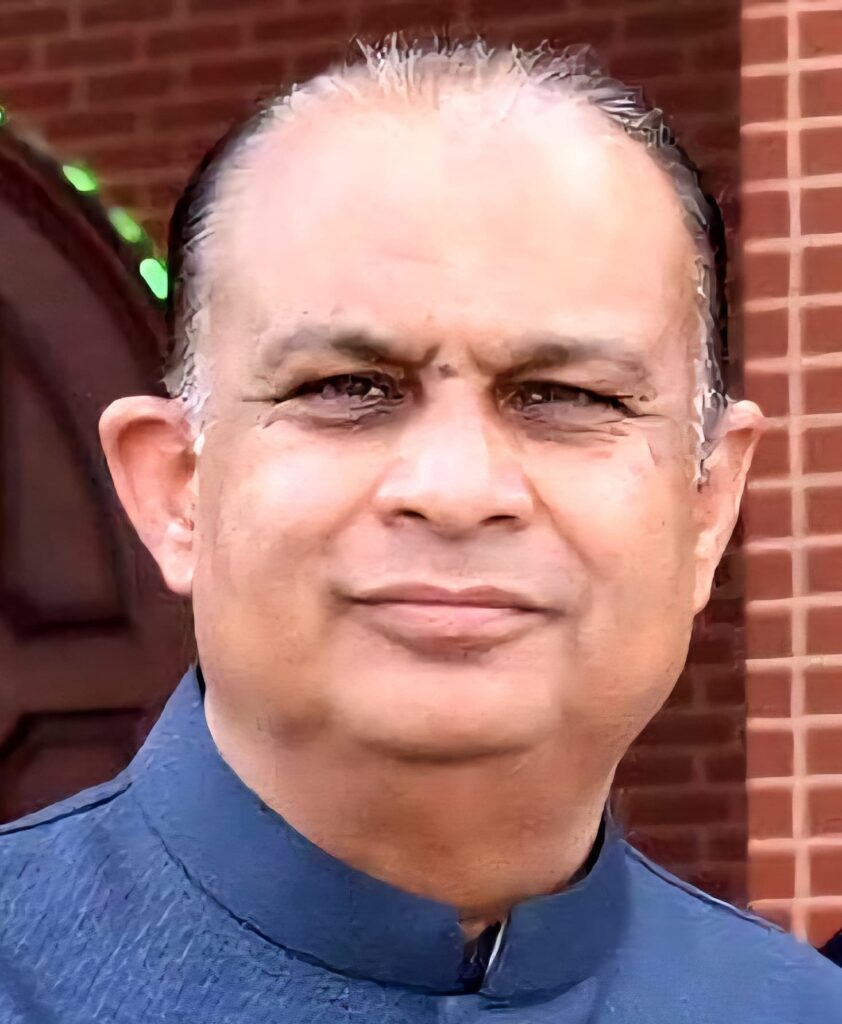
By Abdul Rehman Patel
The world is no longer drifting through a temporary crisis. It is settling into a quieter but far more decisive phase of global change. Power is being rearranged, not announced with dramatic declarations but signaled through seemingly disconnected events. Strategic interest in Greenland, the slow collapse of Venezuela under the burden of its own natural wealth, renewed competition for influence across Africa, and shifting alliances in Asia all point in one direction. The old order is loosening, and a new one is taking shape. In this changing environment, Pakistan’s growing visibility is not accidental. Over the past few years, its defence industry has begun to reach beyond traditional partners.
Expanding defence ties with Libya, Sudan, Indonesia and Bangladesh suggest that Pakistan is no longer confined to the role of a buyer or junior partner. It is beginning to present itself as a supplier, and with that comes a new kind of relevance. Defence exports are not only about money. They are about trust. They create long-term relationships, embed military cooperation, and open political doors that trade alone often cannot. States that sell arms rarely sell equipment alone. They export doctrine, training, maintenance, and influence. In this sense, Pakistan’s defence outreach signals ambition. It hints at a country that wants to be seen not merely as a security consumer, but as a contributor to regional stability.
Yet this raises a more uncomfortable question. Does Pakistan itself understand what it is becoming, or what it needs to become, to sustain this role? Power does not come from weapons alone. History offers repeated warnings. States collapse not because they lack arms, but because they lack internal order. The true strength of a state lies in coherence, predictability and restraint. This is where Pakistan’s real test begins, and where its greatest vulnerabilities remain. Pakistan’s internal politics is marked by sharp discontinuity. Governments change, and with them the sense of national direction often appears to change as well.
Policies are announced, reversed, and rebranded with each political cycle. Disagreement, which is the lifeblood of democracy, frequently turns into paralysis. Institutions are present and, in many cases, powerful, but they operate without harmony. Authority exists, yet its exercise depends heavily on personalities rather than procedures. These are not signs of a failed state. But they are signs of an unsettled one. History is full of examples of states that possessed resources, influence and even military power, yet faltered because they never resolved their internal contradictions. Venezuela is a recent and painful case. It had oil, leverage and international relevance. What it lacked was institutional discipline and political restraint.
Over time, power detached itself from accountability. The result was not foreign conquest, but internal collapse. History follows a harsh but consistent rule. External pressures only destroy states that are already internally unclear. This brings Pakistan to its central dilemma. Is it a complete state, or still a state in the process of becoming? A state is not defined by borders alone. It is not made complete by a flag, a constitution, or even elections. A state becomes whole when power submits to law, when policy outlives personalities, and when institutions operate within clearly accepted limits. A mature state absorbs disagreement without turning every conflict into an existential crisis.
Pakistan is, without question, a state. But it is a state that has not yet fully entered its mature form. This is where the idea of normalcy becomes crucial. Normalcy does not mean the absence of conflict. It does not mean silence, obedience or uniformity. A normal state is one where conflict is processed through institutions, not through disruption. It is one where governments change but the direction of the state remains broadly intact. Where opposition exists without paralyzing the economy. Where courts issue judgments and their implementation does not depend on political convenience. Where institutions are strong, yet respectful of one another’s domains.
For Pakistan, the standard of normalcy is simple in theory, but demanding in practice. Can political crises be resolved without turning them into national security emergencies?
Can dissent be tolerated without being framed as treason, and loyalty without being treated as a certificate? Can there be a clear distinction between what belongs to politics and what belongs to the state? A country that permanently lives in emergency mode loses the ability to plan. It reacts instead of deciding. States that survive only through reaction do not shape history. They endure it. The contradiction Pakistan faces today cannot last indefinitely. Internationally, it is being taken more seriously. Its military capability, strategic location and emerging defence exports give it weight in a volatile region.
(The Pakistani-origin American writer and columnist, sheds light on various social and political issues, can be reached at editorial@metro-morning.com)
#Pakistan #PakistanPolitics #StrategicPakistan #DefenceExports #GlobalInfluence #RegionalStability #PoliticalAnalysis #StateBuilding #GovernanceChallenges #InstitutionalStrength #NationalDirection #SecurityPolicy #PakistanNews #InternalOrder #PoliticalStability #EmergingPower #InternationalRelations #PakistaniColumnist #StateDevelopment #Geopolitics
