



By Sudhir Ahmad Afridi
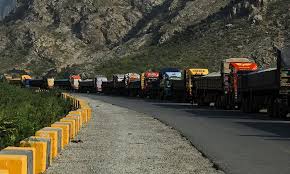
TORKHAM: The closure of Pakistan‑Afghanistan border crossings, including Torkham, Chaman, Ghulam Khan and Kharlachi, was triggered by clashes between Pakistani and Afghan forces on 11 October last year. Following the incidents, authorities had to shut trade and transit points. Pakistan repeatedly accused the Afghan regime of allowing its territory to be used against Pakistan, insisting that borders would remain closed until Afghanistan provided international guarantees to stop cross‑border terrorist incursions. The international community also alleged that Afghanistan continued to harbour militants posing a threat to the region and neighbouring states.
In response, Afghanistan’s current Emir, Hibatullah Akhundzada, issued a statement declaring that the country was at peace, its regime stable, and that it was not a war zone. He said any militant action outside Afghanistan would be considered illegal. Last month, hundreds of Afghan scholars across various districts issued a collective fatwa affirming that Afghanistan was not at war with any state, and any cross‑border attacks would be against the law and considered treason. The scholars also warned that the Afghan government would take strict action against such elements.
The consensus of Emir Hibatullah and Afghan scholars was encouraging for Pakistan and neighbouring countries, yet insufficient. The Afghan regime has so far refused to acknowledge that terrorism is being exported from its soil. It remains unclear whether Afghanistan intends or is able to dismantle terrorist networks within its borders. Fatwas alone cannot solve the problem.
In Pakistan’s Khyber Pakhtunkhwa and tribal districts, most terrorist attacks are traced back to Afghanistan. Locals often wonder why such violence persists, targeting ordinary citizens and security forces alike, despite Pakistan being an Islamic state and its population largely devout. Every attack leaves communities bewildered at the rationale and consequences, as those who suffer are mainly Pakistani Pashtuns.
The human cost has been severe. Every incident prompts security and police operations, including searches, arrests, and clearance operations, which displace thousands of Pashtuns. Families, including children, the elderly, and women, lose homes and livelihoods. Economic hardship deepens, education is disrupted, young people face unemployment, and some women are forced into begging. Such suffering, the writer argues, is morally and spiritually condemnable.
The border closure has also inflicted economic damage. Since 11 October 2025, trade between Pakistan and Afghanistan has been halted, costing both countries billions of dollars. Local communities, especially around Torkham, have seen their livelihoods collapse, with trade and social ties severely affected. The tribal areas, long neglected in terms of development and industry, have been particularly hard hit. Daily wage earners struggle to feed their families, transporters face uncertainty, and manufacturers lose access to key Afghan markets, now filled by goods from Iran, India, and Central Asia.
Afridi warns that continued hostility toward Afghanistan will hurt Pakistan in the long term. He argues that Pakistan’s insistence on coercion may achieve short‑term compliance, but the resentment sown will bring future harm. Instead, he advocates dialogue, goodwill, and cooperation, suggesting that Afghanistan’s leaders remember that their regime’s survival has historically depended on Pakistan’s support. A jointly managed border security mechanism could ensure peace, reduce terrorism, and allow trade and daily life to resume safely.
Afridi concludes by calling for a new year marked by constructive negotiations, reopening of trade routes, and efforts to foster brotherhood and mutual respect between the two nations. Only through dialogue and cooperation, he writes, can peace and prosperity be restored for both countries.
