



The projects are designed to bolster coastal protection, promote climate-smart agriculture, and drive inclusive growth across the country
By S.M. Inam
ISLAMABAD: Pakistan took a significant step toward strengthening its climate resilience on Tuesday, formalizing two major development initiatives with the Asian Development Bank (ADB) that aim to protect vulnerable coastal areas and modernize agriculture with low-carbon practices.
The agreements, announced by the Ministry of Finance and Revenue, encompass the $180.5 million Sindh Coastal Resilience Sector Project (SCRP) and the $124 million Punjab Climate Resilient and Low Carbon Agriculture Mechanization Project, reflecting a growing focus on sustainable development amid rising environmental challenges.
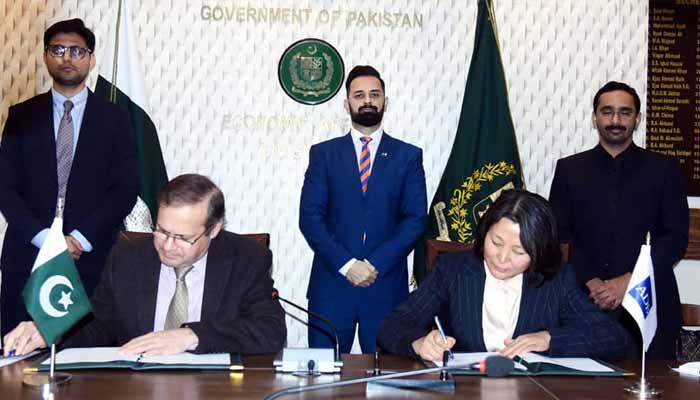
The signing ceremony in Islamabad saw Secretary of the Ministry of Economic Affairs Muhammad Humair Karim express appreciation for ADB’s longstanding support, describing the bank as a trusted development partner in Pakistan’s efforts to advance climate resilience, sustainable agriculture, and inclusive growth.
Karim highlighted that the Sindh Coastal Resilience Project would combine integrated water resources and flood risk management with nature-based coastal restoration, while also building institutional and community capacity for long-term strategic planning. The project is expected to reach over 3.8 million residents of Thatta, Sujawal, and Badin districts, offering protection to livelihoods, food security, and the region’s delicate biodiversity.
Funding will come from multiple sources, including $140.5 million from ADB, $40 million from the Green Climate Fund, and $20 million in provincial counterpart funding. The Punjab Climate Resilient and Low Carbon Agriculture Mechanization Project aims to enhance agricultural productivity and climate adaptation across 30 districts of the province.
Karim detailed that the $129 million initiative would provide small farmers with access to climate-smart machinery, introduce circular agricultural practices to curb crop residue burning, and establish testing and training facilities to strengthen technical skills. Crucially, the project seeks to empower around 15,000 women through skill development and livelihood diversification, underlining its social as well as environmental objectives.
ADB Country Director Emma Fan welcomed Pakistan’s commitment, emphasizing the Sindh project’s role in mitigating climate-induced risks for coastal communities, and framing the Punjab mechanization program as a critical measure to modernize agriculture while reducing emissions.
