



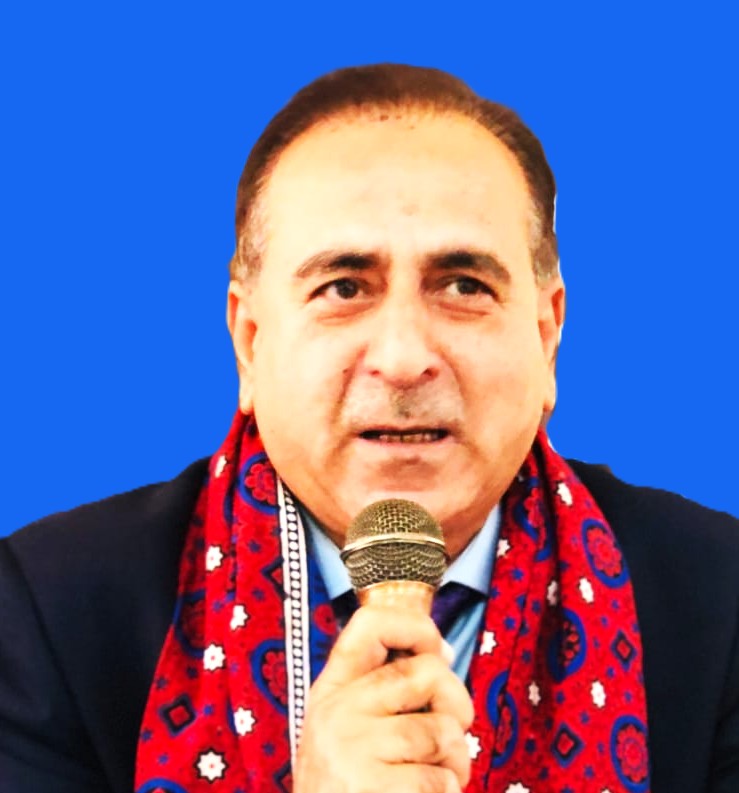
By Naseer Murad Shaikh
Pakistan stands at a precarious juncture in its modern history, a moment where the imperatives of reform are no longer abstract ideals but urgent necessities. For decades, the nation has navigated the turbulent waters of political instability, weak democratic institutions, and constitutional ambiguities, each reinforcing a public perception of governance that is ineffective, self-serving, and disconnected from the needs of ordinary citizens. The result has been a cynicism so pervasive that it has begun to shape the very identity of the polity, leaving citizens disillusioned and young aspirants hesitant to engage with a system they see as rigged. What Pakistan needs now is not incremental tinkering or superficial adjustments, but a holistic, threefold reform program encompassing political, democratic, and constitutional dimensions—a program that does not merely patch the cracks, but reconstructs the foundations of governance.
At the heart of this transformation lies political reform, which must first address the structures and culture of the parties themselves. Political parties are meant to be vehicles of public service, yet far too often they have become instruments of dynastic entrenchment or personal glorification. Leadership should no longer be the preserve of a single family or individual; a two-term limit for party leaders would ensure both accountability and generational renewal. Party elections must be transparent and merit-based, freeing internal politics from manipulation and nepotism. At the national level, power should be entrusted to the party that secures a simple majority, while political factions should set aside parochial interests to unite around the nation’s integrity and collective welfare. Only when parties prioritize service over self-interest will politics reclaim legitimacy in the eyes of citizens.
Equally vital is democratic reform, which requires a clear and enforceable framework to stabilize governance. The office of the head of state must be empowered to oversee constitutional obligations and defence institutions, ensuring that the country’s institutions are both respected and resilient. The authority to establish caretaker governments—a mechanism essential for fair elections—must be unambiguous. At the federal level, this responsibility should rest with the president, the Senate chairman, and the National Assembly speaker; at the provincial level, it should involve the Senate chairman, governors, and provincial assembly speakers. Such clarity would curb the opportunism and corruption that have long plagued transitions of power. More broadly, democratic reform opens the doors for fresh leadership, particularly among youth, and enforces the rule of law, which has often been undermined by entrenched networks of collusion, hypocrisy, and blame-shifting. By strengthening democratic norms, Pakistan would not only make governance more accountable, but would also cultivate a culture in which public service is valued over personal gain.
No reform agenda can succeed without the bedrock of constitutional reform. Administrative divisions must be rationalized to ensure efficiency and equitable representation: ten local councils per sub-district, five sub-districts per district, five districts per division, and five divisions per province. Representation should correspond with population size, with each district electing a member to the national assembly and each sub-district electing a member to the provincial assembly. Voter registration must be drawn directly from national identification databases, guaranteeing accuracy and reducing the potential for manipulation. Constituency boundaries should be carefully calibrated, with 3,000–5,000 voters per ward and 25,000 per local council, while election cycles should be regular and predictable: general elections every four years, local elections every three, with results reflecting at least 51% voter turnout. Transparency must extend beyond the ballot box, with results promptly published online and disseminated through social media to facilitate public scrutiny. Simple majority victories should form governments directly; where majorities are not achieved, elections should be rerun to safeguard legitimacy.
The advantages of such a comprehensive reform package are profound. Patronage networks and vote-buying, once the hallmarks of Pakistani politics, would diminish; political stability would strengthen economic confidence, encourage investment, and improve public welfare. Institutions would operate with discipline and accountability, guided by national interest rather than narrow self-interest. Most importantly, politics would become a tool for governance rather than a theatre for personal aggrandizement. For Pakistan, the choice is stark and inescapable: to continue down a path of cynicism, stagnation, and fractured governance, or to embrace a reformist vision that promises stability, prosperity, and a political culture that genuinely serves the people. The nation cannot afford delay. The time for bold, systemic change is now.
(The writer is an analyst and commentator who writes on a range of topics, including religious, political, social, and international issues, and can be reached at editorial@metro-morning.com)
#PakistanReforms #PoliticalStability #DemocracyMatters #ElectionReform #GoodGovernance #YouthInPolitics #ConstitutionalChange #AccountableLeadership #PakistaniPolitics #NationBuilding
