




Pakistan and Libya sealed a strategic defence agreement, including the sale of 16 JF‑17 fighter jets and 12 Super Mushak trainers, signaling a deepening military partnership (Catchline)
MM Report
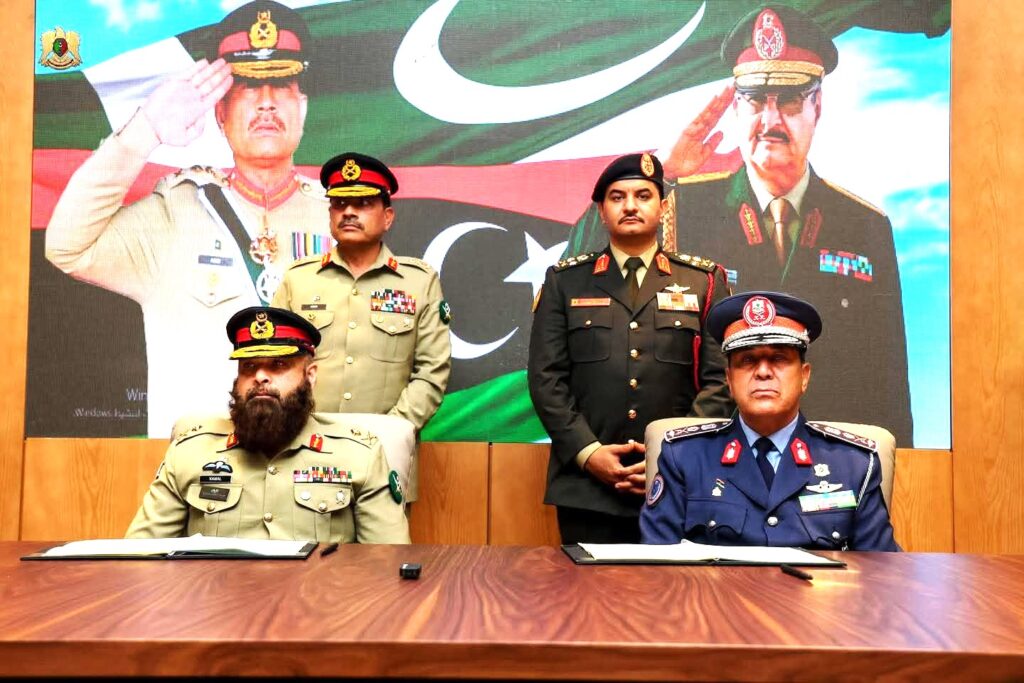
BENGHAZI: Pakistan finalized a major arms agreement with the Libyan National Army (LNA), valued at more than $4 billion and potentially up to $4.6 billion, during a high‑level discussions between Pakistan’s army chief, Field Marshal Asim Munir, and LNA deputy commander‑in‑chief Saddam Khalifa Haftar
The negotiations, which Pakistani sources said were sensitive and tightly held, brought to an informal dialogue between the two militaries. A preliminary copy of the agreement, reviewed by international news agency, showed that it envisaged the delivery of military hardware across land, sea and air domains over an estimated two‑and‑a‑half‑year period.
Central to the pact was the planned sale of 16 JF‑17 multirole fighter jets, as well as 12 Super Mushak trainer aircraft used for basic pilot training. Other categories of equipment were expected to be negotiated and specified as deliveries proceeded.
Libya has been under a UN‑imposed arms embargo since 2011, shortly after the uprising that toppled Colonel Muammar Gaddafi and left the country divided between rival administrations. The embargo obliges all member states to seek approval from the United Nations for arms transfers to the region, but experts have repeatedly warned that enforcement has been inconsistent.
Pakistani officials involved in the deal insisted that it did not breach international restrictions, underlining that there were no direct UN sanctions specifically on Haftar’s faction and that relevant exemptions or interpretations had been considered. The LNA, which controls much of eastern and southern Libya including key oil‑producing areas, publicly acknowledged the defence cooperation pact with Pakistan.
In a broadcast statement carried on its official media outlet, Haftar hailed the agreement as the “launch of a new phase of strategic military cooperation,” encompassing not only weapons sales but also joint training and potential co‑development of military manufacturing projects. He portrayed it as part of a broader effort to bolster the LNA’s operational capacity amid Libya’s fractured political landscape.
In Islamabad, civil ministries including the foreign and defence portfolios declined to comment on the specifics of the agreement when approached by reporters, leaving the army as the primary source of information. Officials involved in defence matters spoke on condition of anonymity given the sensitivity of the subject.
Analysts noted that the deal signalled Pakistan’s ambition to expand its defence export footprint and deepen strategic ties beyond traditional markets, even as it navigated concerns about international regulatory frameworks. The agreement also underscored Pakistan’s efforts to position its defence technology as a competitive alternative in global markets, particularly in regions where Western suppliers are constrained by political conditions or sanctions.
Islamabad’s defence industry, which includes aircraft production, armoured vehicles, munitions and naval construction, has increasingly sought foreign partners willing to engage on terms framed outside major Western supply chains. Though touted domestically as a commercial and strategic success, the deal drew scrutiny from international observers mindful of Libya’s ongoing instability and the complex geopolitics of arms flows in conflict‑affected states.
The United Nations has previously described the Libya arms embargo as “ineffective,” noting that multiple external actors have supplied military assistance to factions on both sides of the country’s political divide.
