




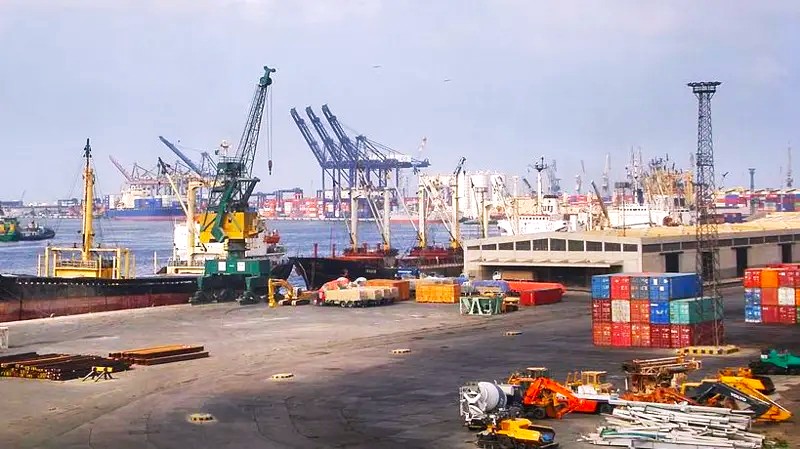
The special vessel MV HM Leader successfully docked at Gwadar Port, with crews efficiently handling 35 transshipment cargo units amid smooth, incident-free operations, underscoring Pakistan’s growing maritime capacity
By S.M. Inam/Anwar Nawab
KARACHI/GWADAR: Gwadar and Karachi ports emerged as vital safe havens for global shipping amid escalating Middle East tensions, as a new vessel berthed successfully at Gwadar and container ships queued up at Karachi, daily Metro Morning reported on Sunday.
The special vessel MV HM Leader completed berthing operations at Gwadar Port, where crews handled 35 units of transshipment cargo without incident. Federal Minister for Maritime Affairs Muhammad Junaid Anwar hailed the event as a milestone, declaring that the port was solidifying its status as a secure maritime hub even as regional instability gripped traditional routes.
The minister pointed out that global shipping lines had begun turning to Gwadar as a reliable alternative, with its Free Zone boasting capacity for 16,000 TEUs of containerized cargo. The minister envisioned the facility playing a pivotal role in the blue economy and broader regional trade, especially now that disrupted corridors had thrust it into the spotlight.
Meanwhile, at Karachi ports, long lines of container ships formed as operators rerouted vessels away from the perilous Strait of Hormuz, battered by the ongoing conflict. Government facilitation measures—slashed port charges, accelerated clearance of backlog cargo, and targeted policies for transshipment—fueled this influx.
Official figures revealed a dramatic surge: transshipment volumes hit 8,860 containers in just the last 24 days, dwarfing the entire 2025 annual total of 8,300. Industry voices described the shift as unprecedented, positioning Pakistan as an emerging hub beyond vulnerable chokepoints and opening doors for trade in petroleum products and LPG with GCC nations and further afield.
Shipping firms cited soaring security and insurance risks in the Gulf as the main driver, with vessels now favoring Karachi to safeguard supply chains. The Pakistan Textile Exporters Association urged creation of a Centralized Monitoring & Response Unit under the Pakistan Single Window (WeBOC) to act as a real-time control tower, spotting bottlenecks across ports, terminals, and lines while coordinating fixes for seamless flow.
Authorities responded by forming specialized sub-committees to push structural reforms in maritime and logistics sectors. Sources noted that both Gwadar and Karachi, safely positioned outside narrow straits, were undergoing a real-world test of their potential during this crisis, promising lasting gains for Pakistan’s economy.
