




Army Chief Asim Munir is reportedly preparing a high-stakes US visit to negotiate a resolution through dialogue, though Pakistan’s position is non-negotiable
MM Report
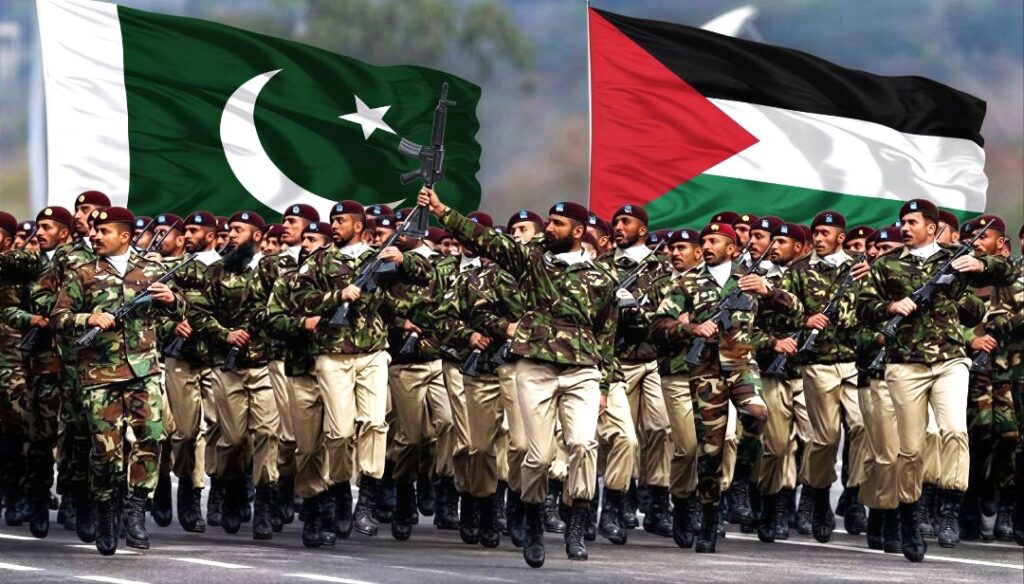
ISLAMABAD: Pakistan’s civilian and military leadership jointly resolved not to send troops to Palestine, reaffirming a position that officials described as firm and unyielding amid mounting international pressure.
Highly placed sources told Metro Morning that Islamabad had faced what they characterized as an Israeli-backed attempt to implicate the country in the ongoing conflict, but that the government had rejected any suggestion of involvement.
According to these sources, Pakistan had communicated its stance clearly to Washington and allied capitals, emphasizing that it would remain disengaged until a genuine and sustainable peace process was established.
The Chief of Army Staff, Field Marshal Asim Munir, is reported to be planning a visit to the United States to discuss the matter further and seek resolution through mutual consent, though officials stressed that Pakistan’s position was non-negotiable.
Sources indicated that Islamabad had explicitly informed friendly countries that the Pakistan Armed Forces could not, under any circumstances, participate in operations against Palestinians, even if such missions were framed as efforts to disarm Hamas.
Any initiative involving the confiscation of weapons or attempts at forced demilitarization, officials noted, would fall outside Pakistan’s remit and contrary to its longstanding foreign policy principles. Officials underscored that the civil and military leadership was united in its stance, reflecting a broader historical commitment to the Palestinian cause.
They suggested that while some international actors might perceive involvement as strategically beneficial for Pakistan, the authorities had opted for principle over expedience. “Our position is clear,” one senior source said. “We will not be drawn into any operation that could be interpreted through an Israeli or American lens.”
Analysts observed that the decision also disrupted narratives propagated by the so-called Israel-India nexus, which officials claimed had sought to frame Pakistan as antagonistic to regional stability. By decisively rejecting participation, Pakistan reinforced its longstanding solidarity with Palestinians and underscored its opposition to what it termed oppressive measures by Israel.
The move, sources suggested, sent a clear signal that Islamabad would not compromise its diplomatic and moral stance, even amid intense external pressure. In reaffirming its principled support for Palestine, Pakistan positioned itself not merely as a passive observer but as a country committed to an international order based on negotiation, sovereignty, and respect for longstanding regional sensitivities.
