




Asim Iftikhar warned that over 80 Pakistanis had been killed in recent cross-border attacks, urging urgent action against militants operating from Afghan soil
By Amjad Qaimkhani
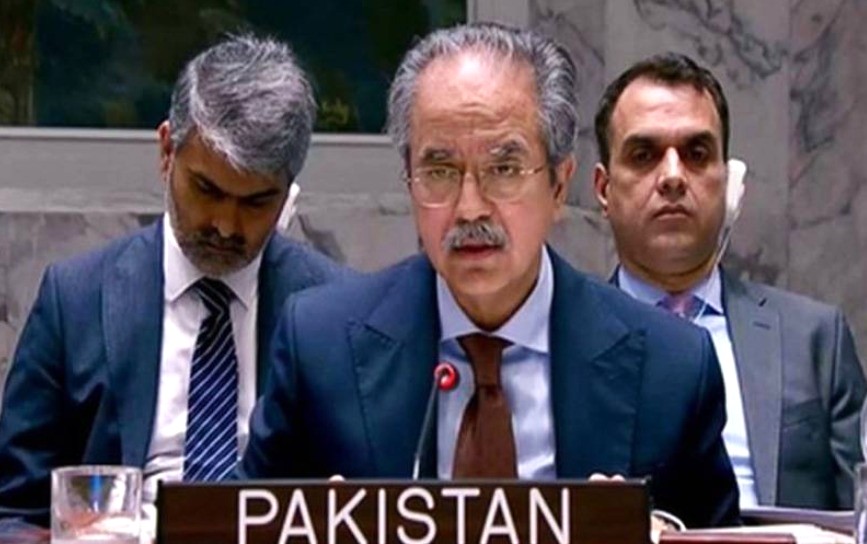
NEW YORK: Pakistan’s envoy to the United Nations, Asim Iftikhar Ahmad, delivered a forceful warning to the Security Council on Wednesday, condemning the use of Afghan territory by militant groups to launch attacks against Pakistan.
In a speech marked by urgency and detailed evidence, Ahmad said cross-border terrorism was not only unacceptable but also a direct challenge to Pakistan’s sovereignty, stressing that the country would not compromise on the safety of its citizens. He cited a series of recent violent incidents in which over 80 Pakistanis lost their lives, asserting that planning and coordination for these attacks had originated from Afghan soil.
“These elements continue to target Pakistan and pose a serious threat to regional peace and stability,” Ahmad told the council, presenting what he described as “irrefutable evidence” of cross-border militant activity. The envoy did not spare criticism of Afghanistan’s interim government, urging its authorities to take immediate and effective steps to ensure that its territory is not used as a safe haven for groups plotting violence against Pakistan or other nations.
Ahmad also appealed to the international community to treat the issue with urgency, calling for coordinated action to dismantle the networks responsible for perpetuating terrorism in the region. He highlighted that unilateral measures would be insufficient, framing the challenge as one that demanded practical, sustained cooperation between neighboring states and global actors.
Beyond the pressing security concerns, the Pakistani envoy drew attention to the broader humanitarian and social crises unfolding in Afghanistan. He expressed alarm over the economic hardships facing ordinary Afghans and the ongoing restrictions on women’s rights, arguing that access to basic services and fundamental freedoms was essential not only for human dignity but also for long-term regional stability.
Ahmad linked these challenges directly to the threat of radicalization, suggesting that neglecting the humanitarian dimension risked perpetuating the cycle of violence. Concluding his address, Ahmad emphasized that cross-border terrorism undermines not only bilateral relations but also wider regional and global stability.
#PakistanUN #AsimIftikharAhmad #CrossBorderTerrorism #Afghanistan #UNSecurityCouncil #RegionalSecurity #CounterTerrorism #PakistanSovereignty #AfghanMilitants #PeaceAndStability #HumanitarianCrisis #WomenRights #GlobalCooperation #TerrorismThreat #SouthAsiaSecurity
