




By Amjad Qaimkhani
NEW YORK: Pakistan issued one of its starkest warnings in months over the deteriorating security landscape along its western frontier, telling the UN Security Council that militant networks entrenched in Afghanistan had emerged as the gravest threat to its national security.
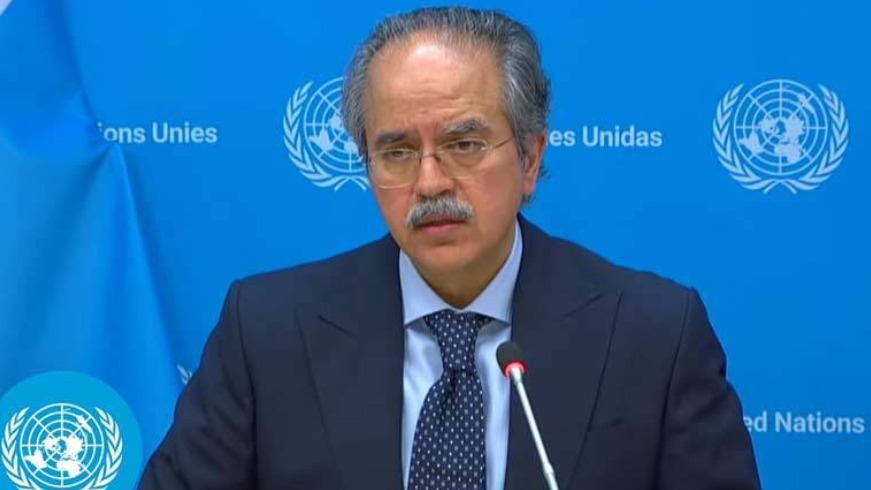
Addressing a Council session on Afghanistan, Pakistan’s Permanent Representative, Asim Iftikhar Ahmad, said a constellation of armed groups—including ISIL-K, Al-Qaeda, the Tehreek-e-Taliban Pakistan (TTP), the East Turkestan Islamic Movement (ETIM), the Balochistan Liberation Army (BLA) and the Majeed Brigade—had continued to exploit ungoverned spaces inside Afghanistan to stage attacks across the border.
Ahmad told diplomats that these organizations had maintained dozens of training bases and operational hubs, enabling the steady flow of fighters, weapons and funding into Pakistan. He said the resulting cross-border raids and suicide bombings had inflicted a heavy toll on civilians and security forces alike, deepening public anxiety and fueling political pressure on Islamabad to act decisively.
The envoy argued that the persistence of these networks underscored what he described as the Afghan Taliban’s failure to honor international commitments to prevent their territory from being used as a launchpad for terrorism. His intervention came amid a broader UN debate over Afghanistan’s precarious political and humanitarian trajectory, more than four years after the Taliban retook power.
Ahmad said Pakistan shared the deep unease voiced by Council members over the country’s worsening human rights climate, singling out the “systematic erosion” of the rights and freedoms of women and girls. He warned that the exclusion of half the population from public life had placed Afghanistan on what he called an unsustainable and internationally isolated path.
