



By our correspondent
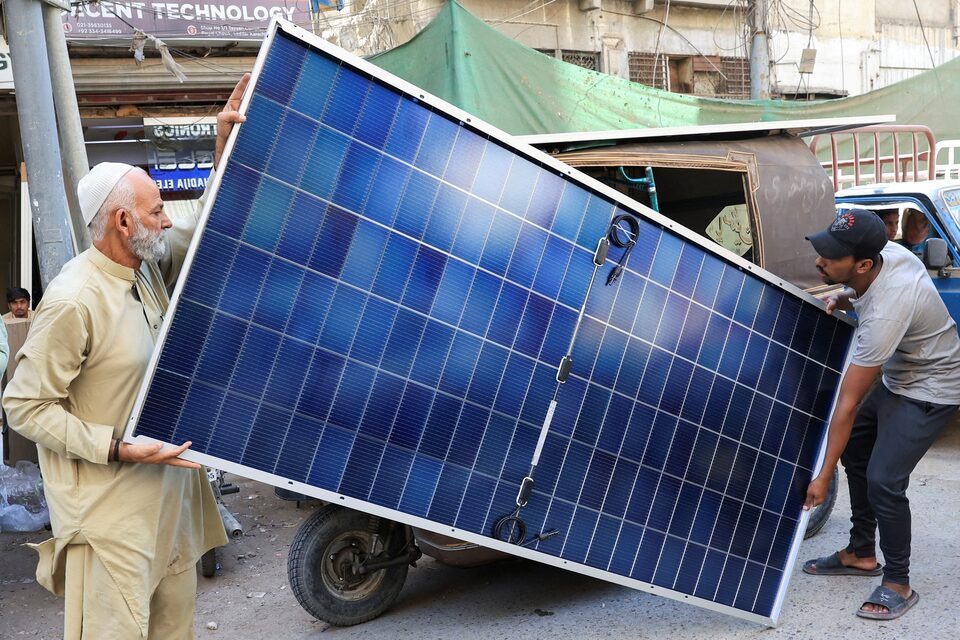
ISLAMABAD: Pakistan’s rapid adoption of solar energy offers a potential foundation for green industrialization and sustainable economic growth, but experts warn that the sector remains heavily import-dependent, particularly on China, limiting industrial and economic benefits.
The warning came during the launch of a policy report, “From Solar Boom to Green Industrialization: Policy Pathways to Localizing Solar Value Chains in Pakistan”, jointly presented by the Sustainable Development Policy Institute (SDPI) and the University of Bath.
Prof. Dr Yixian Sun of the University of Bath noted that Pakistan has spent over $10 billion on imported solar equipment without capturing local industrial spillovers. He highlighted that decentralized solar growth is also straining the national grid and increasing costs for consumers unable to afford solar systems. “With its large market and low labor costs, Pakistan can become competitive in clean energy manufacturing if policy and political frameworks are aligned,” he said, citing China’s $200 billion overseas investment in solar manufacturing over the past three years.
Dr Khalid Waleed, SDPI research fellow, said Pakistan has imported $2–3 billion in solar panels—representing 22–30 gigawatts of capacity—while also taking $9 billion in Chinese financing for coal projects. He urged planning for solar panel recycling and smart value addition rather than reinventing the wheel.
Dr Hina Aslam described the report as “timely,” highlighting the economic dimensions of Pakistan’s solar boom and stressing that clean energy value chains can be leveraged to train youth, build domestic industries, and reduce dependence on imported technology.
Faisal Sharif, doctoral candidate at the University of Bath, presented a “5S Roadmap” for solar PV manufacturing indigenization, advocating a national strategy, solar industrialization taskforce, long-term policy, domestic demand creation, and export-oriented niche targeting. He also recommended tariff rationalization, local content requirements, standards enforcement, and establishing solar clusters in CPEC-II Special Economic Zones.
Other speakers, including SDPI’s Engineer Ubaid Ur Rehman Zia and Afaq Ali Khan of the Pakistan Solar Association, cautioned that unplanned solar imports are impacting grid stability, capacity payments, and workforce readiness. Dr Hassan Daud Butt, Senior Advisor to China Energy Engineering Group, stressed the need for Green SEZs under a reform-oriented CPEC framework.
The report concluded that Pakistan’s solar expansion, while easing energy costs for many, must be paired with industrial reforms, workforce training, and policy alignment to convert a technology import boom into a sustainable domestic industry. Experts emphasized that focused reforms could make Pakistan a competitive player in solar manufacturing, create local jobs, and strengthen the economy while ensuring energy security.
