



Pentagon briefed Democratic and Republican congressional staff for over 90 minutes on the unfolding US operation in Iran, exposing tense debates and rising concerns over its execution and intelligence
By Amjad Qaimkhani
WASHINGTON: Trump administration officials told congressional staff in closed-door briefings on Monday that there was no intelligence suggesting Iran planned to attack US forces first, according to people familiar with the discussions.
Officials had told Metro Morning that the day before that President Donald Trump ordered the strikes partly because of indicators that Iran might act preemptively against US forces in the region. “President Trump was not going to sit back and allow American forces in the region to absorb attacks,” one official said.
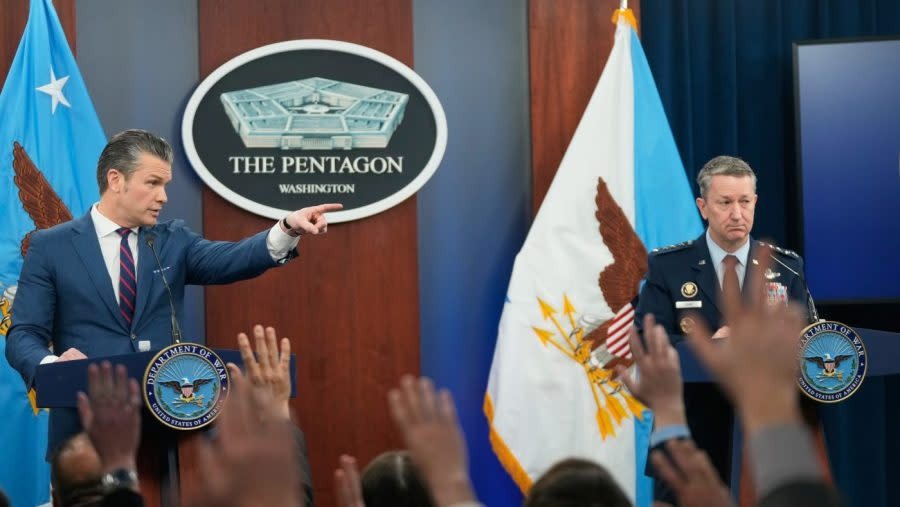
Pentagon briefings lasted more than 90 minutes. Officials briefed Democratic and Republican staff from several national security committees in both the House and Senate on the unfolding US operation in Iran. White House spokesperson Dylan Johnson confirmed the sessions. In the briefings, administration officials stressed that Iran’s ballistic missiles and proxy forces posed an imminent threat to US interests.
However, the two sources, speaking on condition of anonymity, said there was no intelligence showing Tehran planned to strike US forces first. Trump said the attacks, expected to continue for weeks, aimed to prevent Iran from developing a nuclear weapon, contain its missile program, and eliminate threats to the United States and its allies. He also urged Iranians to rise up and overthrow their government. Democrats criticized what they described as a “war of choice,” questioning Trump’s justification for abandoning ongoing peace talks that Oman said still held promise.
The United States and Israel launched their most ambitious strikes on Iran in decades on Saturday, reportedly killing Supreme Leader Ayatollah Ali Khamenei, sinking Iranian warships and hitting more than 1,000 targets so far. However, the remarks to Congress appeared to undercut one of the key arguments for the attacks.
Trump had claimed, without presenting evidence, that Iran was close to acquiring the ability to strike the US with a ballistic missile. Sources familiar with US intelligence assessments described the claim as exaggerated. The first US casualties of the conflict were reported on Sunday, raising further questions about the war’s rationale.
