




Prime Minister Sharif calls for steadfast diplomacy, urging Pakistan and regional powers to embrace dialogue and cooperation as the path to lasting peace
MM Report
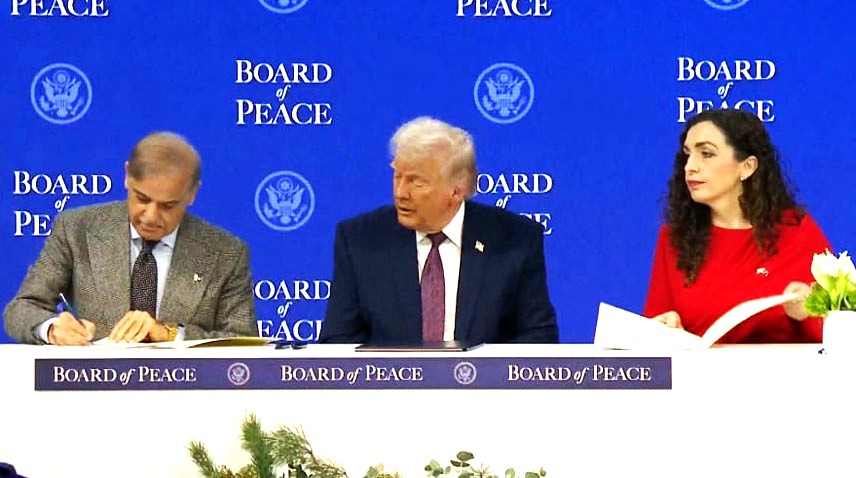
DAVOS, SWITZERLAND: Prime Minister Shehbaz Sharif, alongside a host of world leaders, formally endorsed the Gaza Board of Peace charter at a ceremony in Davos on Thursday. The event marked a significant diplomatic moment aimed at addressing some of the world’s most persistent conflicts.
The initiative, led by former US President Donald Trump, was described by organizers as a concerted effort to foster dialogue and cooperation among nations committed to global stability and the peaceful resolution of disputes.
The ceremony drew representatives from a wide range of countries, including Bahrain, Morocco, Argentina, Armenia, Azerbaijan, Bulgaria, Hungary, Indonesia, Jordan, Kazakhstan, Kosovo, Paraguay, Qatar, Saudi Arabia, the United Arab Emirates, Uzbekistan, and Mongolia. Together, they pledged support for the charter, signaling a renewed focus on multilateral collaboration in international affairs.
Prime Minister Sharif, a long-time advocate of diplomatic engagement in regional conflicts, addressed the assembly, emphasizing Pakistan’s commitment to constructive dialogue and global peace. “This charter represents an opportunity for nations to come together not merely as participants, but as partners in shaping a more stable world,” he said.
The event also featured a notable military presence. Field Marshal Syed Asim Munir, Pakistan’s Chief of Army Staff, attended the ceremony, drawing attention from other global leaders. Observers noted that President Trump greeted Munir with a warm smile, widely interpreted as a nod to Pakistan’s role in regional security and its importance in international peacekeeping efforts.
The launch of the Board of Peace was marked by cautious optimism. Diplomats described the initiative as a step toward structured, cooperative approaches to conflict resolution, particularly in regions long plagued by political instability and humanitarian crises. Analysts noted that while the charter’s practical impact would depend on sustained engagement, the gathering itself underscored the willingness of countries across continents and political alignments to work together.
As the ceremony concluded, delegates engaged in informal discussions, exploring how the charter could influence ongoing peace efforts. For Pakistan, the event offered a platform to reinforce its international standing and to highlight close coordination between its civilian and military leadership in global diplomacy.
