




Siddiqui voiced apprehension over the federal government’s approach to appointing a new governor in Sindh
By Asghar Ali Mubarak
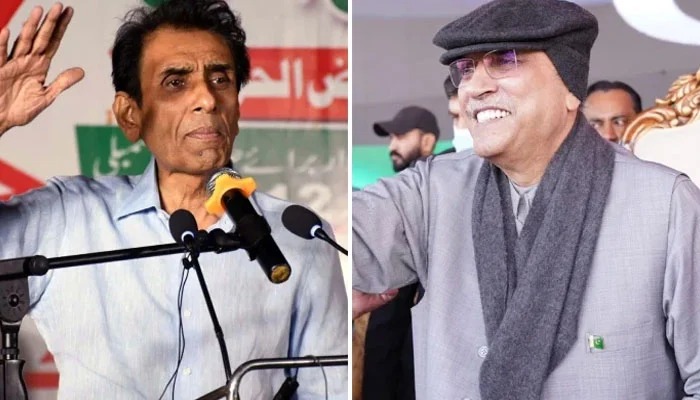
ISLAMABAD: President Asif Ali Zardari met with Khalid Maqbool Siddiqui, the chairman of the Muttahida Qaumi Movement Pakistan (MQM-P), to discuss the evolving relationship between the Pakistan People’s Party (PPP) and MQM-P, officials said.
The meeting, held in Islamabad, was also attended by Federal Interior Minister Mohsin Naqvi, Sindh Chief Minister Murad Ali Shah, Provincial Interior Minister Zia-ul-Hassan Lanjari, and several senior officials.
The discussions followed MQM-P’s annual welfare program, during which Siddiqui voiced concerns over the federal government’s handling of the governor’s replacement in Sindh. He argued that the government should have consulted MQM-P on the matter, warning that the decision had weakened trust between the party and federal authorities, even though outgoing Governor Kamran Tessori had left office with confidence.
Siddiqui also raised questions about the creation of two political factions within a single province. He noted that the governorship had traditionally come from urban Sindh, an area where MQM-P has historically held considerable influence. He criticized federal infrastructure policies, highlighting that motorway projects prioritized Karachi while leaving cities like Hyderabad neglected. He suggested that this imbalance forced heavy traffic through city streets, creating safety hazards for residents.
The MQM-P chairman further pressed the president on issues of land administration, pointing to alleged land grabs in Karachi and implying that such practices had received implicit national approval. He also called for federal support in education, reminding officials of MQM-P’s pledge to implement an education emergency if given responsibility for the relevant ministry.
Siddiqui drew attention to the recent national census, emphasizing that MQM-P had helped ensure the recovery of a population count of seven million. Observers noted that these points reflected broader concerns about governance, urban development, and local representation in Sindh, particularly in cities where MQM-P maintains a strong voter base.
The meeting appeared to underscore continuing tensions between federal and provincial authorities, with MQM-P seeking to assert its influence on key administrative and political decisions. Analysts suggested that the discussions highlighted persistent questions of political equity and trust in the management of Sindh’s urban centers.
