




By Amjad Qaimkhani
NEW YORK: Pakistan’s Permanent Representative to the United Nations, Asim Iftikhar Ahmad, warned that prolonged restrictions, curfews, and ongoing instability had severely disrupted access to education, particularly for girls, in Indian-administered Jammu and Kashmir.
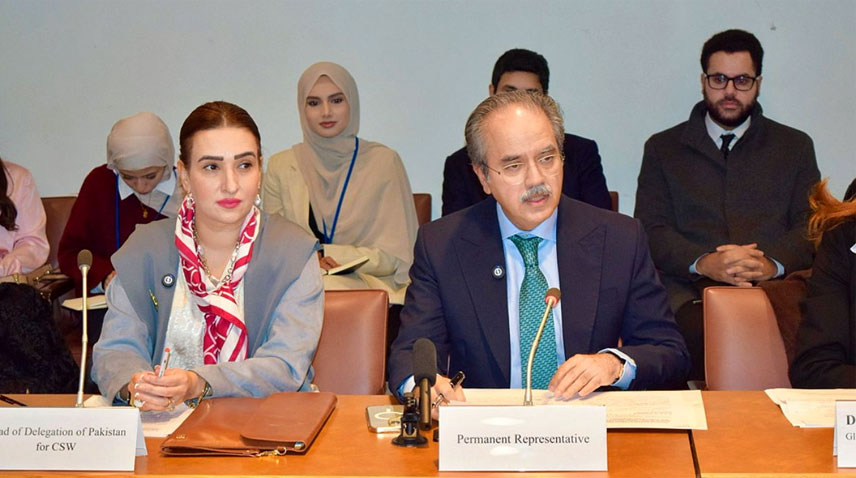
Asim Iftikhar made the remarks during an event hosted by Pakistan’s Permanent Mission to the UN on the sidelines of the 70th session of the United Nations Commission on the Status of Women. He highlighted the daily challenges faced by students and teachers in the region.
Ambassador Ahmad noted that a heavy presence of Indian security forces, repeated communication shutdowns, strict limits on movement, and a pervasive climate of uncertainty had repeatedly interrupted the functioning of schools and universities. According to him, these conditions not only curtailed learning but also widened existing educational inequalities, with girls being the most affected.
Speaking at the same event, Senator Bushra Anjum Butt stressed that women’s empowerment through education was both a constitutional obligation and a national priority for Pakistan. She said that over the past decade, federal and provincial authorities had worked to improve educational access by building schools in underserved areas, expanding scholarship programs, and upgrading school infrastructure to create more inclusive learning environments.
The speakers collectively underscored the principle that education should never become a casualty of conflict or political disputes. They called for sustained international attention and support to ensure that children and young people could pursue their studies without fear or disruption.
