



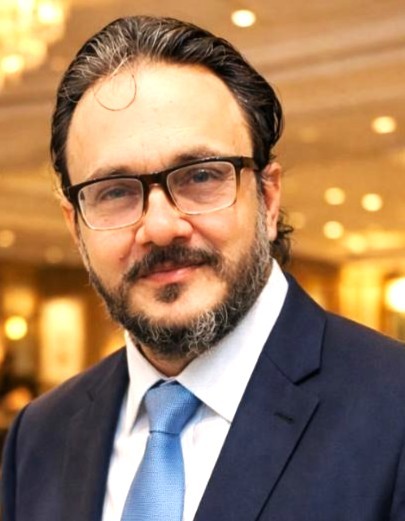
By Syed Shamim Akhtar
In an era defined by evolving security threats and complex internal dynamics, the role of law enforcement and the armed forces in safeguarding the state and its citizens cannot be overstated. Chief of Defence Staff Field Marshal Syed Asim Munir’s recent visit to the National Police Academy provided a rare and compelling insight into this reality, underscoring not only the operational imperatives of security but also the human and moral dimensions of service. Through his remarks, conveyed via the Inter-Services Public Relations, Munir offered a vivid reminder that the nation’s protection is a sacred responsibility, shared by every individual committed to the rule of law. At its core, the message was simple yet profound: a capable, professional, and people-oriented police force is indispensable to the stability and resilience of Pakistan.
Munir’s words did more than praise institutional competence; they recognized the sacrifices made daily by police personnel confronting terrorism, organized crime, and a spectrum of internal security challenges. These are not abstractions or mere numbers reported in official statements; each deployment, each patrol, and each operation carries with it human stories—of families waiting at home, of personal ambitions deferred, and of lives put at risk in the pursuit of public safety. The Chief of Defence Staff’s recognition of this human dimension adds depth to the broader narrative of national security, reminding citizens that the protection of the state is inseparable from the dignity and courage of those who serve it.
Munir emphasized that the strength of Pakistan’s security architecture relies on synergy between the military and the police. In practical terms, this means joint training exercises, intelligence-sharing mechanisms, and clearly defined command structures—all essential for ensuring operational effectiveness. In the contemporary security landscape, where threats are increasingly hybrid in nature and cross provincial and even national boundaries, isolated action is no longer sufficient. Terrorist networks, organized criminal syndicates, and insurgent elements exploit gaps between institutions. It is only through cohesive, collaborative action that these gaps can be closed, that public confidence can be strengthened, and that the sense of security for ordinary citizens can be preserved.
But the Chief of Defence Staff’s message extended beyond logistics and operational doctrine. It conveyed a moral imperative, a call for the nation to recognize the dignity inherent in service. He framed the military and police as two pillars of the state’s strength, each safeguarding not merely life and property but the very principle of law itself. In doing so, Munir highlighted a crucial point: the legitimacy of the state is not derived solely from power or authority, but from the trust and respect of its people. When citizens honor those who serve, when they acknowledge the personal and collective sacrifices made, they reinforce the social contract that underpins governance and justice.
The timing of this address is noteworthy. Pakistan has faced repeated security challenges in recent decades—from internal militancy to cross-border threats—and the societal burden has been immense. Civilians have endured attacks, economic disruptions, and a climate of uncertainty, while those tasked with protection have borne the brunt of risk. Munir’s affirmation of solidarity between the military and police comes not merely as ceremonial rhetoric but as an acknowledgment of the shared responsibility to shield the nation. This message is crucial in a time when public morale and institutional confidence are as important as tactical responses to security threats.
The Chief of Defence Staff also underscored the intrinsic connection between institutional cohesion and national stability. A society’s resilience is often measured not by the absence of danger but by the capacity of its institutions to respond with professionalism, integrity, and unity. In Munir’s vision, a strong, peaceful Pakistan is a society in which security forces are respected, adequately resourced, and aligned in purpose. Citizens, in turn, are called upon to uphold the rule of law, support those who serve, and engage in collective responsibility. It is a vision that integrates operational effectiveness with social trust, reflecting a holistic understanding of security as both a practical and ethical enterprise.
(The writer has diverse in knowledge and has a good omen in politics, can be reached at editorial@metro-morning.com)
