



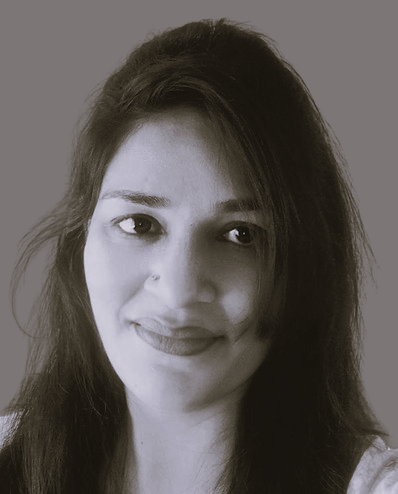
By Uzma Ehtasham
The standoff between Pakistan Tehreek-e-Insaf (PTI) and the federal government continues to unravel in a way that seems less about policy or governance and more about a relentless struggle for narrative dominance. Each side trades barbs with the precision of seasoned orators, as though shaping public opinion alone might tilt the balance of power. Yet behind the rhetoric lies a reality that is often overlooked: ordinary citizens, already burdened by economic hardship and insecurity, bear the brunt of this high-stakes political theatre. Recent developments in the Supreme Court, concerning the cases of PTI’s founder, Imran Khan, have only intensified the drama. Senior party figures, appearing before the media, combined defiance with grievance, painting a picture of a movement mobilizing under siege.
The chief minister of Khyber Pakhtunkhwa, Sohail Afridi, announced plans for what he described as a “street movement” and the formation of an “Imran Khan Release Force”, reportedly under instructions from Khan himself. According to Afridi, this force would draw members from all corners of the party, from student bodies to women’s organizations, with formal induction ceremonies and oaths planned in Peshawar shortly after Eid. His language, invoking preparation, chain of command, and readiness for confrontation, blurred the line between political mobilization and something approaching a paramilitary posture, leaving the observer to wonder how far political activism can stretch before it veers into the realm of coercion.
Alongside Afridi, Allama Raja Nasir Abbas raised concerns over Khan’s health, particularly the condition of his eye, alleging negligence by prison authorities and signaling that legal challenges against the jail administration were imminent. The government, however, was quick to reject these claims. Federal law minister Azam Nazeer Tarar described the reports as premature and unfounded, while the prime minister’s senior adviser on political affairs, Rana Sanaullah, emphasized in a televised interview that Khan had no desire to remain in prison and had received excellent medical care. Sanaullah went further, suggesting that repeated sit-ins and protest politics might be doing more harm than good, even hinting that some of the unrest could be serving hidden interests.
In this prolonged tug-of-war, it is unclear who, if anyone, is winning. The spectacle itself has become a theatre of distraction, consuming political bandwidth while the country’s pressing challenges — unemployment, inflation, law and order — remain unresolved. In Khyber Pakhtunkhwa, a province already grappling with insecurity and fragile public services, the notion of a force dedicated to the release of a single individual is difficult to reconcile with the mandate entrusted to its leadership. Voters expect governance, not mobilization campaigns. They seek solutions to real-world problems, not the escalation of partisan posturing. At the federal level, the temptation to govern by press conference and televised denunciation is equally unhelpful.
Words alone cannot substitute for political maturity or policy action. In a democracy already strained by rising prices, eroding public confidence, and a sense that institutions are fragile, brinkmanship offers only temporary spectacle and long-term risk. Every news cycle dominated by accusations, counter-accusations, and the promise of street action chips away at the credibility of the democratic process itself. It reinforces a perception that politics is an arena for performance rather than governance, where personal loyalty and charisma outweigh deliberation, compromise, and accountability. The PTI-government confrontation also underscores a wider structural problem in Pakistani politics: the personalization of power. When political movements revolve around an individual, institutions take a back seat.
Governance is subordinated to the imperatives of personality and performance, leaving ordinary citizens to navigate the consequences. Economic stress, limited access to quality healthcare, and everyday insecurity become collateral damage in a struggle that, for those at the helm, is as much about reputation and leverage as it is about public service. Equally significant is the risk of normalizing confrontation as a tool of political legitimacy. When party leaders announce mobilization forces or orchestrate sit-ins as routine responses to legal proceedings, the message sent to the public and to civil institutions is troubling. It suggests that coercion, spectacle, and public pressure can achieve what law and dialogue cannot.
Over time, this erodes faith in the rule of law and undermines the very foundations of democracy. For a country striving to consolidate democratic norms after decades of alternating civilian and military rule, the stakes could not be higher. If there is a lesson in the current impasse, it is one of restraint and perspective. Political actors must remember that the currency of democracy is not aggression or theatrical defiance but dialogue, negotiation, and a commitment to the public good. Leaders, whether in provincial capitals or in Islamabad, carry responsibilities that extend far beyond the fortunes of a single party or individual. Citizens do not live on political rhetoric alone; they live with the consequences of stalled governance, economic strain, and social instability.
(The writer is a public health professional, journalist, and possesses expertise in health communication, having keen interest in national and international affairs, can be reached at uzma@metro-morning.com)
