



By Imtiaz Hussain
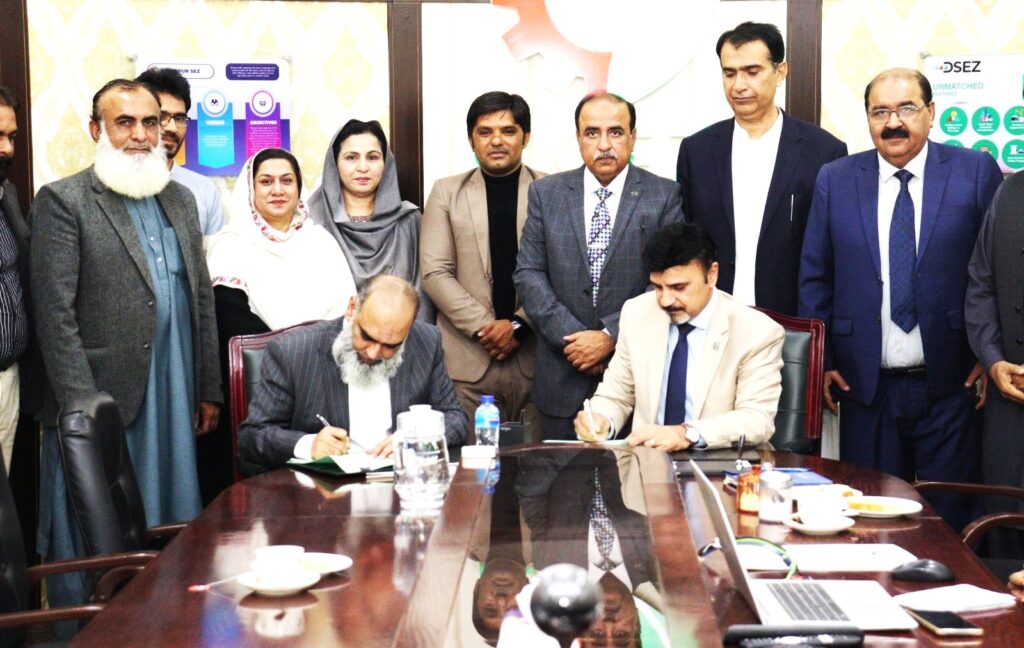
SUKKUR: Shah Abdul Latif University (SALU) in Khairpur and the Sindh Economic Zones Management Company (SEZMC) have signed a Memorandum of Understanding at the Khairpur Special Economic Zone, establishing a partnership aimed at bridging the gap between academia and industry.
The agreement is intended to drive innovation, skill development and regional economic growth by linking academic research directly to practical industrial challenges. The MoU, signed by SALU Vice Chancellor Meritorious Professor Dr Yousuf Khushk and SEZMC Chief Technical Officer Fareed Ahmed Shaikh, provides a framework for collaboration including curriculum development, joint research, internship programs and the commercialization of research.
The ceremony was attended by SALU Pro-Vice Chancellor Prof Dr Wahid Bux Jatoi, Dean of Physical Sciences Prof Dr Noor Ahmed Shaikh, and SEZMC representatives including Muhammad Ali Mahesar. Both parties confirmed their legal authority to enter into the agreement and pledged compliance with all relevant regulations.
Dr Yousuf Khushk emphasized the university’s commitment to meaningful engagement with industry, noting the inclusion of industry practitioners on Boards of Studies to ensure courses address real-world challenges. He highlighted plans to host expert lectures and project exhibitions to showcase student potential, describing the collaboration as a practical step beyond formal agreements.
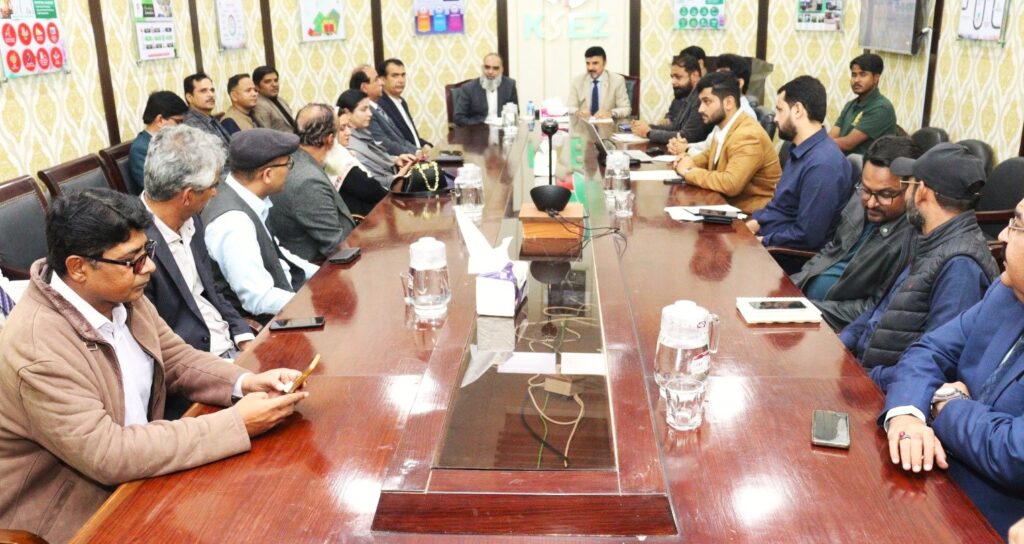
Fareed Ahmed Shaikh stressed the need to create opportunities for talented graduates and faculty, particularly in emerging fields such as artificial intelligence, to prevent brain drain. He said the partnership would connect students with investors and provide a platform for skill development and entrepreneurship. Faculty from across SALU outlined potential areas for collaboration.
Prof Dr Noor Ahmed Shaikh said industry engagement would refine graduate skills, while Prof Dr Minhoon Khan Laghari highlighted broader career opportunities. Professors Dr Akhtiar Ali Ghumro and Dr Irum Rani suggested aligning MPhil and PhD research with industry needs, citing projects such as improving date quality affected by environmental factors.
Prof Dr Barkat Bhayo advocated integrating “Industrial Mathematics” into undergraduate programs, while Dr Raffaqat Arain noted university expos as platforms for industry evaluation of AI projects. The signing ceremony was attended by a wide range of SALU faculty, including Prof Dr Mushtaque Ali Jakhrani, Prof Dr Masiuallah Jatoi, Prof Dr Samina Rajpar, Dr Munir Ahmed Qazi, Dr Raffaqat Arain, Prof Dr Abdul Sami Shaikh, Dr Sahib Oad, Waseem Kalhoro, Aijaz Mahar and Raza Bhutto. Dr Muhammad Hanif Tunio was recognised for his role as Principal Coordinator and Facilitator of the MoU.
SEZMC officials present included Muhammad Ali Mahesar, Zone Operation Manager, and Agha Maseehullah Khan, Focal Person for Industry-Academia Linkages. The MoU outlines five core objectives: promoting academic-industry collaboration through joint research and knowledge exchange; enhancing capacity building via specialized training and workshops; fostering innovation and entrepreneurship by supporting startups; developing curricula aligned with industry needs; and enabling academic advisory support for SEZMC initiatives.
Planned cooperation includes research and development addressing industrial challenges, internships and consultancy for students, training programs for students, faculty and SEZMC staff, startup incubation and mentorship, and joint contributions to economic zone development.
Following the signing, the Vice Chancellor and his team visited units within the economic zone, including Biomasdar Pakistan Ltd., which extracts oils, natural flavors and colors from crops such as garlic, onion, Zera and chilli; Al-Rahim Agro Processing Pvt Ltd., focused on fruit and pulp processing; and Ovais Shamim Enterprises Pvt Ltd., offering warehouse and cold storage facilities.
The agreement establishes a framework for sustained collaboration, aligning SALU’s research and academic strengths with the practical needs of Sindh’s economic zones, and aims to create a pipeline of skilled talent and innovative solutions to support the province’s development.
