



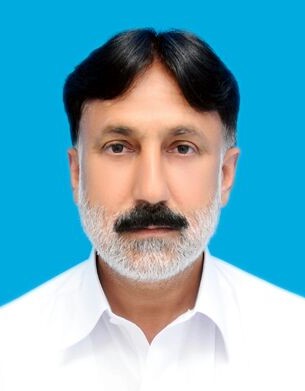
By Sudhir Ahmad Afridi
Poverty, unemployment and economic instability are not new afflictions in the tribal districts of Khyber Pakhtunkhwa. They are structural problems, layered over decades, shaped by conflict, displacement, administrative neglect and the absence of sustained development planning. District Khyber illustrates this reality with painful clarity. What was once a region sustained by cross-border commerce, small-scale agriculture and traditional livelihoods now stands economically paralyzed, its people trapped between shrinking opportunities and expanding desperation. The latest blow has come from the prolonged closure of the Torkham border, the district’s economic lifeline.
For more than two and a half months, trade and movement across the border have remained suspended, bringing transport, warehousing, hotels, loading and unloading work and daily wage labor to an abrupt halt. In a district where thousands of households depend directly or indirectly on border activity, the shutdown has translated into sudden joblessness and creeping hunger. For many families, there is no savings buffer, no alternative source of income and no clear signal from the state about how long this economic suffocation will last. This shock has landed on an already fragile economic base. Cultivable land in District Khyber is limited, fragmented and often barren. Traditional agriculture, once a modest but dependable source of sustenance, is steadily disappearing.
Water scarcity, lack of quality seeds, rising input costs and the absence of extension services have made farming increasingly unviable. Even those who possess small plots struggle to extract a living from them. When trade is frozen and agriculture is failing, the question becomes unavoidable: what livelihood options remain for ordinary people? Nowhere is this dilemma more acute than in Tirah Valley. For generations, communities there have relied on a narrow range of crops adapted to the local climate and terrain, including cannabis, which has historically functioned as a primary source of income in the absence of state-supported alternatives. Today, these traditional livelihoods are being framed through political and security narratives and pushed towards outright criminalization.
Yet the state has offered little clarity on what will replace them. The contradiction is stark. Borders are closed, industry is absent, agriculture is collapsing and long-standing crops are being outlawed. In such circumstances, what are people expected to do to survive? History, both local and global, offers a sobering answer. When communities are stripped of dignified means of earning a living, poverty deepens into despair, frustration hardens into alienation and social breakdown follows. Unemployment is not merely an economic indicator; it is a political and security risk. In regions already scarred by conflict, the absence of lawful livelihood options creates fertile ground for crime, extremism and instability. Ignoring this reality does not neutralize the threat; it merely postpones and amplifies it.
Against this bleak backdrop, one sector stands out as an immediate, practical and locally appropriate pathway towards economic recovery: livestock. Too often misunderstood as a marginal activity, livestock is in fact a complete economic ecosystem. It encompasses veterinary services, mobile health units, artificial insemination centers, diagnostic laboratories, poultry and dairy farming, fisheries, feed and fodder development, training programs and market linkages. For underdeveloped regions with limited land and capital, it offers scalable, household-level opportunities that can quickly translate into income and food security.
In District Khyber, however, the livestock sector remains largely dormant. Many veterinary facilities are non-functional, others exist only on paper, and a significant portion of the population is unaware of the services that should be available to them. This institutional paralysis is particularly tragic given the proven impact of even modest interventions. A milk-yielding cow, a small herd of goats or sheep, or a household poultry unit can lift a family from dependency to self-reliance. Poultry managed by women, small ruminants raised by unemployed youth and village-level dairy clusters are not experimental ideas; they are tested models that have worked across South Asia and beyond. The potential extends further.
Under the Fisheries Department, employment can be generated through the development of fish ponds, water reservoirs and small lakes, particularly in areas such as Tirah, Bara and Landi Kotal. These initiatives require limited land, create quick returns and diversify income sources in a region dangerously dependent on a single economic artery. When integrated with livestock and agriculture, they form a resilient local economy rather than a fragile one. Livestock development is inseparable from agriculture and forestry. Promoting fodder crops, fruit-bearing trees and agroforestry on degraded and barren land can ensure feed availability, improve food security and restore the environment. Such interventions address multiple crises simultaneously: unemployment, malnutrition, ecological degradation and rural poverty.
(The writer is a senior journalist at tribal region, covers various beats, can be reached at editorial@metro-morning.com)
