



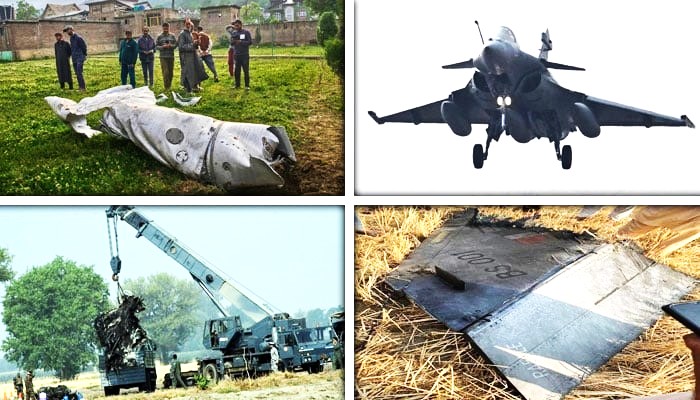
The downed aircraft, identified as BS-001, BS-021, BS-022, and BS-027, remain shrouded in uncertainty as India has yet to release images of the destroyed jets
MM Report
ISLAMABAD: British defence publication Key Aero has disclosed new details regarding the brief but intense aerial clash between Pakistan and India in May, revealing the serial numbers of four Indian Rafale fighter jets that were destroyed during the engagement.
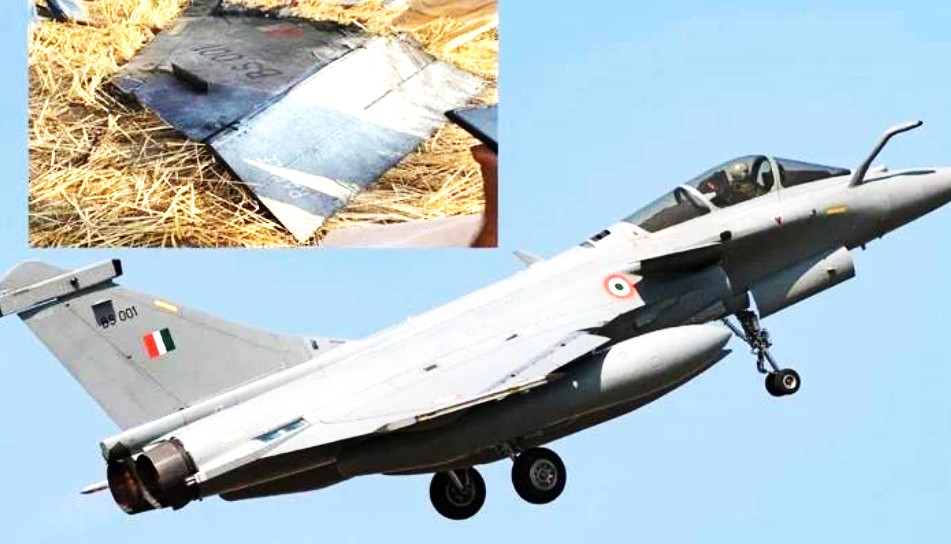
According to the report, the downed aircraft bore the identifiers BS-001, BS-021, BS-022, and BS-027. India has not publicly released images of the destroyed jets, leaving the precise circumstances surrounding the losses shrouded in uncertainty. The magazine highlighted the broader operational impact of Pakistan’s multi-domain strategy, which it described as significantly disrupting the Indian Air Force.
In addition to the Rafale losses, Indian MiG-29s, Su-30s, and Heron drones reportedly suffered damage or destruction. Pakistani forces, it added, struck at critical infrastructure, with a JF-17C Block 3 said to have destroyed an Indian S-400 air defence system in Udhampur on 10 May, while command and control centers in Barnala came under coordinated attack.
A particularly striking aspect of the report was the documented integration of cyber and conventional warfare. Key Aero asserted that approximately 96 percent of India’s social networks and digital systems were rendered inoperative during the operations, marking the first publicly noted instance in which a national air force appears to have fused cyber tactics with aerial combat so systematically.
Analysts suggested that this represented a significant evolution in Pakistan’s defensive posture, demonstrating the country’s ability to synchronize digital disruption with kinetic action. Indian Chief of Defence Staff General Anil Chauhan has publicly acknowledged the destruction of aircraft in media interviews, although specific operational details remain classified.
Prior to the May encounter, Pakistan’s Air Force had already demonstrated its retaliatory capabilities by downing an Indian MiG-21 during Operation Swift Retort, signaling a pattern of preparedness and tactical resilience along the border. The revelations underscore the scale and sophistication of Pakistan’s recent military capabilities, which appear to combine cyber and aerial strategies in a highly coordinated and integrated manner.
Observers note that the integration of these domains marks a departure from conventional engagement patterns, reflecting a more complex and multi-layered approach to national defence and aerial deterrence. Analysts argue that the disclosures, even if partial, illuminate the evolving nature of military competition between Pakistan and India, suggesting that future confrontations may be increasingly shaped by cyber-enabled operations alongside conventional air power.
