



Murad Ali Shah hails World Bank partnership as cornerstone of Sindh’s post-crisis recovery, stressing global cooperation as key to sustainable development
By Sajjad Shah
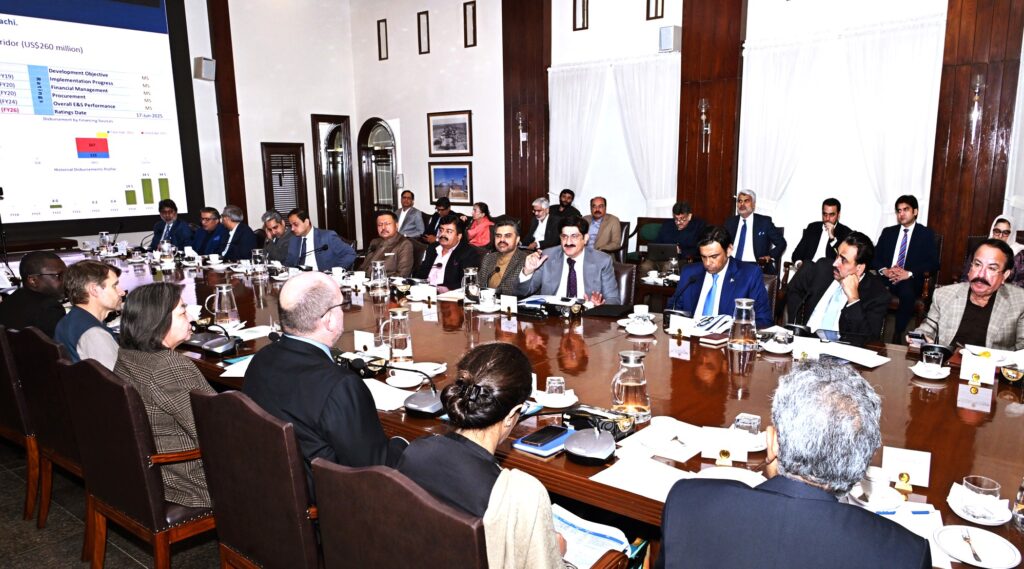
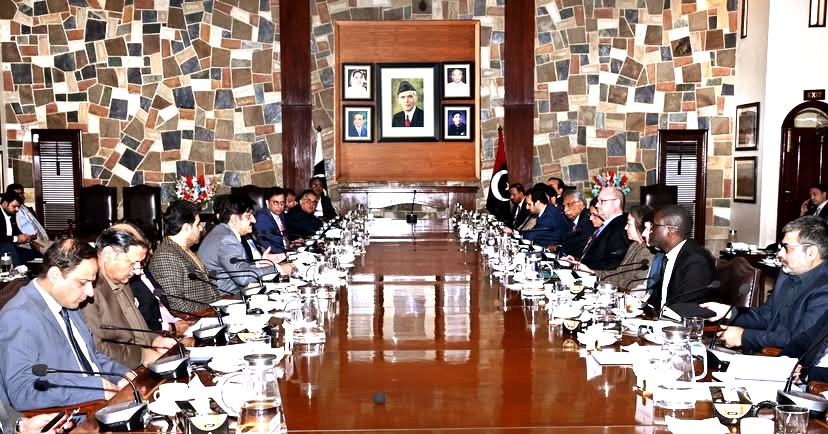
KARACHI: Sindh chief minister Syed Murad Ali Shah on Tuesday chaired a detailed review meeting on ongoing and proposed World Bank–supported development projects in the province, stressing the importance of international partnerships for Sindh’s reform and recovery agenda.
The meeting was attended by a 10-member World Bank delegation led by the country director, Bolormaa Amgaabazar, along with provincial ministers, advisers, the chief secretary, the mayor of Karachi, relevant secretaries and senior officials, according to the chief minister’s spokesperson.
Murad Ali Shah said the partnership with the World Bank played a central role in Sindh’s development and post-crisis recovery, adding that international cooperation was vital for long-term growth. He told the meeting that 13 World Bank-funded projects were currently under way in Sindh with a total cost of $3.86bn, of which $1.96bn had already been spent.
The meeting decided to release $700.25m for projects in the financial year 2026. Progress on urban development, transport and municipal projects in Karachi was reviewed, and committees were formed for the Competitive and Liveable City of Karachi initiative, the Karachi Mobility Project and solid waste management schemes.
The chief minister said a door-to-door property survey in Karachi had identified 3.1m properties so far, adding that the urban property survey would continue until completion. He said the completion of the survey would significantly increase property tax revenues for local government institutions.
Shah said the Sindh government was working to improve the business environment and highlighted the launch of phase two of the Sindh Business One Stop Shop (SBOSS). He said 13 departments were now on board and more than 4,000 e-permits had been issued, with additional institutions to be included in phase three by May 2026.
Emphasizing integrated urban planning, the chief minister said the government aimed to turn Karachi into a modern and well-developed city. He described water supply, sewerage and irrigation projects as essential for public health and environmental protection.
Officials briefed the meeting on the Karachi Water and Sewerage Services Improvement Project, a $40m initiative, and its second phase costing $240m. Other projects discussed included the $292m Sindh Water and Agriculture Transformation Project and the $291.23m Sindh Barrages Improvement Project. Shah said water and sanitation were fundamental to public health.
The meeting was informed that replacement of gates and other works at Sukkur Barrage were under way, while improvement work at Guddu Barrage had also begun. In the education sector, officials said school upgrades and classroom improvements were continuing under the SELECT program, with a target to complete work on 15 schools by January 2026 and a further 150 schools by April 2026.
On health, the chief minister reviewed progress on the $200m Sindh Health and Population Project. He said basic healthcare, along with maternal and child health, remained top priorities. Updates were also given on the Sindh Integrated Health and Population Program and the National Health Support Program.
Shah said the transfer process for 171 general duty doctors was nearing completion, while recruitment and training of 238 community health workers would begin soon. The meeting also decided to complete the relocation of ambulances by 19 December. Progress on strengthening the social protection system was reviewed, with agreement reached on reinforcing the system under a $200m social protection project.
Shah said social protection was essential to protect people from poverty and crises, calling it the first line of defence against poverty. The meeting also received briefings on livestock, agriculture and environmental restoration projects. The chief minister directed officials to speed up implementation of rehabilitation and housing schemes for flood-affected people, stressing the need to rebuild in a stronger and more resilient manner after floods.
He instructed all departments to remove bottlenecks, accelerate procurement processes and ensure the timely release of funds, saying that every action rooted in humanity would ultimately improve people’s lives.
