



By Imtiaz Hussian
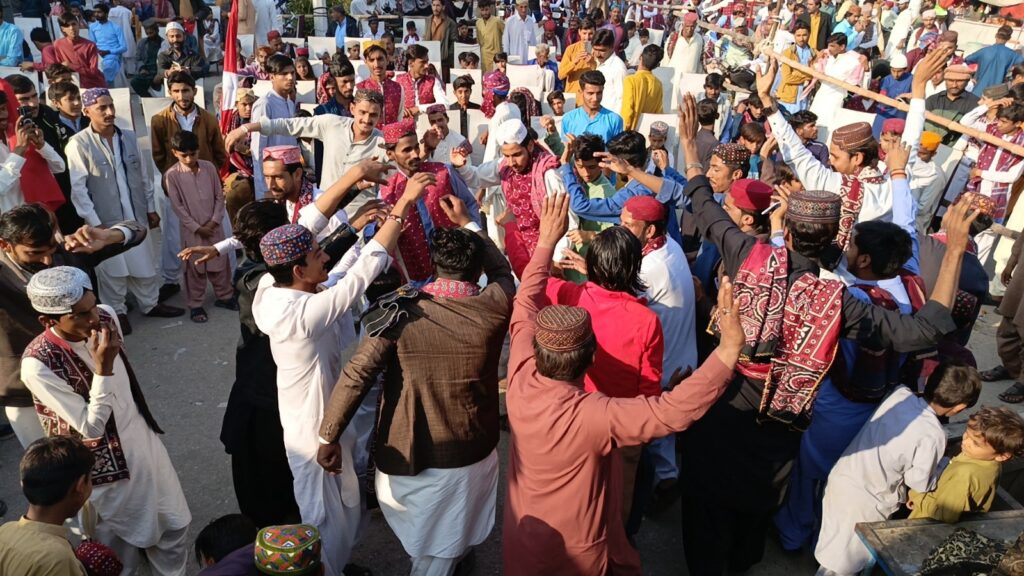
SUKKUR: Sindhi Topi and Ajrak Day was celebrated with enthusiasm across Sindh, showcasing the vibrant cultural traditions of Sindh. The day featured rallies, cultural events, and traditional festivities, while residents exchanged Sindhi caps and ajraks as gestures of goodwill, dubbing the occasion “Prosperous Sindh Day.”
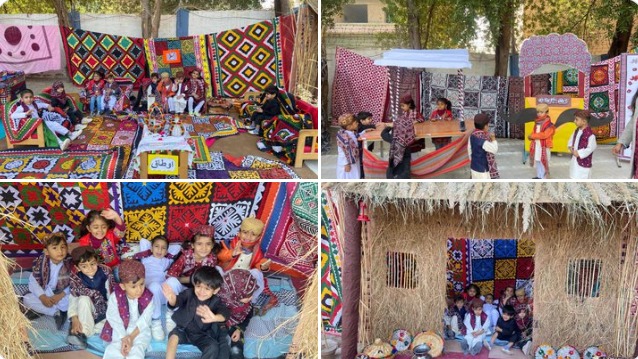
Events took place in schools, colleges, and public spaces, with stalls displaying traditional handicrafts and attire. Celebrations spanned major cities and towns including Sukkur, Khairpur, Shikarpur, Naushroferoz, Moro, Larkana, Dadu, Ghotki, Hyderabad, Mithi, Tharparkar, Ummarkot, Badin, Sanghar, and beyond.
Political activists, students, journalists, trade union members, and citizens from diverse backgrounds participated, donning colorful Sindhi caps and ajraks. Rallies, motorcades, and cultural performances echoed Sindhi songs and poetry, reflecting the spirit of unity and pride in Sindh’s heritage.
Renowned journalist Mumtaz Bukhari noted that the day transcends ethnic boundaries and promotes love for Sindh, its traditions, and cultural values. He emphasized that people of all communities, including Sindhi, Urdu, Punjabi, and Balochi speakers, joined the celebrations, reflecting Sindh’s ethos of peace and inclusivity.
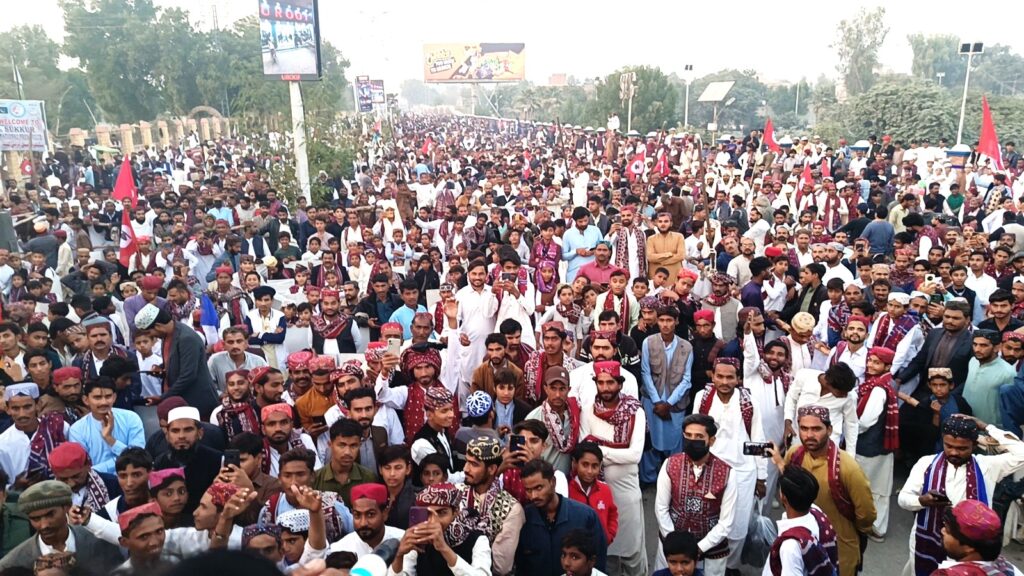
Yasin Junejo highlighted the role of the day in promoting traditional arts and supporting local artisans, while also fostering religious harmony and tolerance as minority communities participated in the festivities. He added that the celebrations enhance civic pride and encourage the preservation of Sindh’s cultural heritage.
The event also bolstered local economies, with strong demand for traditional attire. While printed ajraks remain more affordable, hand-painted ajraks, priced between Rs. 300 and Rs. 10,000, have gained popularity among urban and younger generations.
Sindhi Culture Day was also observed internationally, with celebrations in the United States, Canada, the United Kingdom, and Dubai, where Sindhi communities reside. Cultural rallies, exhibitions, musical performances, and student activities highlighted Sindh’s art, folklore, and traditions.
President Asif Ali Zardari praised Sindh’s culture as a symbol of tolerance, peace, and national unity. In his message, he highlighted the province’s historical significance, including its early advocacy for Pakistan’s creation, and called for promoting cultural values among future generations.
President noted that Sindh’s Urdu-speaking population also contributes to its reputation as a model of diversity and harmony. Governor Kamran Khan Tessori echoed these sentiments, stating that Sindh’s cultural celebrations send a message of love and brotherhood from the province to the wider world.
