



By Dr Barkat Ali Khan and Dr Iqra Shamsher
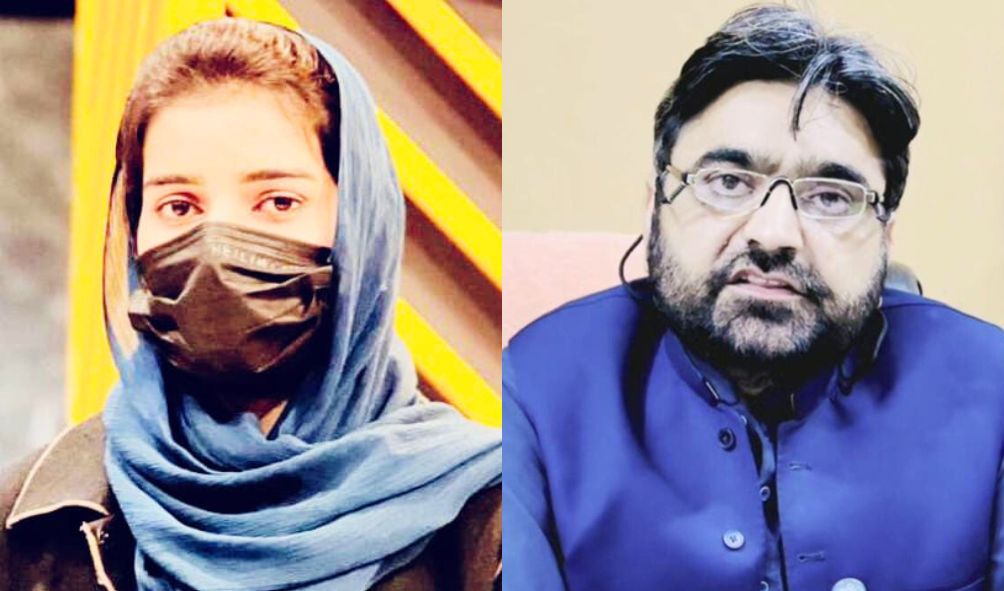
Islam recognizes this sacred role. The Prophet Muhammad (PBUH) declared, “Paradise lies beneath the feet of mothers.” This is not merely a statement of affection but a profound acknowledgment of a mother’s influence in shaping the moral and spiritual foundation of the next generation. An educated and morally upright woman does not just elevate herself; she elevates her family, her community, and her nation. When women are empowered with education, they become agents of change—teachers, leaders, scientists, and reformers who guide society toward enlightenment. As Muslims, we must continue this legacy for women. In the contemporary Muslim world, countless women carry forward the work of their predecessors. They are educators, scientists, leaders, and social reformers transforming their societies from within.
One such figure is Dr. Adeeba Kamarulzaman of Malaysia—a globally recognized infectious disease expert and advocate for public health. As Dean of the Faculty of Medicine at the University of Malaya, her groundbreaking research and leadership have placed Malaysia on the map of medical excellence. Her dedication to humanity, especially during the global HIV and COVID-19 crises, reflects the same spirit of service and compassion that guided women like Rufaida centuries ago. Similarly, Sheikha Lubna Al Qasimi of the United Arab Emirates became the first woman to hold a ministerial position in her country. Through her initiatives in trade, economy, and philanthropy, she demonstrated that women can be pivotal architects of national policy and international progress.
Pakistan, too, has seen women rise in academia, science, and governance. Dr. Nergis Mavalvala, an astrophysicist and dean at MIT, stands as a symbol of intellectual excellence. Her contribution to the detection of gravitational waves—a discovery that reshaped our understanding of the universe—reflects how Muslim women continue to expand the boundaries of human knowledge. In education, Dr. Samina Qadir, the former Vice-Chancellor of Fatima Jinnah Women University, dedicated her career to empowering women through higher learning. Her leadership inspired thousands of young women to step forward and contribute to nation-building.
Yet there remains a pressing need to address the barriers to equality and empowerment for women. Despite these remarkable examples, millions of women across the Muslim world still face obstacles in realizing their potential. Social stereotypes, lack of access to education, gender-based discrimination, and economic inequalities limit their participation in public life. These challenges are not insurmountable. Islamic teachings emphasize equality, dignity, and the pursuit of knowledge for all. The Prophet (PBUH) said, “Seeking knowledge is an obligation upon every Muslim man and woman.” This timeless command makes it clear that empowering women through education is not a modern reform—it is a divine imperative.
Governments, communities, and families must work together to remove these barriers. Investment in girls’ education, support for women entrepreneurs, and the inclusion of women in leadership and policy-making can transform societies. When women are educated and economically independent, poverty declines, literacy rises, and the moral fabric of society strengthens. If we consider both the home and the wider world, one of the greatest challenges women face today is balancing family responsibilities with professional aspirations. Society often measures a woman’s success by how well she conforms to traditional roles, overlooking the fact that she can excel both as a homemaker and a professional.
Islam does not restrict women to the home; rather, it values their contributions in all spheres of life. A woman can be a nurturing mother and a pioneering scientist, a caring daughter and a capable leader. Her strength lies in her ability to balance compassion with competence—to sustain families while shaping nations. When women participate equally in every field—education, science, politics, healthcare, and business—societies become more just, dynamic, and prosperous. Empowering women is not a favor; it is a collective responsibility. When we uplift women, we uplift generations. When we invest in their education, we invest in our nation’s future. And when we ensure their dignity and rights, we build a stronger moral foundation for society.
Every woman deserves access to education, healthcare, safety, and economic opportunity. She deserves to be heard, respected, and included in decisions that shape her community. When a woman rises, her family rises, and when families rise, nations ascend. A woman is not just an individual—she is an institution, a teacher, and a builder of civilizations. From Hazrat Khadijah (RA) to Fatima al-Fihri, from Hazrat Ayesha (RA) to Dr. Adeeba Kamarulzaman, history bears witness that women have always been architects of change. If we truly seek progress—moral, social, or economic—we must give women their rightful place, not as mere symbols but as partners in building nations. No nation can rise higher than the status of its women.
(The writers are academics in Gomal University, penned a range of articles at various news outlets, can be reached at editorial@metro-Morning.com)
