




MM Report
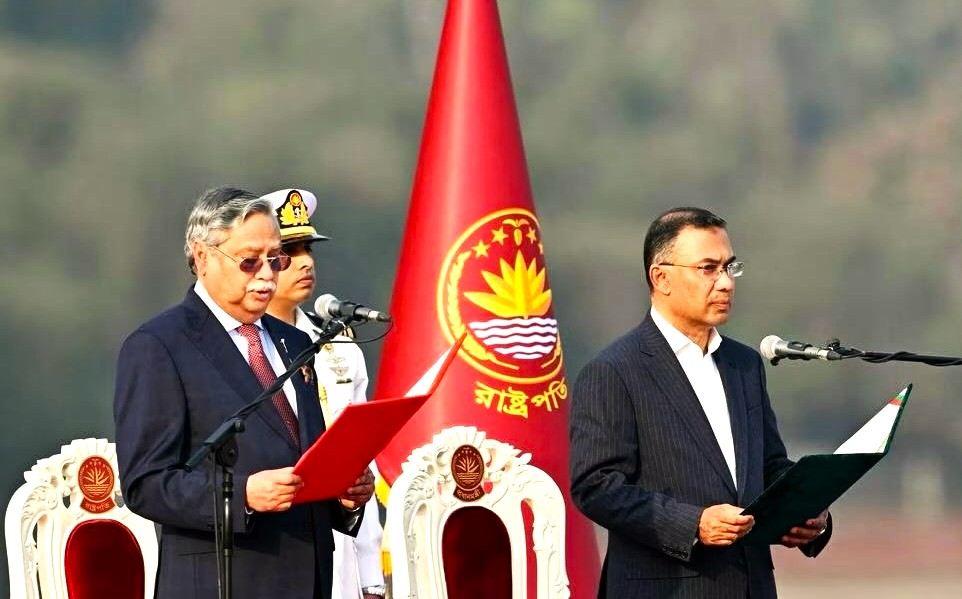
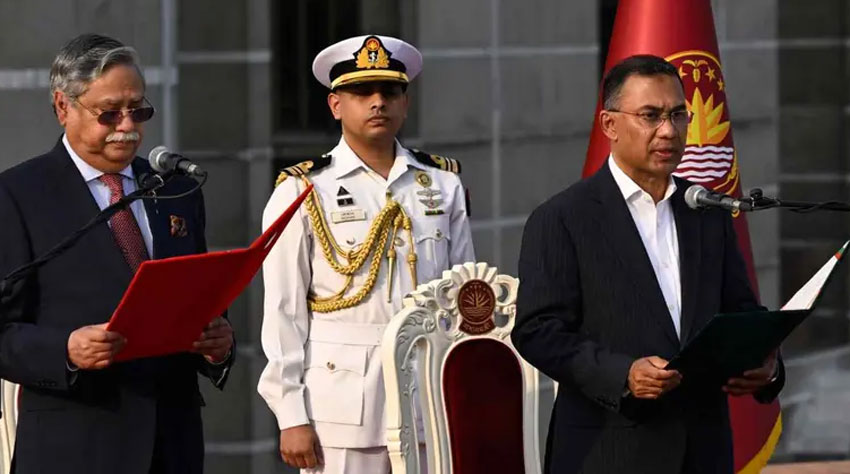
DHAKA: Tarique Rahman was sworn in as Bangladesh’s prime minister on Tuesday, marking a dramatic political shift in the South Asian nation after the Bangladesh Nationalist Party (BNP) secured a commanding parliamentary victory.
Rahman assumed office at a moment of heightened expectations and challenges, inheriting a country seeking political stability, investor confidence, and a revival of key industries, including the vital garment sector. The swearing-in ceremony broke with long-standing tradition.
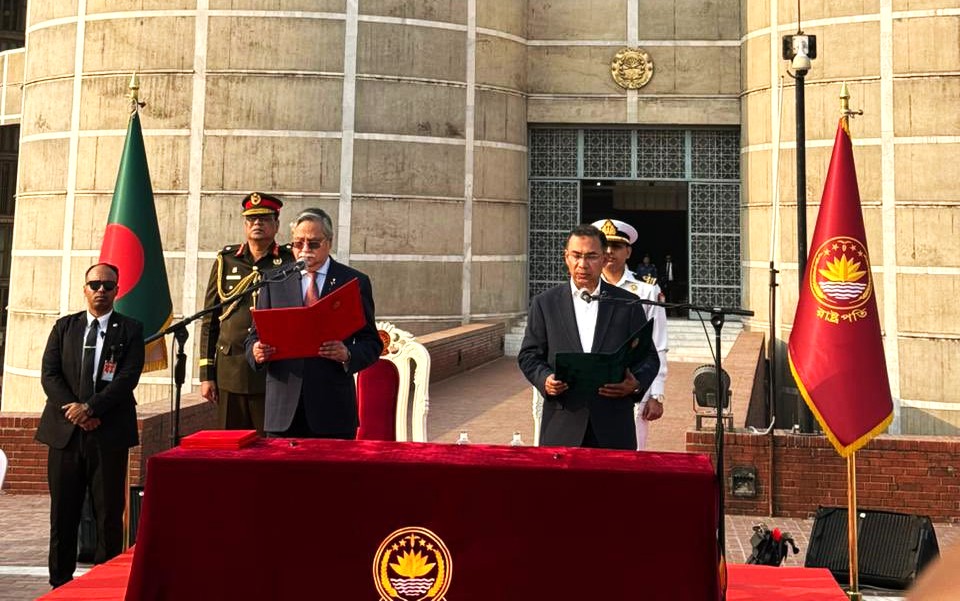
Instead of taking place at Bangabhaban, the president’s official residence, Rahman and his cabinet were administered the oath at the South Plaza of the Jatiya Sangsad Bhaban, the national parliament building, under an open sky. President Mohammed Shahabuddin officiated the event, which drew senior political figures, diplomats, civil and military officials, and international representatives, including delegations from China, Pakistan, and India.
Rahman’s BNP returned to power after nearly two decades, securing a two-thirds majority, while the Jamaat‑e‑Islami, contesting its first election since a 2013 ban was lifted following the overthrow of Sheikh Hasina in 2024, won a record 68 seats. Hasina’s Awami League, previously the dominant party, was barred from contesting after its registration was revoked by the Election Commission.
Jamaat and its allies, including the National Citizen Party led by youth activists who had played a leading role in the Gen Z‑led movement that toppled Hasina, will form the opposition. After 17 years of self-imposed exile in London, he returned to Bangladesh last year shortly before his mother’s death, rejuvenating party supporters and reshaping the BNP’s elections campaign.
In his first public remarks after the election, Rahman urged calm and restraint, emphasizing that “peace, law and order must be maintained at any cost” and calling on supporters to avoid any form of retaliation. Analysts said his initial approach signaled a careful balancing act: consolidating authority while managing the expectations of a nation still adjusting to the seismic political changes of the past two years. The new government now faces the immediate task of stabilizing the economy, reviving international confidence, and steering Bangladesh through a period of transition that will test the durability of its emerging political order.
