




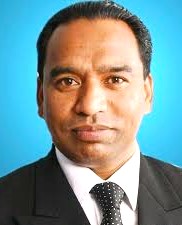
By Asghar Ali Mubarak
The government’s latest attempt to cushion the public from a deepening economic shock reflects both urgency and constraint, a balancing act that has come to define Pakistan’s policymaking in times of crisis. As tensions in the Middle East continue to disrupt global energy markets, the administration led by Shehbaz Sharif has moved to present itself as both responsive and protective, even as the scale of the challenge threatens to overwhelm the very measures designed to contain it.
At first glance, the relief package appears expansive. Public transport has been made free in key urban centers, including Islamabad and across Punjab, railway fares have been frozen, and planned increases in motorway tolls have been suspended. These decisions are framed as immediate interventions to ease the burden on ordinary citizens, particularly those already strained by rising living costs. In a country where mobility is directly tied to livelihood, such measures carry symbolic as well as practical weight. They suggest a state willing to absorb short-term fiscal pain to preserve social stability.
Yet beneath this effort lies a more complicated reality. The same government that is offering relief has also overseen one of the steepest increases in petroleum prices in recent memory. Petrol and diesel costs have surged sharply, driven by global oil price volatility linked to geopolitical tensions. The contradiction is not merely rhetorical; it is structural. Relief, in this case, is being financed not by surplus capacity but by reallocation, austerity and, ultimately, by passing costs through different channels of the economy.
The decision to hold fuel prices steady through subsidies—estimated at around Rs129 billion—initially provided breathing space. But such interventions are inherently time-bound. As global crude prices continue to climb, particularly amid instability affecting key supply routes such as the Strait of Hormuz, the sustainability of these subsidies becomes increasingly doubtful. The government has already acknowledged this by shifting towards targeted assistance rather than blanket support, an approach that reflects fiscal realism but raises questions about execution and equity.
Targeted subsidies for motorcyclists and rickshaw drivers, for instance, are being positioned as a more efficient alternative. By offering limited quantities of subsidized fuel through digital vouchers, the state aims to direct resources to those most in need while avoiding the fiscal drain of universal subsidies. In principle, this is sound economics. In practice, however, it depends heavily on administrative capacity, data integrity and public trust—areas where Pakistan has historically faced challenges.
The broader austerity measures further illustrate the constraints under which the government is operating. A 50% reduction in fuel usage for official vehicles and the curtailment of non-essential transport signal an attempt to lead by example, but they also underscore the severity of the situation. These are not routine efficiency drives; they are emergency responses to a crisis that is both external in origin and domestic in impact.
Provincial governments, too, have stepped in with their own initiatives, reflecting a degree of decentralized responsiveness. In Punjab, under Maryam Nawaz, free public transport and agricultural diesel subsidies have been introduced, while in Sindh, the administration led by Murad Ali Shah has announced direct cash support for motorcyclists. These measures, while welcome, also reveal a fragmented policy landscape in which relief varies by region, potentially creating disparities in access and effectiveness.
The economic data, however, tells a more sobering story. Inflationary pressures are intensifying across multiple sectors, from transport and healthcare to education and household goods. The rise in fuel costs has had a cascading effect, increasing the price of nearly every essential service. Transport fares have surged, medical expenses have crept upward, and even basic commodities have become less affordable. This is the classic transmission mechanism of energy inflation, where higher input costs ripple through the economy, eroding purchasing power and deepening inequality.
What complicates matters further is the apparent disconnect between policy intent and public perception. While officials emphasize relief measures and targeted support, many citizens experience only the immediate impact of higher prices. For daily wage earners and lower-middle-income households, the promise of subsidies or free services may be overshadowed by the reality of increased expenses in food, transport and utilities. In such an environment, trust becomes as critical as policy design.
At the global level, Pakistan’s predicament is far from unique. Countries across the developing world are grappling with similar challenges as energy prices fluctuate and supply chains remain fragile. However, Pakistan’s limited fiscal space and structural economic weaknesses make it particularly susceptible to external shocks. The reliance on imported fuel, coupled with a narrow tax base and persistent balance-of-payments pressures, constrains the range of viable policy responses. Ultimately, the government’s response to the current crisis will be judged not only by the relief it provides but by the resilience it builds. The challenge is not merely to shield citizens from the present storm but to ensure that when the next one arrives—as it inevitably will—the country is better prepared to withstand it.
(The writer is a senior journalist covering various beats, can be reached at editorial@metro-morning.com)
