



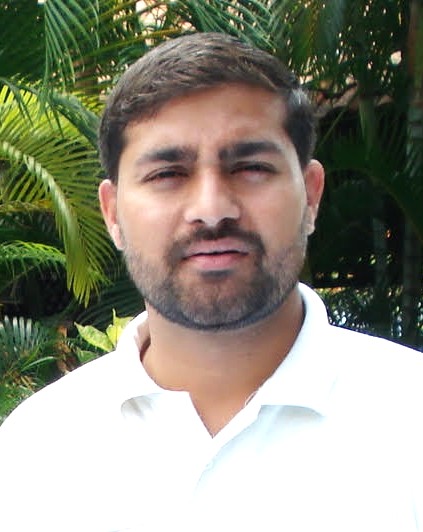
By Dr Zawwar Hussain
The world today is confronted not with one or two isolated dangers, but with a tangled web of simultaneous and interconnected threats. The latest Global Risk Report by the United Nations Office for Disaster Risk Reduction (UNDRR) lays bare this uncomfortable truth: modern risks do not exist in isolation. Natural disasters, environmental degradation, misinformation, weak institutional capacities, and political and economic uncertainties at both global and regional levels interact in ways that traditional governance structures struggle to address. The speed and complexity of these challenges mean that yesterday’s solutions are often inadequate for today’s crises.History offers an instructive perspective. Across millennia, human civilizations have repeatedly faced the consequences of ignoring warning signs.
The ancient Egyptians contended with shifts in the flow of the Nile, which threatened agriculture and food security. The Maya civilization was undermined by prolonged droughts that eroded societal resilience. The Indus Valley and Roman empires similarly struggled when environmental and administrative systems failed to adapt. The lesson is clear: nations that neglect risks rarely achieve lasting stability. What makes the modern era distinct is the scale and interconnectivity of risks, amplified by climate change, globalization, and the digital revolution.At the forefront of current threats are disasters linked to natural hazards. Climate change has transformed floods, intense rainfall, storms, heatwaves, and droughts from episodic events into recurring crises with wider geographic impact.
Countries like Pakistan, which are particularly vulnerable due to their geography, bear the brunt of these hazards, facing human loss, economic disruption, and social instability. The catastrophic floods of 2022 provide a stark illustration. What began as a natural event rapidly escalated into a national crisis, revealing the profound consequences of inadequate risk management and planning.Environmental degradation compounds these natural hazards, forming a second pillar of risk. Deforestation, reckless water consumption, unplanned urban expansion, the destruction of agricultural land, and air pollution all exacerbate vulnerabilities. As a student and observer of geography, it is critical to emphasize that the environment is not merely a backdrop for human activity—it is an active, dynamic system.
Intervening carelessly in its processes, whether through damming rivers, overbuilding coastal zones, or clearing forests in mountainous regions, sets the stage for future calamities. Each small interference reverberates through complex ecological systems, creating consequences that are often unforeseen and far-reaching. In parallel, the spread of misinformation and disinformation has emerged as a modern risk multiplier. In the age of digital media, the line between truth and falsehood is increasingly blurred. Scientific facts are distorted or ignored to serve political, economic, or ideological objectives. The result is a public that struggles to grasp the true nature of risks and is less able to support coherent, evidence-based responses. When societies cannot discern fact from fiction, collective resilience weakens, and vulnerabilities are magnified.
The UNDRR report also highlights the limitations of institutional preparedness. Most countries continue to operate on a sectoral model, with policies and responses confined to individual ministries or agencies. Yet the threats confronting humanity today are cross-cutting, often transcending national borders. Climate-induced disasters, pandemics, food insecurity, cyberattacks, and information warfare cannot be contained within single departments. Effective risk governance requires integrated, science-based strategies that connect data, policy, and action across all levels of society. Despite this daunting scenario, the UNDRR report is not a message of despair. Rather, it offers a roadmap for building resilience. The first step is understanding risk in its full complexity.
Historical data, geographic analysis, climate models, and local knowledge must be synthesized to create actionable risk maps. Numbers alone are insufficient; insight must be converted into planning and tangible policy. A society that understands the magnitude, distribution, and interaction of risks is better equipped to anticipate and respond to crises. Second, effective risk communication is vital. Public engagement must be rooted in clarity, trust, and transparency. Governments and experts must not simply issue warnings; they must educate, explain, and empower. When citizens comprehend the causes, consequences, and their own roles in risk mitigation, collective resilience strengthens naturally. Schools, universities, media outlets, and local forums all have a role in nurturing this informed public awareness, creating communities capable of proactive response rather than reactive panic.
(The writer is a PhD scholar with a strong research and analytical background and can be reached at editorial@metro-Morning.com)
