



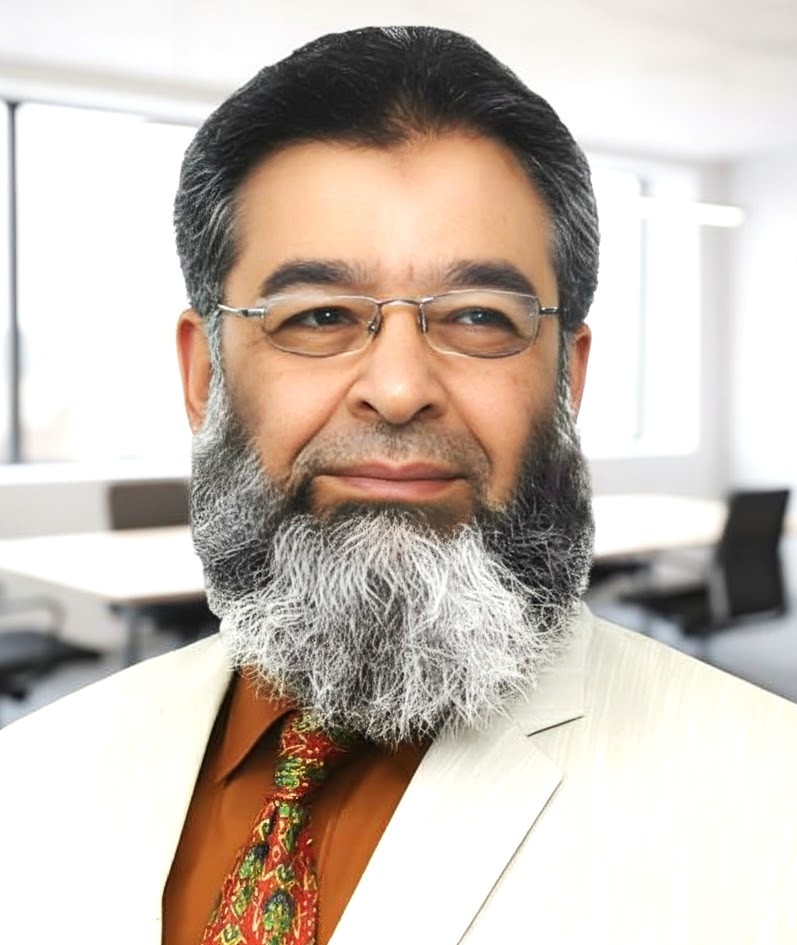
By Muhammad Mohsin Iqbal
Great nations take pride in their civilization, history, and language, and they never separate these elements from their personal existence or collective identity. These attributes are not merely cultural ornaments; they are the spiritual foundations upon which a nation’s character rests. Across the world, particularly in diplomatic circles, English has become a convenient medium of communication. It allows people from different regions to converse on equal footing. Yet even in such environments, there are leaders, officials, and dignitaries who, despite having full command of English, choose to speak in their national languages. They do so without hesitation, without embarrassment, and often with visible dignity.
Their confidence springs from a deep respect for their own heritage. Unfortunately, our situation stands in stark contrast. We live in a society where Urdu is effortlessly understood and comfortably spoken, yet many take pride not in fluency of thought but in fluency of English. A strange standard of superiority has taken root—where speaking English is seen as a marker of intellect and status, while speaking Urdu is sometimes treated as a sign of deficiency. In gatherings, in workplaces, and particularly in elite social circles, even those who think naturally in Urdu consciously switch to English to appear distinguished.
This behavior has given rise to an awkward hybrid known popularly as “Gulabi Urdu,” in which English words are sprinkled unnecessarily, as if plain Urdu were inadequate for dignified expression. During my years in journalism, I was fortunate to work with teachers and senior colleagues who helped purify my language and refine my expression. Their guidance became a treasure that still accompanies me in every sentence I write. I vividly recall an early lesson from my chief editor, Mujeeb-ur-Rehman Shami, who once reviewed a piece of mine containing the word “Mizbah Khanna” (slaughterhouse). He looked at it attentively and said, “You have added ‘Khana’ unnecessarily. The word is complete even without it.”
It was a small correction, yet its impact was lasting. It taught me that precision in language is not achieved through excess but through clarity. That one moment remains etched in my memory. On another occasion, I witnessed a gentle but profound lesson from the respected teacher Irfan Siddiqui. Someone at an event used the term “body language” while speaking in Urdu. Siddiqui smiled and said he could not understand why we insert English terms when perfectly expressive Urdu equivalents exist. A journalist present asked him what Urdu word could be used instead. With characteristic grace, he replied, “You may use the term ‘Bad’an Boli’ for that.”
From that day onward, I began employing “Bad’an Boli” whenever needed, and it felt as though I had reconnected with a forgotten part of the language. There were many others in my journalistic journey—Qudratullah Chaudhry, Abdullah Tariq Suhail, Athar Masud, Tauseef Ahmed Khan, Tahir Majeed, Naveed Chaudhry, Imran Mir, Naeem Iqbal, Chaudhry Khadim Hussain, Esar Rana, Naeem Mustafa, Najam Wali Khan, Zahid Rafique, Akhtar Hayat, Allama Saeed Azhar, and several more—whose companionship enriched my Urdu. They corrected my expressions, refined my usage, and strengthened my connection with the language. Over ten years, I learned from them not only words but attitudes, not only grammar but respect for the elegance and depth of Urdu.
Yet all is not lost. Languages survive not through force but through love, usage, and conscious preservation. Urdu possesses a beauty, rhythm, and expressive power that needs no foreign ornament to stand tall. It is a language that carries centuries of poetry, scholarship, and cultural elegance. It is a language that binds our collective memory. But for it to endure in its true essence, we must revive the habits of careful expression, of learning from elders, and of resisting unnecessary linguistic invasions.
We must not be apologetic when speaking Urdu. We must let it flow with the same confidence with which other nations speak their own languages. The world respects those who respect themselves. When we carry Urdu with dignity, it enhances our stature rather than limiting it. Languages are not mere tools of communication—they are vessels of identity. If we allow Urdu to weaken, we weaken a part of ourselves. The responsibility lies with each of us to nurture the language that has nurtured us. Let us speak it with pride, write it with care, and guard it from being overshadowed by borrowed expressions.
(The writer is a seasoned parliamentary expert with over two decades of experience in legislative research and media affairs. He is currently serving as DG Research at the National Assembly, leading policy support initiatives for lawmakers on complex national and international issues, and can be reached at editorial@metro-Morning.com)
