




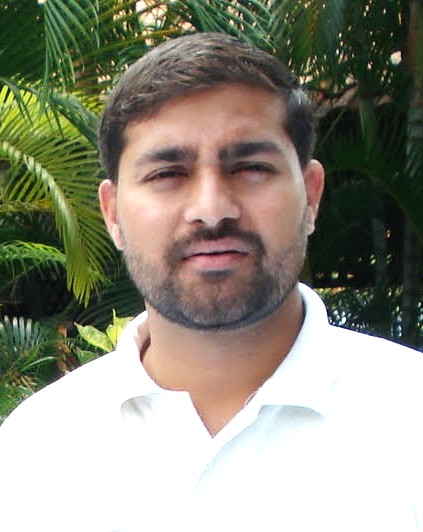
By Dr. Zawwar Hussain
The present era is defined by information, technology, and scientific awareness, where the progress of nations largely depends on how effectively they understand and utilize their resources, environment, and geographical realities. In this context, Landsat satellites are not merely a scientific facility but a transformative force that has fundamentally changed the way we perceive and study the Earth. For more than fifty years, the Landsat program has been continuously recording the Earth’s surface, and this consistency has made it one of the most reliable and long‑term sources of scientific research in the world. The true strength of Landsat lies in its consistent and high‑quality data provision. Since 1972, the satellite imagery collected has become a scientific treasure that has transformed the Earth into a living laboratory.
This program does not only tell us what the Earth looks like, but also reveals how it is changing over time. This very aspect has given a new dimension to geographic research, where conclusions are now drawn based on concrete evidence rather than assumptions. Urban expansion, which has emerged as a major global challenge, is now being monitored with remarkable precision through Landsat. Rapidly growing cities are not only disturbing the natural balance of the Earth but are also placing immense pressure on resources. Through Landsat data, it has become possible to clearly observe urban growth, land use changes, and environmental impacts. In major cities of Pakistan such as Karachi and Lahore, the effective use of this data can help control unplanned urbanization and establish a more balanced and sustainable urban system.
In the field of water resources, Landsat serves as a vigilant guardian. Water, the foundation of life, is becoming increasingly scarce in many parts of the world. Through Landsat, continuous monitoring of rivers, lakes, reservoirs, and groundwater resources is possible. In flood situations, this technology provides timely information that plays a crucial role in minimizing damages. This is why modern water policy and management are considered incomplete without data from systems like Landsat. Landsat has also become a decisive tool in addressing climate change. Rising temperatures, melting glaciers, and deforestation are now being understood on solid scientific grounds. Landsat data has not only recorded these changes but has also highlighted their impacts on a global scale. Today, this data forms the foundation of international environmental policies and agreements.
In the agricultural sector, Landsat has brought about a silent revolution. The analysis of crop health, water requirements, and soil fertility is now possible through satellite data. This has led to increased productivity while ensuring efficient use of resources. For an agricultural country like Pakistan, this technology presents a golden opportunity to strengthen its economy and ensure food security. Landsat’s importance is equally significant in disaster management and forest monitoring. After natural disasters such as earthquakes, floods, and wildfires, it becomes possible to quickly assess the situation, enabling effective and timely relief operations. It is also proving to be a powerful tool in preventing illegal deforestation and environmental degradation.
Another revolutionary feature of Landsat is its free and open data access. This accessibility provides equal opportunities for researchers, students, and institutions around the world to utilize the data and advance their research. This aspect is particularly a beacon of hope for developing countries. At this point, it becomes essential to mention geography as a subject, because understanding and utilizing advanced scientific systems like Landsat satellites fundamentally depends on knowledge provided by geography, particularly its branches such as remote sensing and GIS. Geography has been important since the dawn of human civilization. It is no longer confined to theoretical concepts or map‑making alone, but has evolved into a fully practical, research‑oriented, and technology‑driven discipline.
Pakistan is fortunate that geography is taught in almost all universities, where high‑quality education is offered not only at the undergraduate and postgraduate levels but also up to PhD. Such modern technological disciplines present a golden opportunity for Pakistani students who aspire to achieve something meaningful. They should step forward and establish their identity at the global level for themselves and for the nation. With the availability of open‑source data like Landsat, the doors of research have now expanded more than ever before. Today, there is a pressing need to treat whatever subject we study not merely as an academic requirement but as a mission. This is the kind of knowledge that enables us, through science and technology, to understand the Earth and its environment, solve its problems, and contribute to building a better future.
Geography and its related disciplines stand as strong and reliable companions in this journey, constantly teaching us that development is not just about the use of resources, but about their wise and sustainable management. In conclusion, it is fair to say that Landsat satellites have not only changed the way we observe the Earth but have also transformed the way we think. They invite us to play our part through knowledge, research, and technology. As Pakistanis, we possess both the capability and the opportunities. What is required now is a serious commitment to move forward in this direction and become part of a global scientific and research revolution.
(The writer is a PhD scholar with a strong research and analytical background and can be reached at editorial@metro-Morning.com)
