



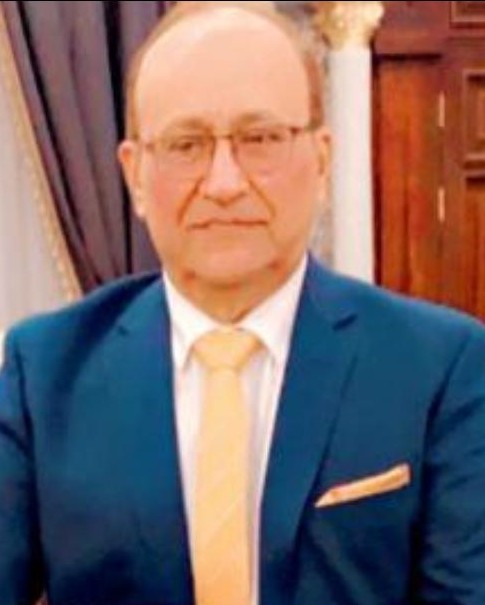
By Amir Muhammad Khan
Where can a country, where almost half the population is forced to live a miserable life below the poverty line, find the space to concern itself with democracy or dictatorship, constitutional amendments, human rights, and high moral values? It is often said that if a small, ignorant child is left alone with a poisonous snake, he will try to catch it. How would he know there is poison in it, or what harm it can cause? In the same way, what do nearly half of our people living below the poverty line know about democracy? What is dictatorship to them? What are constitutional amendments, or even the concept of human rights? They are consumed by the daily struggle for two meals a day for themselves and their children, and sometimes even one.
Because of a lack of education, we have still not been able to build the Kalabagh Dam, trapped in endless political wrangling. Punjab says it should be built. When people there are asked why, the answer is often simply: “My country, my leader Chaudhry Sahib has said so.” Sindh, on the other hand, says that if the Kalabagh Dam is built, it will be built on their bodies. When people there are asked why, the answer again comes through intermediaries: “Our friend says so.” Politicians exploit the lack of education skilfully. Intellectually, the feudal landlords do not want anyone to be educated, because ignorance is to their advantage.
In Pakistan, I had the honor of going to jail, along with countless journalists, workers, students and farmers, during the movement for press freedom. I spent a long time in Khairpur jail. As a B-class prisoner, I had two or three attendants, who were also inmates. On the famous pleasant evenings of Khairpur, when two fellow journalists and I would sit together to drink tea, we would sit on chairs while the attendants sat politely on the ground. Once, I asked them to sit on the chairs as well. One of them folded his hands and said: “Sir, we are fine on the ground. We do not know how to sit on chairs. In our village, if the landlord finds out that we sat on a bed or chair in our house, he would demolish it.” He would kill or burn it down.
The son of a prominent PPP leader was also imprisoned with us in Khairpur jail. In the evenings, we played badminton, with the jail superintendent present. At dinner time, food would arrive from the house of a former chief minister, and the superintendent himself would bring bottles of foreign-brand mineral water and place them at the feet of the imprisoned PPP leader in front of us. The leader would place his hand on the superintendent’s head and accept it. I recount this not as an anecdote, but to show how extreme class and social differences manifest even in such circumstances. What, then, can we realistically expect from the feudal class and the elite who sit in assemblies formed through supposedly honest elections?
Tehreek-e-Insaf used the illiteracy of the people and continues to do so. Through social media, myths are spread and followed by the less educated and the uninformed. Much of the damage is driven by holders of foreign passports. Former Pakistanis sit comfortably in America and Europe, while we are diplomatically weak enough that those who have caused havoc in Pakistan remain beyond our reach. Even many Pakistani passport holders abroad are either inaccessible to our diplomats or closely connected to them.
When it comes to poverty, a privileged candidate once said that his voter votes for him in exchange for a plate of biryani, and in this way he has temporarily solved the hunger of his poor constituents. According to one survey, about 45 percent of people are constantly worried about bread. Ten percent do not worry about food for the next 10 or 15 years. Twenty-five percent have some assurance for the next five years. Twenty percent can be considered middle class, working hard and content with security for a week ahead.
Those powerful Pakistanis who have the capacity, and the responsibility, to change this situation have entirely different priorities. Our rulers fly high above the ground and refuse to acknowledge the realities below. Their priorities are disconnected from logic and history. Decisions rooted in logic and history are not made on scraps of paper, over tea or bottled water, or through constitutional amendments. Logic and history follow their own paths and standards, as they have done for centuries.
(The writer is a veteran journalist having 45 years of experience across print and broadcast media in Pakistan and the United States, can reached at editorial@metro-morning.com)
