



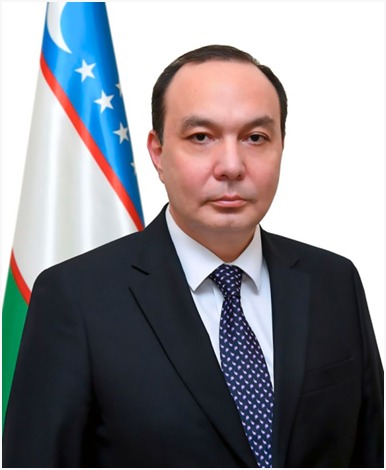
By Eldor Aripov
The address delivered by President Shavkat Mirziyoyev to the Oliy Majlis and the people of Uzbekistan goes far beyond a routine annual political speech. In substance and intent, it serves as a strategic policy document, marking the country’s transition to a new stage of development centered on the consolidation of reforms and the pursuit of long-term, sustainable growth. Over the past decade, Uzbekistan’s economy has undergone rapid and systemic transformation. In the mid-2010s, nominal gross domestic product stood at around $60–65bn. According to the president’s address, it has now reached $145bn. This represents more than a doubling of the economy in a relatively short historical period, underscoring the scale of recent change.
Economic growth has remained steady despite global turbulence. In recent years, average annual growth has hovered around six per cent, reflecting both continuity and resilience. The economy has maintained momentum through external shocks, including the pandemic, supply chain disruptions, and rising global inflation, demonstrating an increased capacity to absorb pressure without losing direction. Structural shifts within the economy reinforce this picture. Industrial output has more than doubled over the past decade. Whereas industry once played a secondary role to commodities and agriculture, sectors such as mechanical engineering, electrical equipment manufacturing, and chemicals now contribute steadily to economic output. Processing and manufacturing activities account for more than 80 per cent of GDP, indicating a clear move away from raw material dependence.
Agriculture has also evolved. A decade ago, success was measured largely by production volumes. Today, the focus has shifted towards processing and the export of finished goods. As highlighted in the address, the expansion of fruit and vegetable processing and the growth of food exports are helping to stabilize incomes and reduce vulnerability to fluctuations in harvests and global prices. Investment trends reflect similar qualitative change. Investment in fixed capital has grown rapidly in recent years, surpassing historical averages. Just as importantly, its composition has changed. Where investment was once concentrated in infrastructure and state-led projects, it is now increasingly directed towards industry, energy, transport, and digital technologies. This shift suggests that investment is not only supporting present growth but also laying the groundwork for future productivity.
External trade figures further support this assessment. Over the past decade, export revenues have more than doubled, rising from about $12–13bn in the mid-2010s to more than $24–25bn in recent years. This growth has been driven not only by favorable market conditions but also by changes in the structure of exports. The transformation is particularly evident in manufacturing. Textile exports have increased more than threefold, rising from under $1bn to around $3bn and beyond, reflecting a decisive move towards finished products. Similar trends are visible in electrical engineering, chemicals, and food processing, where expanded production chains and access to new markets have driven sustained export growth.
Macroeconomic stability has been preserved alongside this expansion. Economic and investment growth has been accompanied by controlled public debt levels and overall financial stability. This balance is significant, as rapid growth without restraint often creates long-term vulnerabilities. The address makes clear that Uzbekistan has opted for a cautious but strategically sound development path. Taken together, developments over the past decade point to a central conclusion. Further progress now depends less on the size of the economy and more on its quality. This explains the emphasis in the address on boosting labor productivity, accelerating technological modernization, and deepening industrialization. Achievements to date are presented as the foundation for the next decade of growth.
The economy is now larger, more diversified, and more resilient than it was ten years ago. These changes provide a long-term basis for improving living standards and strengthening Uzbekistan’s position in regional and global markets. A notable feature of the address is its reflection of public concerns. Its priorities align closely with issues raised consistently by citizens, including employment, incomes, access to social services, education, healthcare, and fairness in governance. This alignment highlights an ongoing feedback loop between the state and society. Progress on poverty reduction illustrates this connection. In 2017–18, poverty levels stood at around 35 per cent. By 2024, they had fallen to 8.9 per cent, with a projected reduction to 5.8 per cent in 2025. This trajectory suggests that the country is on track not only to meet but to surpass its stated targets.
President Mirziyoyev’s leadership emerges as a central factor in this process. International institutions frequently stress that political will is decisive in reforming transitioning economies. In Uzbekistan’s case, consistency and a long-term vision have enabled the alignment of economic, social, and institutional reforms within a single framework. Overall, the address represents not just a roadmap for the next phase of reform, but a coherent vision for the country’s future. Grounded in data and reinforced by international assessments, it strengthens domestic confidence and signals continuity and credibility to the outside world.
(The writer is a director of the Institute for Strategic and Regional Studies (ISRS), and a renowned strategic scholar of Uzbekistan, can be reached at editorial@metro-morning.com)
