




By Ahsan Mughal
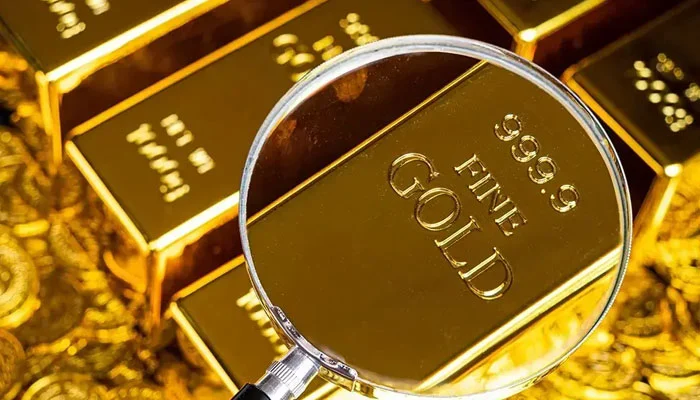
KARACHI: Despite the ongoing conflict against Iran and escalating tensions across the Middle East, global gold markets have not witnessed a significant surge in prices—an anomaly that experts describe as highly unusual given historical patterns. Since the United States and Israel launched attacks on Iran on February 28, regional instability has steadily mounted, yet the precious metal has remained surprisingly stable.
Following the announcement by senior Iranian Revolutionary Guards adviser Ibrahim Jabbari on March 2 regarding the closure of the Strait of Hormuz, oil prices skyrocketed past $100 per barrel and global stock markets experienced declines. Gold, however, held its ground without the dramatic rally typically associated with such geopolitical turmoil. On Tuesday, spot gold remained steady at approximately $5,001 per ounce, while US gold futures saw a marginal increase to $5,005 per ounce, according to Arab media reports.
Experts expressed bewilderment at the trend, noting that wars, economic crises, and global uncertainty traditionally drive investors toward safe-haven assets like gold, causing prices to climb sharply. The Russia-Ukraine war served as a textbook example, with gold prices recording substantial gains immediately after hostilities began.
Several factors explain gold’s current stagnation, according to market analysts. The strength of the US dollar, gold’s already elevated price levels, high volatility, and fears of interest rate hikes have all contributed to capping further gains. Economist Remy Bouryou suggested that gold is no longer viewed as the safe asset it once was, now being treated more as a speculative investment by market participants.
Analysts believe significant price movement could occur under two scenarios: if the US Federal Reserve signals a clear intention to cut interest rates, or if the Iran war becomes prolonged, amplifying global economic risks and forcing investors back into traditional safe havens.
