





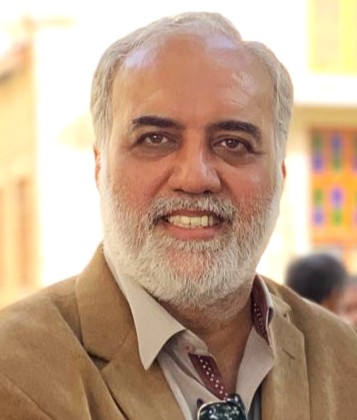
By Prof. Dr. Raza Ali Khan
Pakistan stands today at a rare and defining moment in its history. It is not merely engaged in active diplomacy; rather, it finds itself at a point where geopolitics and economics are beginning to intersect in ways that could shape its future trajectory. Such moments are uncommon—and when they arise, they demand clarity of vision and disciplined execution. There is opportunity, certainly—but there is also risk. The evolving dynamics of the Gulf region have created a complex geopolitical environment. Within this setting, Pakistan has emerged as a credible intermediary, maintaining balanced relations with Gulf states, Western powers, and Iran. Managing this delicate equilibrium is no small achievement. It reflects diplomatic maturity, but it also carries significant responsibility—because diplomacy alone cannot deliver economic progress.
The central question, therefore, is whether Pakistan can convert its diplomatic positioning into tangible economic outcomes. Historically, Pakistan has benefited from its strategic location, yet it has struggled to transform that advantage into sustained economic growth. Today, with a GDP of approximately $340–350 billion, modest growth rates, persistent inflation, and continued pressure on foreign exchange reserves, the economy remains fragile. However, within this fragility lies a meaningful opportunity. Pakistan is not yet in a golden era—but it stands at its threshold. In the short term, the most immediate gains are likely to come from the Gulf. Pakistan’s workforce already plays a vital role in the region, and as Gulf economies move toward large-scale development and potential reconstruction, demand for skilled labor, engineering expertise, and construction services is expected to rise.
By investing in human capital and aligning skills with international standards, Pakistan can increase remittances, expand labor exports, and strengthen its external account. At the same time, Pakistani firms have the capacity to enter Gulf construction and infrastructure markets. Through joint ventures and strategic partnerships, they can secure participation in major projects and generate substantial service exports. In parallel, Gulf countries—particularly Saudi Arabia and the UAE—offer promising avenues for foreign direct investment in sectors such as energy, mining, and agriculture. Long-term energy arrangements, including concessional oil facilities, could further ease Pakistan’s economic pressures. There is also considerable untapped potential in regional trade, especially with Iran.
If regional tensions ease, bilateral trade could expand significantly, particularly in energy cooperation and cross-border commerce. Access to more affordable energy resources alone could provide much-needed relief to Pakistan’s economy. In the longer term, the United States and other Western economies offer pathways for sustainable growth. Their markets remain essential for Pakistan’s exports, particularly in textiles, information technology, and engineering goods. With improvements in quality, innovation, and trade engagement, Pakistan can strengthen and diversify its export base. The global shift toward outsourcing further enhances Pakistan’s prospects, especially in the IT sector, where skilled professionals can deliver high-value services with relatively low capital investment.
Additionally, as Western firms diversify supply chains under the “China+1” strategy, Pakistan has an opportunity to position itself as an alternative manufacturing hub—provided it ensures ease of doing business, policy continuity, and political stability. However, attracting Western investment and financial flows will depend on credible reforms, institutional strength, and transparency. Without these, opportunities will remain largely unrealized. The fundamental reality is clear: none of these prospects will materialize automatically. They require consistent policies, political stability, and effective implementation.
Above all, Pakistan must adopt a framework of economic diplomacy—one in which every international engagement is aligned with trade, investment, and measurable economic outcomes. Diplomacy has opened the door. The question now is whether Pakistan can step through it with purpose and direction. If managed wisely, engagement with the Gulf can provide immediate financial stability, while partnerships with Western economies can drive long-term growth, technological advancement, and export expansion. If not, this moment—like many before it—may pass without leaving a lasting impact. The opportunity is real. The outcome will depend on the choices made today.
(The writer is former faculty member of NED University, a financial scholar and geopolitical expert. He can be reached at editorial@metro-morning.com)
