





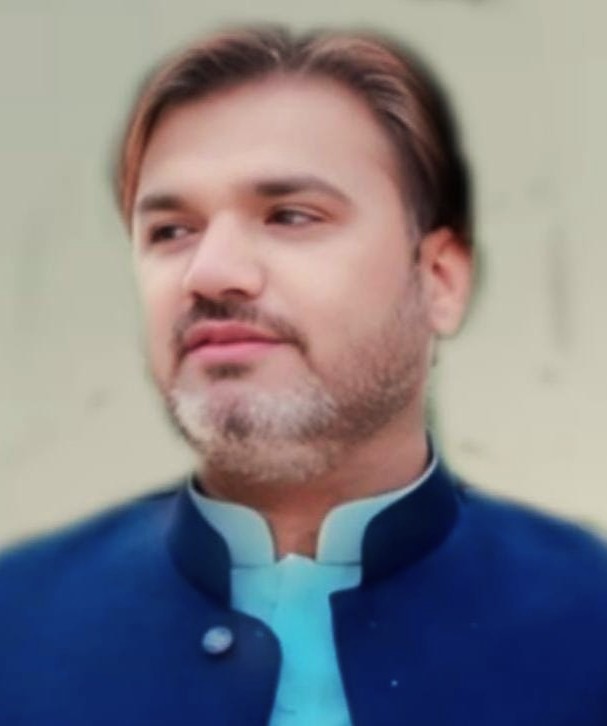
By Ghulam Hussain Baloch
Every year on 3 May, the world marks World Press Freedom Day. Under the auspices of the United Nations and UNESCO, this day is meant to highlight the vital importance of a free press, to safeguard the basic rights of journalists, and to pay tribute to those who have laid down their lives in the pursuit of truth. It is also a necessary reminder that a free press is the very bedrock of any democratic society – because journalists are the bridge between the people and those who govern them. Journalism is rightly called the fourth estate. A responsible journalist does not merely shine a light on public grievances; by holding power to account, they nurture awareness, justice and accountability within society. Yet it is a source of deep frustration that, in Pakistan as in so many countries, journalists face every kind of danger: pressure, threats, economic hardship. Moreover, when one turns to Balochistan, the picture becomes grimmer still.
Balochistan is Pakistan’s largest province by area, but by any measure of opportunity and welfare, it is its most deprived. Journalists there are not only struggling with economic destitution; they also contend with security threats, official neglect and institutional weakness. Across most districts of the province, reporters work with scant resources to highlight public problems, but no one seems to hear their own. In remote corners – Kalat, Khuzdar, Turbat, Awaran, Washuk, Panjgur, Barkhan, Musa Khel and beyond – journalists carry out their duties under severe duress. Many are forced to work for no salary at all, or for a pittance. Media houses hide behind falling advertising revenues and financial crises to deny their own correspondents even the most basic entitlements. Most journalists have no office to work from, no travel budget, no protective equipment, and no insurance.
This is a profession in which speaking the truth sometimes costs a life. In Balochistan, several journalists have already been killed in the line of duty, while many more live amid threats, intimidation and a climate of fear. What is truly shameful is that the families of those killed or injured are almost always left to fend for themselves. Neither the government provides full support, nor do media organizations offer any lasting assistance. Another major problem is the lack of training and modern facilities. The world is rushing headlong towards digital media, but in much of Balochistan, poor internet connectivity, chronic power cuts and the absence of modern equipment remain crippling obstacles. And yet, against all odds, these journalists persist in trying to give voice to their communities.
On this World Press Freedom Day, an urgent question presents itself: are our journalists truly free? Do they enjoy the protection, the dignity, the resources that are rightfully theirs? If a journalist lives under the shadow of insecurity, poverty and uncertainty, how freely and how effectively can they expose the society’s problems? What is needed is plain. The Balochistan government and the federal government must devise a comprehensive policy for journalists: secure employment, fair wages, health cards, life insurance, housing facilities and legal protection. Press clubs must be revitalized and strengthened so that journalists can collectively raise their voices for their rights. Journalist organizations, too, must set aside personal rivalries and unite to solve the problems facing the entire community.
Media owners also bear a responsibility. They must stop treating their correspondents as mere news‑gathering tools and recognize them as a working class whose rights deserve respect. Those working in a sensitive province like Balochistan should receive special benefits and protection, so that they can do their jobs without fear. World Press Freedom Day ought not to be a ritual of speeches and statements. It should be a day that commits us to concrete action for journalists’ freedom, dignity and safety. The forsaken, unaided journalists of Balochistan still hold up their pens with hope. They are the ones who, in searing heat and biting cold, in fear and deprivation, remain the voice of the people. If we truly want a stronger, more aware, more democratic society, we must first strengthen our journalists. For a free press is the very mark of a living society.
(The writer is a journalist working with different tasks currently stationed in Balochistan, can be reached at editorial@metro-morning.com)
