





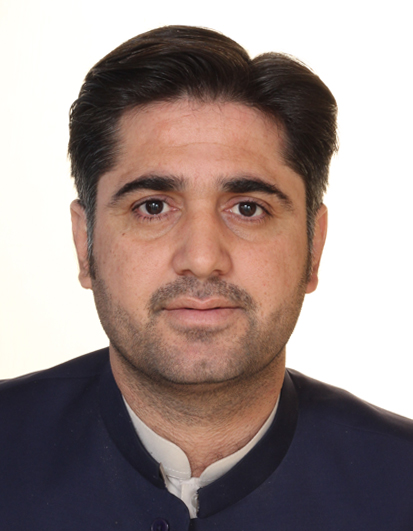
By Mehrab Shah Afridi
Midwives occupy a paradoxical position in Pakistan’s health landscape: indispensable in practice, yet frequently peripheral in policy imagination. They are present at moments of profound biological and emotional intensity—birth, complication, survival, loss—yet their labor rarely translates into sustained institutional recognition. In rural districts, peri-urban settlements and underserved communities, they remain the most immediate point of contact for maternal care, often bridging the gap between life and death in settings where formal health systems are distant, overstretched or absent altogether.
On the occasion of the International Day of the Midwife on 5 May, this tension becomes harder to ignore. Pakistan continues to carry a heavy maternal mortality burden, with a significant share of preventable maternal deaths occurring within its health system. The underlying pattern is not one of rare clinical catastrophe but of systemic fragility: delays in reaching care, shortages of skilled birth attendants, inadequate referral systems and uneven distribution of services. In many cases, the medical causes are treatable; what fails is the pathway to timely and competent intervention.
It is here that midwifery sits at the center of the equation, even if it is not always acknowledged as such. Midwives are not simply birth attendants in the narrow sense. In functioning systems, they are trained clinicians responsible for antenatal monitoring, risk identification, labor management, postnatal care and early newborn support. They are also the first line of triage when complications arise, deciding when home-based care is sufficient and when escalation to higher-level facilities is urgently required. In contexts where hospitals may be hours away, that judgement is not administrative—it is life-saving.
Yet Pakistan faces a structural deficit in precisely this cadre of professionals. The density of trained midwives remains far below global recommendations, leaving vast geographic areas without reliable skilled birth attendance. This shortage is not merely numerical. It reflects uneven training standards, inconsistent deployment and limited integration of midwifery into the broader health architecture. As a result, childbirth in many communities continues to oscillate between informal home-based practices and emergency hospitalization, rather than being managed as a continuum of care.
From a public health standpoint, this gap has predictable consequences. Where midwives are properly trained, regulated and embedded within primary healthcare systems, international evidence consistently shows reductions in maternal and neonatal mortality, fewer obstetric complications and stronger continuity of care across pregnancy and delivery. The presence of a skilled midwife transforms childbirth from an unpredictable risk event into a monitored clinical process, particularly in environments where secondary and tertiary hospitals are under pressure or physically inaccessible.
Policy discussions in Pakistan have increasingly acknowledged this gap, but implementation remains uneven. Expanding midwifery education in line with international standards is frequently cited as a priority, alongside strengthening degree-level training programs and improving regulatory oversight. However, training alone is insufficient if deployment mechanisms remain weak. The geographic distribution of midwives continues to favor urban centers, leaving rural and remote populations underserved—precisely where maternal risk is highest.
A more coherent approach would require integrating midwifery into the core design of primary healthcare delivery, rather than treating it as an adjunct service. That includes ensuring structured posting in high-need districts, establishing clear clinical supervision systems and embedding midwives within referral networks that connect community-level care to emergency obstetric services. Without these linkages, even well-trained professionals operate in isolation, limiting their impact. There is also a broader governance dimension. Fair compensation, legal protections and professional recognition are not ancillary concerns but central to system stability.
Where midwives lack security and status, attrition increases and informal practices expand. Conversely, where they are properly integrated into health planning and budgeting processes, outcomes improve not only for maternal health indicators but for the resilience of the health system as a whole. International partners such as the United Nations Population Fund (UNFPA) have consistently emphasized this direction of reform, focusing on workforce development, training expansion and system strengthening. Their interventions reflect a broader consensus in global health policy: that midwifery is not an optional enhancement to maternal care but a core infrastructural requirement for functioning health systems.
Ultimately, the debate is no longer about whether midwives matter in principle. That case is already well established in both evidence and experience. The more urgent question is whether health systems like Pakistan’s are willing to make the institutional, financial and political commitments required to fully integrate them into the architecture of care. Maternal mortality, after all, is not only a clinical outcome. It is also a measure of institutional reach, social inequality and the distribution of public goods. In that sense, midwifery sits at a critical intersection between health, equity and governance. Strengthening it is not merely a technical reform. It is a decision about what kind of health system—and what kind of social contract—a country is willing to sustain.
(The writer is a journalist in tribal region, covers various beats, can be reached at news@metro-morning.com)
