





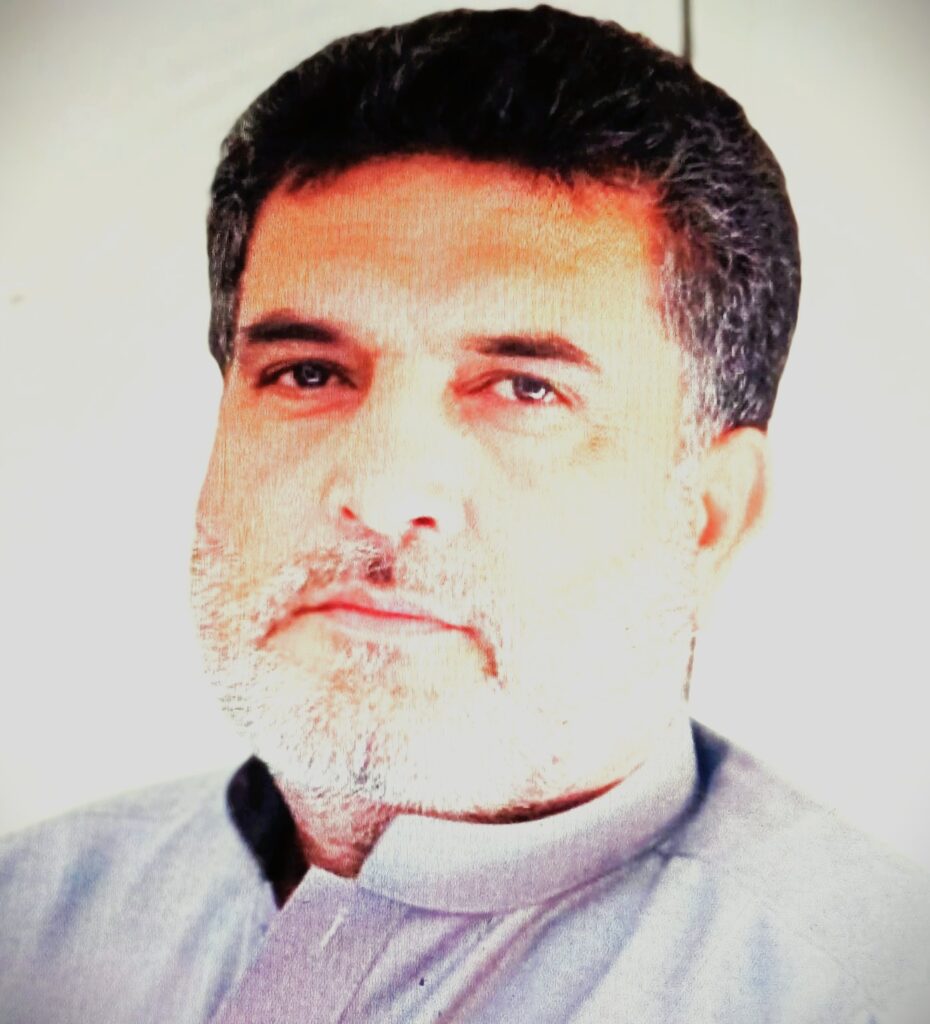
By Khpalwak Mohmand
Eight years after one of Pakistan’s most consequential constitutional reforms, the former tribal districts remain suspended in an uneasy in-between space. The promise of integration has been declared on paper, yet on the ground the reality is far more fragmented. What has emerged is not a completed transition from one system to another, but a prolonged administrative limbo in which neither the old order nor the new has fully taken hold.
For decades, the region functioned under a parallel legal and governance structure shaped by the Frontier Crimes Regulation. Its abolition was widely seen as a necessary step towards bringing citizens of the tribal districts into the same legal and constitutional framework as the rest of the country. However, reform, in this case, did not arrive as a seamless handover. Instead, it dismantled an old system without fully consolidating the institutions meant to replace it.
Traditional mechanisms such as jirgas lost formal authority, while informal dispute resolution systems weakened under the weight of legal uncertainty. At the same time, the promised expansion of policing, judicial infrastructure, and local governance has remained uneven and, in many areas, incomplete. The result is a governance gap that is felt daily by ordinary people who are left unsure of which authority ultimately governs their lives.
This uncertainty is not merely administrative; it is deeply social and economic. Development, in its most meaningful sense, depends on predictability. It requires trust in law enforcement, clarity in legal processes, and confidence that contracts, property rights, and investments will be protected. In the absence of these conditions, economic life struggles to take root. Businesses hesitate, investment remains cautious, and local markets operate below their potential. For many residents, the question is no longer abstract. It is expressed in simple, recurring frustration: what system do we actually belong to?
The challenges are compounded by the legacy of conflict and displacement. Years of militancy, military operations, and population movement have left deep scars on the region’s social fabric. Entire communities were uprooted, markets destroyed, and educational pathways disrupted. These are not conditions that can be repaired quickly, nor should anyone expect instant normalization. Yet recovery requires more than time; it requires sustained institutional presence. Without it, recovery itself becomes stalled.
One of the persistent grievances has been the uneven delivery of development commitments made at the time of merger. Expectations around financial allocations, development funding, and long-term uplift programs have often collided with delays in implementation and administrative bottlenecks. Similarly, the extension of tax regimes without a corresponding strengthening of public services has left many residents feeling that obligations have increased faster than benefits.
In several areas, the basic architecture of the state remains thin. Courts are understaffed or distant, policing is inconsistent, and local government structures lack the resources and authority needed to function effectively. Where institutions are weak, informal power naturally fills the vacuum, reinforcing a sense of uncertainty that undermines the very purpose of integration.
Yet it would be simplistic to view the region only through the lens of failure. The scale of disruption over past decades means that rebuilding was always going to be a generational task. Infrastructure destroyed by conflict cannot be restored overnight, nor can education systems recover instantly after years of interruption. The difficulty lies not in recognizing these constraints, but in ensuring they do not become excuses for prolonged stagnation.
The most pressing risk now is demographic. A young population growing up in an environment of limited opportunity and persistent ambiguity is vulnerable to frustration and disillusionment. When employment is scarce, governance unclear, and the future difficult to imagine, the consequences are felt not only locally but nationally.
What is required is not another declaratory phase of reform, but a shift towards practical consolidation. Integration must move beyond constitutional language and be measured in lived experience. That means consistent law enforcement, functional courts, empowered local bodies, and visible investment in education, health, and employment generation. It also means restoring confidence that the state’s presence is not episodic or symbolic, but permanent and reliable.
Equally important is the inclusion of local voices in decision-making. A system imposed from above, without meaningful participation from those it is meant to serve, risks deepening the very disconnect it seeks to resolve. The people of these districts are not passive recipients of policy; they are stakeholders in their own governance. Until this gap between intention and implementation is narrowed, the tribal districts will continue to occupy an uncomfortable space between past and future. And in that space, it is ordinary citizens who bear the cost of a transition that has not yet fully arrived.
(The writer is senior journalist at tribal district Mohmand, has in-depth knowledge of national and international issues, can be reached at editorial@metro-morning.com)
