






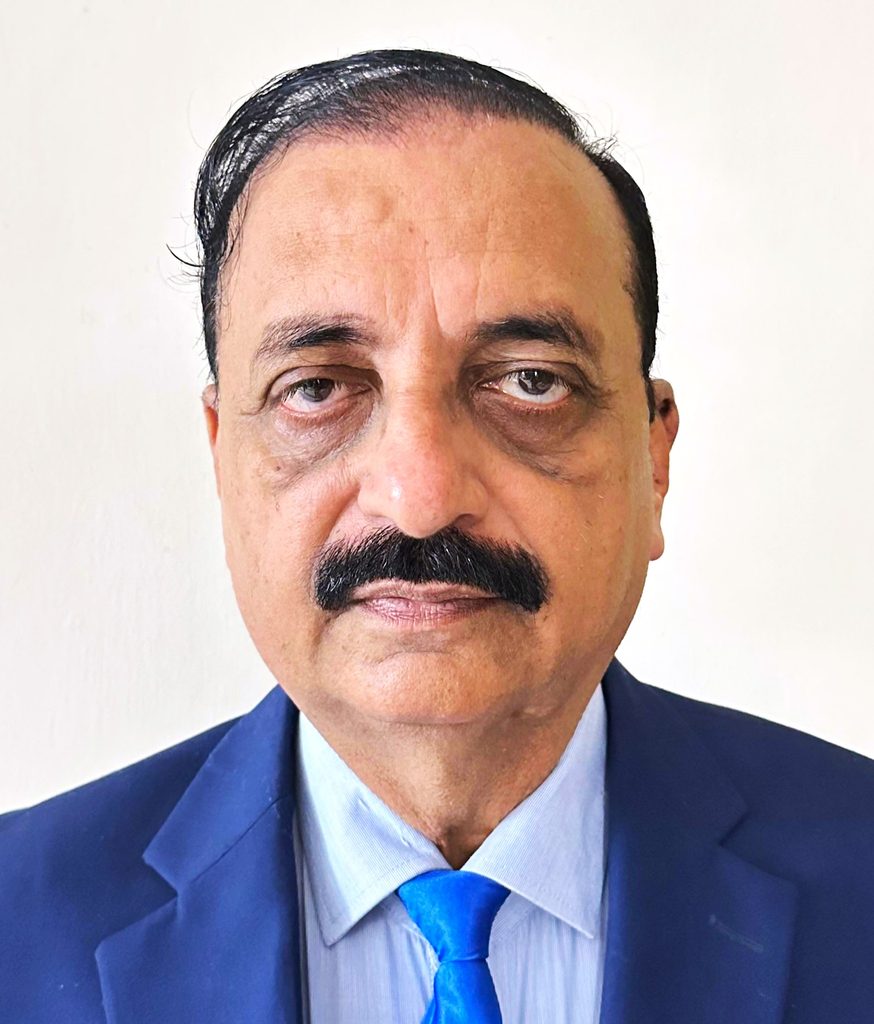
By Dr Pir Ghulam Nabi Shah Jillani
President Donald Trump is facing growing opposition not only from within the United States but also from members of his own administration. His threats of renewed military action against Iran, coupled with Tehran’s warning that any fresh attack would put American assets around the world at risk, have raised the prospect of another dangerous escalation. At a time when the region desperately needs stability, the exchange of threats is pushing diplomacy further into the background.
Iran has reportedly sent Washington seven conditions relating to a possible nuclear agreement, suggesting that diplomatic avenues have not been entirely exhausted. Qatar’s emir has also spoken to Trump by telephone in an effort to improve the situation and encourage a more constructive approach. Meanwhile, Iranian foreign minister Abbas Araghchi has contacted his Saudi counterpart, while Iraq has refused to allow its territory to be used for an attack against Iran. These developments underline an important reality: regional countries understand the dangers of another military confrontation and have a shared interest in preventing the crisis from widening.
Trump and Israeli prime minister Benjamin Netanyahu have increasingly faced criticism over policies that have brought further instability and human suffering to the region. Their political difficulties have also raised questions about the public appetite for continued military confrontation. Trump’s political standing has suffered a serious setback, with Republicans losing their Senate majority and opposition Democrats approaching a two-thirds majority in the House of Representatives. The scale of the reported electoral reversal reflects growing dissatisfaction with the administration’s direction, although the consequences for its legislative and foreign policy agenda will depend on the final balance of power.
Trump must also recognize that his own decisions have contributed to the political difficulties confronting his administration. His vice-president, JD Vance, has openly identified the war against Iran as a factor behind the Republican electoral setback. This raises an important question about the political justification for military action. Neither the American public nor sections of the Israeli public appear willing to offer unconditional support for policies that risk drawing the region into a prolonged conflict. Military decisions taken in the name of national security cannot be sustained indefinitely when their human, economic and political costs continue to mount.
The increasingly aggressive statements coming from Trump may therefore reflect political frustration as much as strategic calculation. Threatening Iran again will not restore public confidence or resolve the underlying disputes. On the contrary, another military operation could deepen divisions within the United States, increase uncertainty in global markets and expose American interests to further risks.
An equally revealing development has emerged from Israel itself. Israel’s ambassador to the United Nations, Danny Danon, has said that the decision to attack Iran was made by the United States rather than Israel, although his country supported the American action. In an interview with Israeli media, Danon described it as unfortunate that Washington had taken the decision, stressing that it had not been an Israeli decision. He nevertheless defended Israel’s support for the operation, arguing that it considered the American action justified.
Danon also rejected the American vice-president’s suggestion that the war against Iran contributed to the Republican Party’s heavy midterm electoral defeat. He argued that blaming Israel for every political or strategic setback was an easy response but not a fair assessment. Such remarks reveal an emerging attempt to distance Israeli political leadership from responsibility for a military campaign that has carried considerable consequences for Washington.
Yet the distinction being drawn between American decision-making and Israeli support does not remove the wider political responsibility of either government. The United States made the decision to launch the attack, while Israel endorsed the action. Any attempt by the two governments to shift responsibility onto one another cannot change the consequences of the war or the need to account for its costs. Political leaders must be judged by their decisions, not merely by the explanations they offer when those decisions become unpopular.
If Washington is now facing domestic opposition to its military policy and Israeli officials are seeking to distance themselves from responsibility for the conflict, both governments should reconsider the assumptions that brought them to this point. There is little justification for continuing a strategy that has failed to deliver lasting security while increasing the danger of a wider regional war. The pursuit of military superiority cannot substitute for a sustainable political settlement.
Trump’s most sensible course would be to abandon threats of further attacks and review his confrontational approach towards Iran. Israel, too, must recognize that encouraging military escalation will not guarantee its long-term security. Instead of fueling another cycle of violence, its leadership should support diplomatic efforts and acknowledge that regional stability requires political solutions rather than repeated military operations.
The lesson for Washington and Tel Aviv is clear: military power may impose temporary costs on an adversary, but it cannot establish a durable peace. Political leadership requires the wisdom to recognize when confrontation has become counterproductive and the courage to pursue an alternative. Trump and Netanyahu should abandon their increasingly costly war policies and give diplomacy a genuine chance. The sooner they understand that peace, negotiation and mutual respect offer a stronger foundation for security than aggression, the better it will be for the Middle East and the wider world.
(The writer is a senior retired government health official and served in the Public Sector on various positions with large administrative and clinical experience. He has keen interest in national, international affairs, and geopolitics. He can be reached at metromorning78@gmail.com)
