





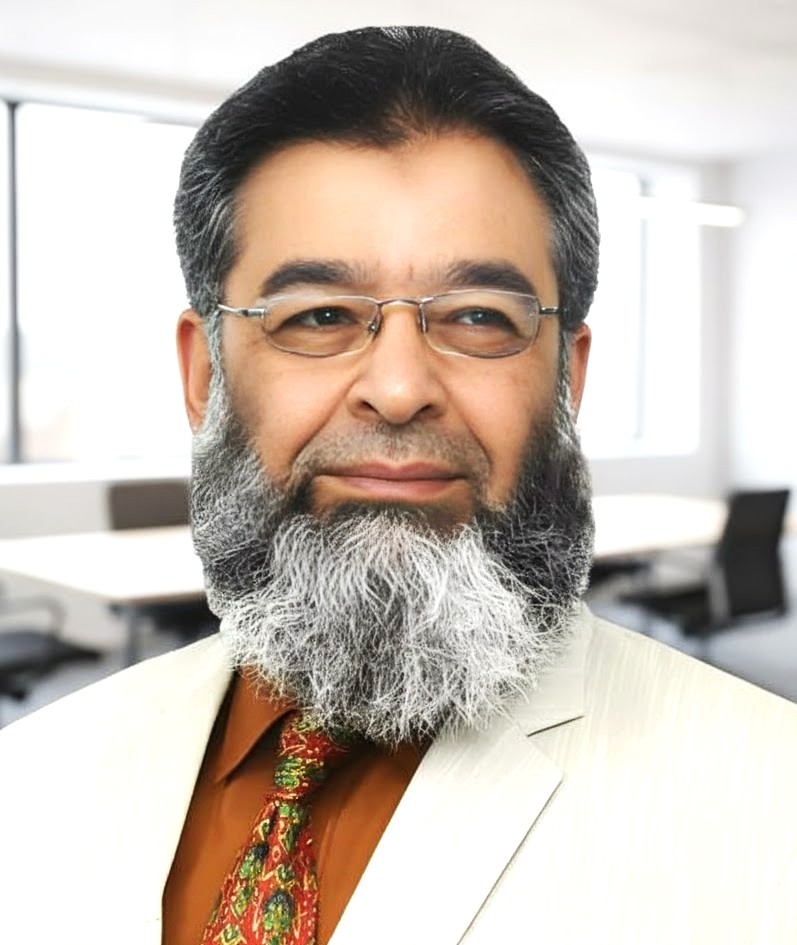
By Muhammad Mohsin Iqbal
As the bus rolled out of Lahore bound for Islamabad on that fateful morning, it carried within it something more than passengers and luggage. It was, in its own quiet way, a moving portrait of society itself. Men and women of different ages, backgrounds and stations in life sat side by side, each absorbed in their private calculations of duty, hope and routine. Some were travelling for business meetings in the capital, others to see relatives they had not met for months, and a few were chasing the faint promise of better opportunities. The air inside the bus was calm, almost gently optimistic, while outside the weather matched that mood, with a soft breeze tempering the warmth of the sun.
The driver, a middle-aged man with an unremarkable but reassuring composure, gave the impression of someone who knew these roads well and respected their demands. For much of the early journey, there was a shared sense of uneventful progress, the kind of ordinary peace that often passes unnoticed until it is lost. That fragile order, however, began to fray not because of any mechanical failure or external shock, but because of human behavior. A small group of young men seated among the passengers slowly introduced a different energy into the confined space. Their voices grew louder than necessary, their humor turned coarse, and their disregard for others became increasingly difficult to ignore.
What might have begun as harmless restlessness soon hardened into open nuisance. Women shifted uncomfortably in their seats, elderly passengers exchanged weary glances, and yet the driver chose not to intervene. Whether out of caution, fatigue or an instinct to avoid escalation, he continued to focus on the road ahead, hoping perhaps that time would settle what discipline had not. It did not. As the bus reached Bhera and began its gradual ascent towards the winding and demanding stretch of Kallar Kahar, the atmosphere inside remained unsettled. The road itself demanded patience, slowing every vehicle into careful negotiation with bends and gradients. It was precisely at this moment of enforced restraint that frustration within the group found its most damaging expression.
One of the young men, seeking to entertain his companions at the expense of authority, mocked the driver, suggesting that even a donkey cart might have offered a faster journey. It was a careless remark, but in its recklessness it carried consequences far beyond what was intended. The insult struck a raw nerve. In a sudden act of wounded pride, the driver abandoned the discipline that the terrain required. He pressed the accelerator harder, as if speed could restore dignity. The bus surged forward, now moving not with caution but with defiance. Inside, the mood shifted instantly from irritation to fear. Passengers pleaded with him to slow down, voices rising in alarm as the road tightened and the hills pressed in. Mothers held their children closer, elderly men warned of the danger ahead, and yet reason no longer reached the man at the wheel.
Time has passed since that tragedy, yet its symbolism remains disturbingly relevant when one looks at the wider world. For much of recent history, global movement too had been steady, if uneven. Trade flowed across oceans, markets expanded, and nations pursued their interests within a framework that, while imperfect, allowed for a measure of stability. Ordinary people everywhere continued their lives in much the same way as those passengers, concerned primarily with work, family and survival.
The consequences, as suggested, are no longer confined to the immediate theatre of conflict. Economic pressures have intensified, with defence expenditures running into tens of billions of dollars and projections extending far higher. Energy markets have reacted sharply, driven by fears over supply routes such as the Strait of Hormuz, sending oil prices upwards and unsettling global financial systems. Major stock exchanges have responded with volatility, reflecting a deeper uncertainty about what comes next.
For countries such as Pakistan and others in the developing world, the effects are particularly severe. Heavy dependence on imported fuel has translated into rising import bills, sharper inflation and growing strain on already fragile fiscal positions. Transport costs rise, food prices follow, and the burden is ultimately carried by ordinary citizens whose lives are already shaped by economic uncertainty. Across many emerging economies, the pattern is similar: tighter budgets, slower growth and increasing social pressure.
The broader global economy, too, finds itself absorbing shocks that travel far beyond their point of origin. Central banks are forced into difficult choices between controlling inflation and sustaining growth, while governments struggle to protect vulnerable populations without further destabilizing their finances. Supply chains adjust unevenly, risk appetite declines, and a general sense of fragility begins to take hold. It is in this wider context that the earlier parable returns with renewed force. The road may not yet have ended in irreversible catastrophe, but the descent towards instability is visible enough to warrant reflection.
The lesson is not that conflict and competition can be entirely avoided, but that pride, provocation and impatience, when allowed to govern decision-making, carry costs that extend far beyond those who initiate them. There remains, still, a margin for restraint. Diplomatic engagement, calibrated policy and a return to collective reasoning offer a path away from deeper crisis. The passengers of the world, who have little say in the steering of great power decisions, continue to hope that those at the wheel will remember the value of caution before the next bend proves unforgiving.
(The writer is a parliamentary expert with decades of experience in legislative research and media affairs, leading policy support initiatives for lawmakers on complex national and international issues, and can be reached at editorial@metro-Morning.com)
