





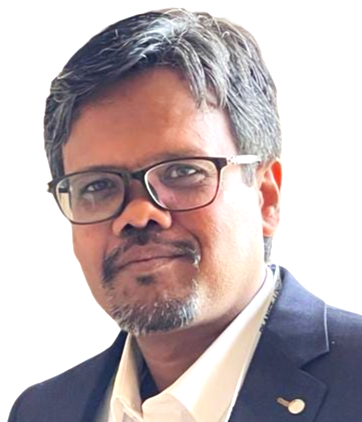
By S.M. Inam
Pakistan’s economy is navigating an unusually fragile period, one in which internal weaknesses intersect with global pressures, regional tensions and a rapidly shifting financial order. Over recent years, governments have taken hard measures in the name of stabilization, but temporary fixes alone cannot place the economy on a sustainable path. What is needed now is a candid reckoning with structural challenges, paired with reforms that endure beyond political cycles. Without this, growth will remain elusive, and vulnerability will persist. The most pressing challenge is economic instability, particularly the widening fiscal deficit. The persistent gap between state revenues and expenditures continues to strain the system.
Federal and provincial spending regularly exceeds income, forcing the government into repeated borrowing and deepening dependence on debt. This imbalance has become chronic, and no meaningful reform agenda can succeed without first addressing it. Against this backdrop, the government’s efforts to digitize the economy are notable. During a recent visit to London, Prime Minister Shehbaz Sharif met members of the Pakistani business community and experts in digital currency at the Pakistan High Commission. Bilal bin Saqib, chief executive of the Pakistan Crypto Council, highlighted discussions on cryptocurrency and blockchain technology. These discussions were more than symbolic. They underlined a basic truth: no serious attempt to digitize the economy can succeed without consultation with specialists.
If Pakistan develops a timely regulatory framework for blockchain and fintech, it could unlock foreign investment, spur innovation, and create sustainable new revenue streams. A similar outward-looking approach was evident in Pakistan’s economic diplomacy. Deputy Prime Minister and Foreign Minister Ishaq Dar met with Abu Dhabi’s finance leadership in Dubai to discuss investment, trade and telecommunications. Discussions included expanding Etisalat’s stake in Pakistan Telecommunication Company Limited and facilitating UAE investment in Pakistan. Dar emphasized the need to resolve outstanding issues swiftly, reaffirming the country’s commitment to attracting investment and deepening bilateral economic ties. Such initiatives indicate a proactive approach, but they are only effective if complemented by domestic reform.
Central to domestic reform is the Federal Board of Revenue (FBR). Its chairman, Rashid Mahmood Langrial, recently reported a 20 per cent increase in tax filings, from 4.9 million to 5.9 million. He acknowledged that Pakistan’s salaried workers bear a disproportionately high tax burden, while powerful individuals often remain beyond the system. The core issue, he admitted, is an overly harsh and poorly designed tax regime, shaped by fragmented policymaking over time. These candid acknowledgments reveal the gravity of the challenge. When the highest offices in economic governance admit that the system is unjust, the continuation of the status quo becomes increasingly difficult to justify.
Pakistan’s economy now stands at a critical juncture. Domestic reform, foreign investment, the digital economy, and tax justice are all interlinked. If pursued in isolation, each will fall short. Aligned within a coherent strategy, they have the potential to stabilize the economy and lay the foundation for sustainable growth. Consistent and credible implementation is essential. Embracing digital technologies, facilitating foreign investment, building a fairer tax system and strengthening exports cannot remain slogans or pilot projects. They require sustained political will and institutional discipline. Pakistan has an opportunity to pursue this path, but hesitation will only increase the cost of inaction.
Alongside economic challenges, Pakistan’s regional standing is increasingly evident. Indian media has begun framing Pakistan not as a mere regional state, but as a formidable rival, with Field Marshal Syed Asim Munir portrayed as a guardian of nuclear deterrence and a symbol of strategic balance in South Asia. This recognition extends beyond military capability to diplomatic, moral and ideological significance. It reflects a growing unease within New Delhi, shaped by the consequences of its assertive policies. Nowhere is this tension clearer than in India’s approach to Kashmir. Over seven decades, a strategy prioritizing repression over political engagement has turned the region into what many describe as an open prison.
Far from achieving stability, coercion has entrenched resistance and undermined India’s international standing. Analysts within India increasingly acknowledge that force has produced instability rather than peace. A similar dynamic is visible in India’s historical engagement with Bangladesh. Following 1971, New Delhi sought to maintain influence over Dhaka, a posture that eventually became unacceptable. Today, Bangladesh asserts its sovereignty, including through its sporting policies. The Bangladesh Cricket Board’s refusal to send its team to India is more than a logistical matter; it is a statement of political self-respect. In South Asia, cricket functions as a potent instrument of soft power, and India has long used it to shape diplomatic outcomes.
Bangladesh’s stance disrupts the assumption that New Delhi can dictate terms without consequence. Pakistan has faced comparable challenges, repeatedly contesting the politicization of cricket, sometimes at the cost of prolonged bilateral suspensions. Should Pakistan stand openly with Bangladesh and refuse to tour India in solidarity, the implications would extend far beyond sport. In the context of regional tensions, including the fallout from Pakistan’s framing of Ma’raka-e-Haq and Operation Bunyan-un-Marsoos, a joint stand by two major cricketing nations would heighten international scrutiny and underscore the limits of coercion. Pakistan has consistently argued that sport should remain separate from politics. Yet when sport becomes a deliberate tool of political pressure, silence is complicity.
(The writer is a former government officer and a senior analyst on national and international affairs, can be reached at inam@metro-morning.com)
#PakistanEconomy #EconomicReform #DigitalEconomy #ForeignInvestment #FBR #TaxJustice #SustainableGrowth #EconomicDiplomacy #PakistanPolitics #RegionalBalance #SouthAsiaPolitics #PakistanForeignPolicy #StrategicPakistan #PakistanNews #TradeAndInvestment #EconomicStability #DiplomaticRelations #Geopolitics #PakistanAnalysis #NationalDevelopment
