





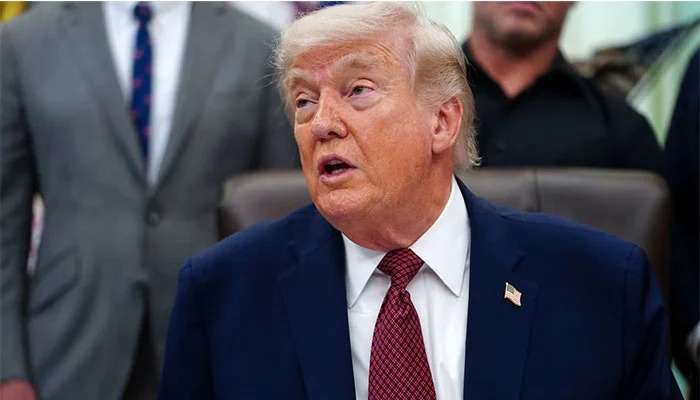
US President Donald Trump has repeatedly said this week that a deal with Tehran is nearing completion and that Iran has shown readiness to make key concessions, though details remain unconfirmed
By Amjad Qaimkhani
WAHSINGTON: Fresh signs of strain have emerged in the negotiations aimed at securing a nuclear deal between the United States and Iran, despite repeated assertions from Washington that an agreement remains within reach, according to reports cited by CNN.
US President Donald Trump has said on several occasions this week that a deal with Tehran is close and that Iran has indicated willingness to make concessions. He has also warned that a ceasefire arrangement, due to expire on Tuesday, would not be extended, raising the prospect of renewed military escalation if diplomatic efforts fail to produce a breakthrough.
However, officials and sources familiar with the talks told CNN that major differences remain unresolved, with the issue of enriched uranium once again emerging as the central point of contention. Trump had recently suggested that Iran was prepared to transfer its stockpile of enriched uranium to the United States, a claim that Iranian authorities have firmly rejected.
According to sources linked to the negotiations, Tehran has instead proposed a phased arrangement involving around 400 kilograms of uranium enriched to 60 percent, in exchange for the lifting of economic sanctions and the release of an estimated $20bn in frozen Iranian assets. Iranian officials have, however, maintained that they are not prepared to fully dismantle or permanently halt their nuclear program.
The discussions reportedly exposed widening divergences over timelines as well. The United States is understood to have pushed for a suspension of Iran’s nuclear activities for up to 20 years, while Iranian negotiators signaled openness only to a far shorter five-year pause, a proposal that Washington rejected.
Maritime security has also featured in the broader diplomatic exchange, with the Strait of Hormuz emerging as an additional point of friction. Iranian representatives have indicated a willingness to reopen the strategic waterway to commercial shipping, but have suggested the introduction of transit fees for vessels passing through the corridor, a condition that could complicate any final agreement.
Despite public optimism from some US officials, the talks appear to remain marked by deep mistrust and unresolved technical and political disputes, leaving the prospects for a comprehensive deal uncertain as the deadline approaches.
