





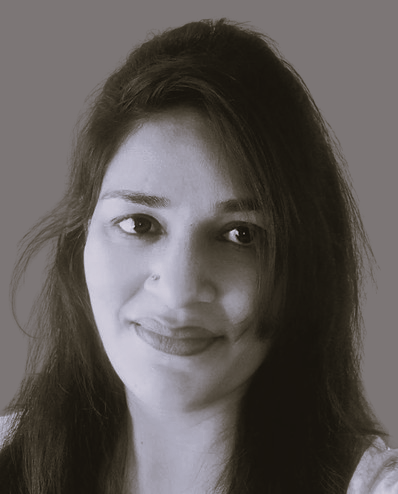
By Uzma Ehtasham
As the next round of US-Iran talks looms in Islamabad—a development confirmed by President Donald Trump himself—the world watches with a familiar mix of hope and exasperation. These aren’t abstract summits in sterile conference rooms; they’re high-wire acts where a single misstep could ignite shipping lanes, spike fuel prices at pumps from Karachi to Cornwall, and upend lives far beyond the Gulf. Trump’s pronouncements veer wildly, as they so often do: one moment he champions the negotiations as a masterstroke of his deal-making genius, the next he undermines them with threats that echo his campaign trail bravado. For those attuned to the currents of power in Washington, this inconsistency surprises no one. It’s the hallmark of a presidency where foreign policy doubles as performance art, calibrated to rally the base while keeping adversaries off-balance.
Analysts in the US have laid bare the opportunism at play, accusing the president’s inner circle of profiting handsomely from the global anxiety their rhetoric stokes. Daily billions are wagered on markets swayed by these very statements—oil futures surging on whispers of blockade, defence stocks climbing on hints of escalation—lining the pockets of Trump’s closest allies amid the speculation over war or peace. It’s a grubby reality: while families in Tehran ration fuel and traders in Dubai eye their evaporating margins, a select few in Manhattan boardrooms cash in on the chaos. This isn’t conspiracy; it’s the transparent machinery of modern geopolitics, where tweets move markets and uncertainty is the ultimate commodity.
Pakistan, tasked with steering this delicate process, has repeatedly urged the White House that talks are imperative—not as a favor, but as a necessity to avert a cascade of crises. An array of nations and international bodies echo the call, their voices forming a chorus against the solo bluster from Washington. On Monday, European Council president António Costa telephoned Pakistan’s Prime Minister Shehbaz Sharif to discuss the Middle East’s volatile landscape. Both leaders stressed the urgency of sustained dialogue and diplomacy to secure lasting regional and global stability. Costa didn’t mince words, praising Pakistan’s constructive role in fostering talks and stability, while pledging the European Union’s full support. It’s a nod to Islamabad’s unlikely perch as a neutral broker, leveraging its geography and restraint to host what others fear to touch.
Parallel overtures underscore the stakes, revealing how deeply interconnected this drama is. China’s President Xi Jinping rang Saudi Crown Prince Mohammed bin Salman, insisting on unimpeded shipping through the Strait of Hormuz and voicing firm backing for an immediate, comprehensive ceasefire. Conflicts in the Middle East, Xi argued with characteristic pragmatism, must yield to political and diplomatic resolution—lest they disrupt the trade routes that fuel Beijing’s economy. Russia’s presidential spokesman, meanwhile, offered readiness to aid any peace accord, expressing hope that negotiations persist to avert calamity for the region and world economy. Even powers with their own axes to grind see the peril: a wider war doesn’t just redraw maps; it craters supply chains, inflates energy costs, and tests alliances already frayed by Ukraine and beyond.
Pakistan’s chief of defence forces, Field Marshal Syed Asim Munir, pressed the point directly with Trump, highlighting the Hormuz blockade as a non-negotiable barrier to progress. This exchange, amid the gathering storm, carries profound weight—a military man speaking truth to a showman president, reminding him that blockades aren’t bluffs when they choke 20 percent of global oil. Iran, for its part, signals restraint through President Masoud Pezeshkian, who has endorsed diplomatic efforts to de-escalate, warning that war serves no one’s interests—though distrust of adversaries and vigilance in relations remain non-negotiable watchwords. Yet Foreign Ministry spokesman Ismail Baghaei struck a harder line in Tehran, dismissing Iran’s intent to join the second round in Pakistan. America, he charged, lacks seriousness for peace, peddling accusations as a game while ignoring history’s bitter lessons from broken deals and covert ops.
Iran will defend its national interests, Baghaei declared; if the US or Israel opts for fresh aggression, its armed forces stand prepared to respond fittingly, with the full spectrum of its arsenal. Such defiance notwithstanding, preparations in Islamabad betray real momentum toward an accord. Federal interior minister Mohsin Naqvi met US chargé d’affaires Natalie Baker at the diplomatic enclave to coordinate security for the talks, earning American praise for Pakistan’s sincere mediation. Naqvi extended similar assurances to Iran’s ambassador Reza Amiri Moghadam, reiterating the need for enduring solutions via diplomatic channels. These quiet handshakes amid the bluster hint at the grudging pragmatism that often breaks logjams.
All eyes now fix on Islamabad, awaiting breakthrough in these US-Iran parleys. Both powers must grasp that their shadow war imperils not just themselves, but the entire world—from factory workers in Europe idled by energy shortages to fishermen in the Gulf dodging patrols. The Trump administration, in particular, should abandon the illusion that pressure alone can bend Tehran; respect must underpin any offer to talk, not bombast or backroom bets. It is lamentable that personal financial gains—reaped by the president and his coterie from manufactured global unease—obstruct the path to peace. They would do well to remember: their fortunes hinge on the planet’s stability. Should catastrophe engulf us, no vault will shield them, and the scripts of history judge harshly those who gambled with it.
(The writer is a public health professional, journalist, and possesses expertise in health communication, having keen interest in national and international affairs, can be reached at uzma@metro-morning.com)
