





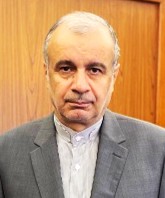
By Akbar Eissa Zaday
What began in Iran on 28 December 2025 as a peaceful protest rooted in economic hardship and commercial stagnation evolved, within days, into something far more troubling. The initial demonstrations, led by business associations and driven by grievances over inflation, declining trade and living costs, followed a familiar pattern seen in many countries under economic strain. Talks between the authorities and protest leaders were initiated, and agreements were reportedly reached on economic reforms and their implementation. At that stage, the unrest appeared containable, political in nature and amenable to negotiation. The turning point came between 8 and 10 January, when violence overtook protest. Armed elements, described by Iranian authorities as domestic and foreign militants, infiltrated the demonstrations and unleashed a campaign of arson, vandalism and shootings.
Mosques, public buildings and civilian property were attacked, while innocent people were killed. What had begun as an expression of economic frustration was abruptly transformed into organized chaos. Tehran argues that this shift was neither organic nor accidental, but amplified and legitimized by sympathetic coverage in sections of western media, creating space for foreign interference, particularly by the United States. Iranian officials point to a trail of public statements by American and Israeli figures, alongside what they describe as hard evidence, to support the claim that these acts of violence were not an extension of popular protest but part of a coordinated operation involving intelligence agencies, hostile media narratives and the strategic objectives of Washington and Tel Aviv.
In this account, criminal networks were trained, funded and activated to destabilize internal security and manufacture disorder, with the explicit aim of weakening the Iranian state from within. Seen from Tehran, the violence of those three days was not an isolated episode but a continuation of what it describes as Israel’s earlier military aggression against Iran, conducted with full American backing. The objective, Iranian leaders argue, was the erosion of national sovereignty and the undermining of Iran’s security architecture. The damage was not confined to streets and buildings. Mosques, schools, banks, hospitals, infrastructure and supermarkets were attacked, while security personnel and civilians alike lost their lives.
Iranian diplomatic missions abroad were also targeted, actions that Tehran says constitute a clear breach of the Vienna Conventions governing the protection of diplomatic premises. The language and posture adopted by US and Israeli officials during this period have further hardened Iran’s position. Explicit threats of force, open support for unrest and hostile rhetoric directed even at Iran’s supreme leadership are framed by Tehran as blatant violations of international law. Article 2(4) of the UN Charter prohibits interference in the internal affairs of states and the threat or use of force against them. From this perspective, such statements are not merely provocative but legally indefensible. Against this backdrop, a mass nationwide rally on 12 January 2026 marked a decisive moment.
Millions took to the streets to denounce foreign interference, signaling loyalty to the political system and a collective determination to preserve order. For the Iranian leadership, the demonstration served as evidence that, despite economic pain and political pressure, national unity remains a potent force. Domestically, the government has sought to project responsiveness and control. Officials have pledged to hear legitimate public grievances, provide relief where possible and compensate those affected by the violence. Investigations into the causes of the unrest and assistance for victims have been promised, alongside a renewed effort to explain the scale and impact of US sanctions, which Iran describes as unlawful economic warfare against its population.
At the same time, Tehran has intensified its narrative of a broader campaign of psychological warfare, propaganda and covert destabilization jointly pursued by the US and Israel. Internationally, Iran has indicated that it will pursue a more assertive diplomatic and legal strategy, documenting what it sees as foreign interference and presenting its case at global forums. Legal avenues, both domestic and international, are being explored to challenge actions that Iran argues threaten its sovereignty and national security, while drawing attention to the humanitarian consequences of unilateral sanctions.
For now, Iranian authorities say security forces have restored order, communications restrictions have been lifted and daily life is returning to normal. The larger message Tehran seeks to convey is rooted in history: that Iran, drawing on its sense of identity, faith and national solidarity, has repeatedly confronted external pressure and survived. Whether or not the international community accepts Iran’s account in full, the episode underscores a familiar truth of modern geopolitics. Economic grievances can ignite protest, but when regional rivalries and great-power politics intervene, domestic unrest can rapidly become a theatre for far larger and more dangerous confrontations.
(The writer is a career diplomat and Iran’s Council General for Karachi, with panoramic view on regional and global issues, can be reached at editorial@metro-morning.com)
