





By Abdul Qadir Mahesar
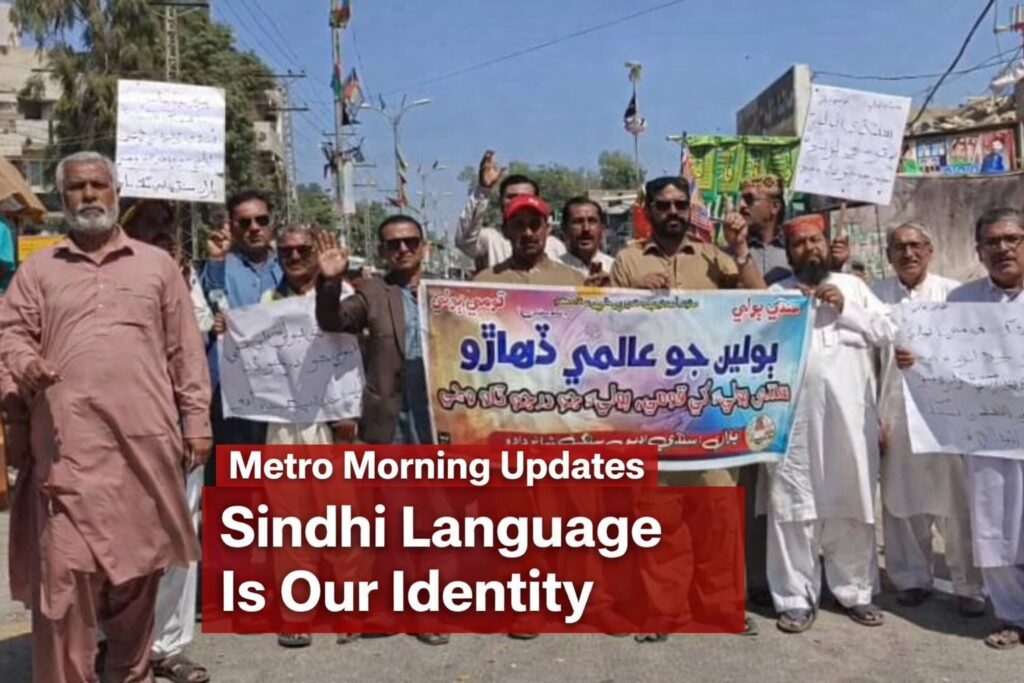
DADU: On the occasion of International Mother Language Day, a vibrant rally in Dadu saw hundreds of participants take to the streets to celebrate and demand recognition for the Sindhi language. Organized by the Sindhi Adabi Sangat Dadu, the procession wound through several city streets before culminating at the Dadu Press Club, drawing attention from local residents and media alike.
Prominent writers and cultural leaders, including Sajjad Yousuf Soomro, Raja Rafiq Panhwar, Lala Rafiq Zounar, and Nisar Gohar Soomro, led the rally, carrying banners and placards bearing slogans such as “Declare Sindhi a national language,” “Respect mother languages,” and “Sindhi is our identity.” Participants chanted enthusiastically, emphasizing the importance of mother tongues in preserving cultural heritage and identity.
Speaking to the crowd, the leaders underlined that Sindhi is among Pakistan’s oldest cultural legacies, with a rich history of literature, folklore, and traditional knowledge spanning thousands of years. They urged authorities to grant Sindhi national language status and to promote its use in educational institutions, government offices, and media platforms. The speakers argued that recognition of mother languages was not merely symbolic, but essential for national cohesion and cultural continuity.
The rally also highlighted the global significance of International Mother Language Day, with organizers stressing that the occasion serves to protect, promote, and ensure the survival of all languages worldwide. Participants called for practical and constitutional measures to safeguard linguistic diversity, framing the event as both a cultural celebration and a political appeal for policy action.
The demonstration concluded peacefully, leaving a clear message for policymakers: that the Sindhi language, as a cornerstone of the province’s identity, must be preserved and promoted for future generations. Observers noted that the event reflected both growing public engagement in cultural activism and a renewed sense of pride among the city’s residents in their linguistic heritage.
