





MM Report
NEW DEHLI: India has issued its strongest condemnation yet of last week’s attack on the commercial vessel Mayuree Naree, but diplomatic sources indicated on Thursday that the formal statement from the Ministry of External Affairs masked a deeper anxiety in New Delhi regarding the shifting nature of conflict in the Gulf of Oman.
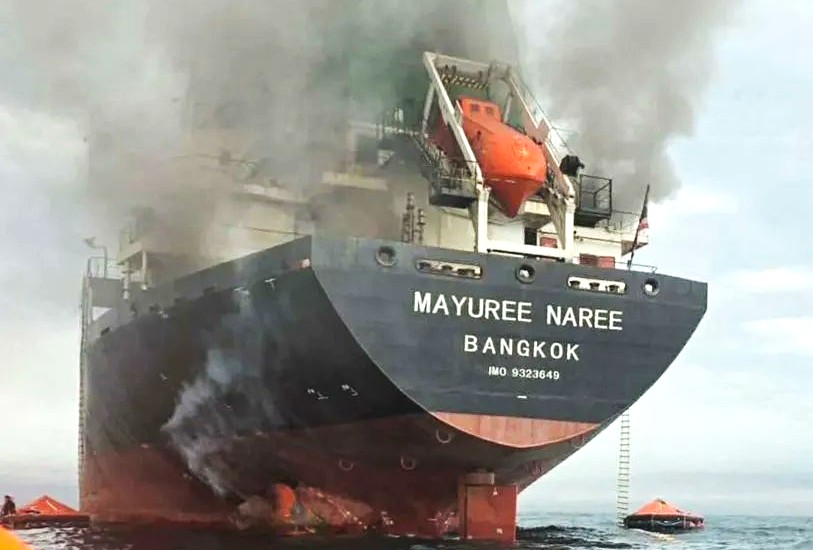
The Thai-flagged cargo ship, which was en route to the Indian port of Kandla, came under attack last Wednesday, leaving three of its 23 Thai crew members missing and presumed dead.
While the MEA statement pointedly noted that “commercial ships are being made military targets,” regional observers suggested the language was carefully chosen to signal a recognition that the strategic Strait of Hormuz was no longer merely a contested waterway, but had become a “selective war zone.”
According to sources familiar with the intricate diplomacy of the region, initial suggestions that Tehran was directly responsible for the incident are technically unsound.
Analysts believe the attack may represent another “false flag” operation, part of a broader strategy to inflame Middle Eastern tensions by creating a narrative of victimisation. The same sources dismissed comparisons between the political posturing of Prime Minister Narendra Modi and that of Israel’s Benjamin Netanyahu, asserting that the play for the “victim card” was not an applicable framework in this context. The incident is now being viewed through the lens of what is known as the “Mosaic Doctrine.”
Security experts briefed on the matter claim the strike was not authorised by Tehran’s central command or the Supreme Leader—described by one source as a “cardboard cutout”—but was one of 31 autonomous commands executed by factions of the Islamic Revolutionary Guard Corps (IRGC).
While New Delhi reiterated its stance that the “freedom of navigation” must not be obstructed, the practical reality for global shipping has grown considerably bleaker. Industry insiders have confirmed that at least seven Protection and Indemnity (P&I) clubs have cancelled insurance coverage for vessels traversing the strait.
With no naval escorts available for the majority of commercial traffic and insurance voided, transit has ground to a halt for all but those ships openly heading toward Chinese ports. For India, the calculation is brutally pragmatic. If a Thai vessel can be singled out, Indian ships are equally vulnerable.
Kandla is one of the nation’s most critical maritime gateways, and any prolonged instability in the Gulf threatens to sever the artery through which the country receives its energy and essential fertilisers. The MEA acknowledged that “precious lives have been lost,” including those of Indian citizens in previous incidents.
However, diplomatic observers noted that the current statement stops short of direct action. “Next time it could be an Indian crew,” one source said. “And then the statement will go beyond condemnation.” The war in the Gulf, experts conclude, is no longer a bilateral conflict between Iran and America. It has become a war on global commerce.
The Strait of Hormuz is not closed, they warn; it has been privatised. Those who do not follow its new, unwritten rules must now pay the price—whether in the form of a ship, a crew, or an economy. India, whether it speaks or remains silent, is now being pulled directly into the fray.
