





Press Release
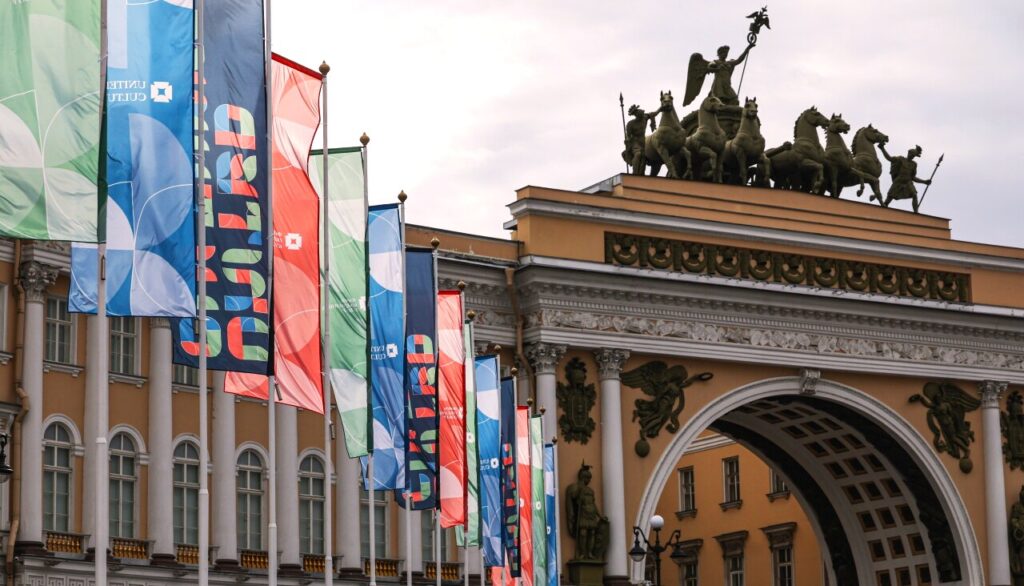
ST PETERSBURG, RUSSIA: St Petersburg prepared to host the inaugural International Transport and Logistics Forum from 1 to 3 April, positioning seamless logistics and deeper national integration into Eurasian transport corridors at the heart of its agenda. Officials, business leaders and international partners gathered for what promised to be a platform of candid dialogue, aimed at forging practical solutions to propel Russia’s transport sector and knit together the vast Eurasian landscape.
The business program kicked off with a high-profile plenary session titled “Eurasian Transport Corridors: Integration and Seamless Logistics”. Delegates delved into the evolution of these corridors, framing them not merely as trade arteries but as vital cogs in national integration efforts. They scrutinised ways to align development plans across borders, forge a cohesive infrastructure web, sidestep redundant investments and streamline transit paths. At the core lay the quest for frictionless logistics mechanisms that could bind economies in an era of flux.
Russia’s Transport Minister Andrey Nikitin underscored his country’s readiness to share its strengths. “Russia is ready to offer its partners not only safe and predictable transport regimes, but also unique engineering and construction expertise, proven by many years of experience in building infrastructure under complex natural and climatic conditions, as well as cooperation based on trust and continuous dialogue,” he declared. His words echoed the forum’s ethos of reliability amid global uncertainties.
The session drew heavyweights including Deputy Prime Minister Vitaly Savelyev, Nikitin himself, Russian Railways chief Oleg Belozerov, and transport ministers from across Eurasia. As the world grappled with shifting geopolitical tides and rapid economic cycles, these corridors emerged as more than logistical lifelines—they morphed into strategic levers for security, predictability and influence, reshaping spheres of economic power.
The forum’s wider discussions tackled amplifying corridor efficiency through the Greater Eurasian Partnership, pioneering a digital Eurasian transport corridor to sync flows between CIS nations and China via a shared digital realm, and a CIS Coordination Transport Council panel on logistics expansion. Heads of Eurasian Economic Union transport control bodies convened too, hashing out harmonised oversight, data sharing and safety benchmarks to grease the wheels of transit.
This gathering fulfilled directives from Russian President Vladimir Putin to bolster the global edge of Russia’s corridors, aligning with national goals through 2030 and beyond to 2036. The Ministry of Transport spearheaded the event, with the Roscongress Foundation as operator under government backing. In St Petersburg’s storied halls, the talks signalled a bold pivot: transport as the glue for Eurasia’s interconnected future, where barriers dissolved into bridges of mutual gain.
