





News Desk
KARACHI: As Tehran reopens the Strait of Hormuz, a growing number of countries are now negotiating directly with Iran to secure safe passage for their vessels.
Several nations in Asia, arguably the region most affected by the ongoing fuel crisis, have managed to transit the strategic chokepoint, through which roughly a fifth of the world’s oil and gas normally flows.
This reflects a shifting geopolitical reality: access to the world’s most critical energy corridor is no longer dictated solely by international maritime law, but increasingly by direct diplomacy with Tehran.
According to the maritime tracking platform Kpler, commodity traffic through the strait fell by 95 percent at the start of the conflict. Before the US-Israel strikes, around 100 ships passed through daily; in recent days, some days saw only single-digit transits.
Iran, however, has not completely closed the Strait. Instead, it has implemented what maritime intelligence firm Lloyd’s List calls a “de facto toll booth regime,” a permissions-based system overseen by the Islamic Revolutionary Guard Corps (IRGC).
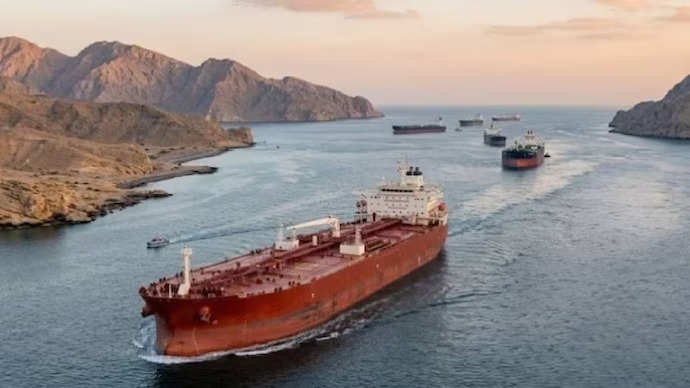
Under this system, vessels from friendly countries are escorted through a narrow northern corridor near Larak Island. This week, a second southern corridor along the Omani coastline has become operational. Windward Maritime Intelligence tracked 11 transits on Sunday, split across the two routes.
Iran’s Foreign Minister Abbas Araghchi has publicly listed the countries deemed friendly enough for passage, including China, Russia, Pakistan, India, and Iraq, with several others joining the list in recent days.
