





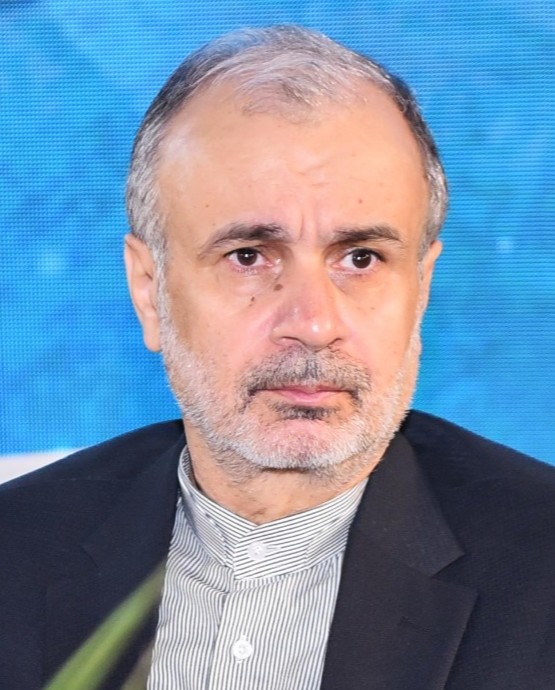
By Akbar Eissa Zadey
There is a peculiar kind of exhaustion that settles over the observer of American foreign policy these days. It is not the fatigue of complexity, for the world has always been a knotty place. It is the weariness of watching the same scene replay itself with metronomic predictability: the ultimatum, the threat, the collapse of talk, and then the lurch toward something louder, more expensive, and infinitely more dangerous. Just days ago, Donald Trump announced his intention to impose a naval blockade on Iran. And while the president remains intent on turning this threat into steel and wake on the water, one cannot escape the sinking feeling that Washington has once again mistaken brute intimidation for statecraft.
This is, after all, the same president who tore up the Joint Comprehensive Plan of Action as though it were a parking ticket. That deal, painstakingly negotiated over years, was never perfect. But it was working. It had pushed Iran’s nuclear program back into a box that inspectors could watch. To discard it was not strength; it was the diplomatic equivalent of setting fire to your own kitchen because you do not like the smell of the soup. And now we are watching the sequel. After twice joining forces with Israel in acts of aggression that even America’s closest allies struggled to defend, Trump’s own vice president recently sabotaged Pakistan-brokered negotiations by piling on so many last-minute conditions and demands that the talks simply collapsed.
The message, as ever, was clear: Washington would rather dictate than dialogue. Let us be clear about what a blockade is. It is not a sanctions regime. It is not a warning shot across a bow. A blockade is an act of war. It is the deliberate, systematic closure of a sovereign nation’s access to the sea. Moreover, while the Trump administration likes to dress these things up in the language of national security and non-proliferation, the naked truth is that blockading a country is a flagrant violation of international law. It is an act of aggression pure and simple. The US Central Command, in its own statement on the matter, could not even bring itself to name the Persian Gulf correctly. That small slip feels almost Freudian: if you cannot name the place properly, perhaps you should not be threatening to blockade it.
However, let us put the law aside for a moment and talk about cost, because the American taxpayer might want to sit down for this part. To turn this naval blockade into reality, the US fleet would have to remain at sea indefinitely. That is ruinously expensive. Ships need fuel, food, ammunition, maintenance, and crews who do not go mad from the monotony of circling the same patch of water for months on end. If the fleet ventures closer to Iran’s maritime borders to make the blockade more effective, it will find itself in the cross hairs of Iranian missiles and drones – a confrontation that could escalate within minutes. If it stays far out, maintaining a blockade over such a vast expanse becomes nearly impossible.
On the ground, the operational plan involves tracking vessels, forcing them to change course, searching them, stopping them. Ships that are not heading to or from Iranian ports but merely passing through the strait would supposedly be safe. However, in the fog of such an operation, safety is a thin promise. The stated goal is to disrupt Iran’s exports. Yet Iran has already made significant progress in maintaining short-term supply, opening alternative trade routes, and using indirect networks to boost its exports. So any naval blockade will end up hurting the economies of the region’s nations as a whole, not just Iran’s. The crisis will destabilize the balance of supply and demand on global energy markets.
All the evidence suggests we are already entering a dangerous, multidimensional phase: disruptions to energy exports, terrifying rises in oil prices, instability in financial markets, fissures in political alignments, and major upheavals in global trade. If this continues, the world’s energy markets and the entire global economy could be severely damaged. A blockade is not a scalpel. It is a sledgehammer swung in a crowded room. The mediating countries are urging Iran to show restraint – to avoid retaliatory actions such as striking US naval vessels in the Gulf of Oman, completely closing the Strait of Hormuz, or disrupting activities at Bab el Mandeb. That is a reasonable plea.
However, restraint is a two-way street. President Masoud Pezeshkian has responded to the blockade threat by reaffirming that Iran has always tried to ensure the safe passage of ships through this strategic waterway. He has insisted that any threat to regional security will carry enormous costs for global trade. Even so, Iran is fully prepared to face any situation while safeguarding its national interests. Reiterating Iran’s most fundamental policy – maintaining a peaceful and secure regional environment and building constructive ties with its neighbors – the president added that threats, pressure, and military action do not resolve problems; they only complicate them further.
For now, they are merely making Washington’s self-inflicted dilemmas even worse. One does not need to be a pacifist to see the madness here. A blockade is not a strategy. It is a theatre of power, and an extraordinarily expensive one at that. It will not bring Iran to its knees; it will merely harden its resolve and deepen the region’s misery. The only question that remains is whether anyone in the White House is still capable of hearing that truth before the first ship is stopped.
(The writer is a former Consul General of Islamic Republic Iran in Karachi, a political analyst, and a career diplomat, can reached at editorial@metro-morning.com)
