





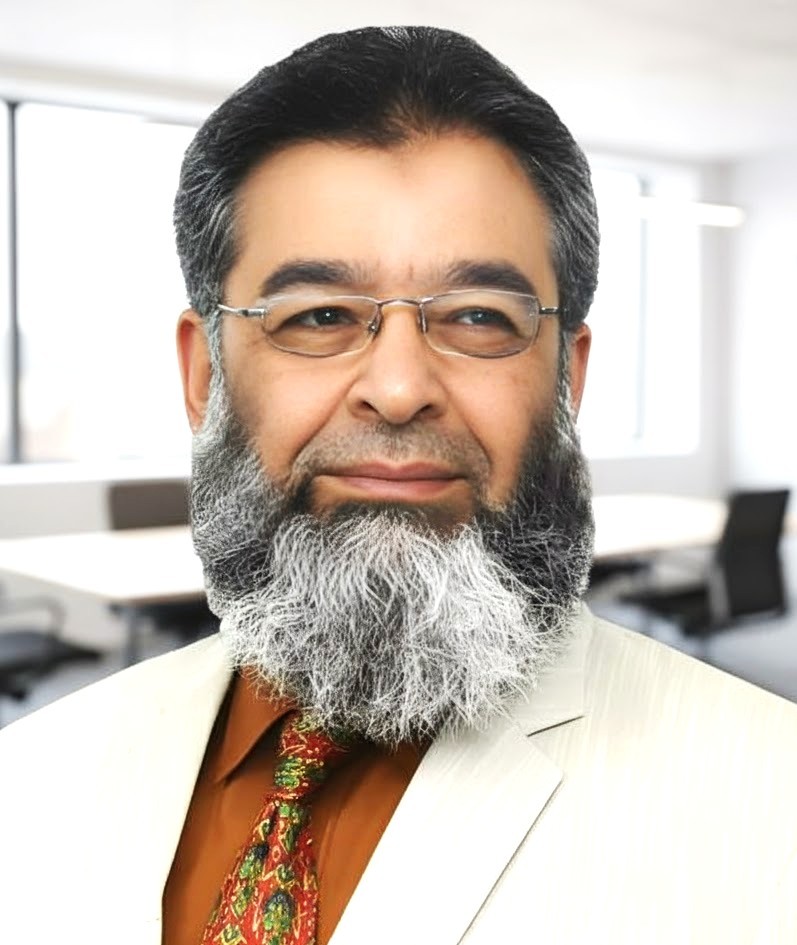
By Muhammad Mohsin Iqbal
There is a peculiar comfort in the architecture of parliaments. The worn leather benches, the stern portraits of statesmen past, the echo of a voice raised not in anger but in argument—these are the furnishings of civilization’s attempt to govern itself without the sword. When the world’s legislative chambers fall silent, something vital leaves the air. It is the sound of hope being negotiated. This week, in the storied city of Istanbul, that sound returned, albeit softly. The 152nd Assembly of the Inter-Parliamentary Union (IPU), hosted by Türkiye’s Grand National Assembly, gathered representatives from nations that often struggle to find common language, let alone common ground.
Under the deceptively simple theme of nurturing hope, safeguarding peace and ensuring justice for future generations, the world’s talking shop attempted something radical: it tried to listen. For those who dismiss such gatherings as mere theatrical diplomacy—all handshakes and no action—there is a temptation to look away. However, to do so is to misunderstand the nature of peace. Peace is not a treaty signed in a single afternoon. It is a slow, unglamorous accretion of small understandings, of corridor conversations, of a speaker from one troubled region nodding at a speaker from another. It is, in the finest sense, parliamentary. Consider the measured intervention of Sardar Ayaz Sadiq, the Speaker of Pakistan’s National Assembly.
In a different era, a politician from a nation with a complex border and a restless neighborhood might have resorted to the language of the rampart. Instead, Sadiq offered the language of the ledger. He spoke of the Indus Waters Treaty as a sacred trust, warning that to hold it in abeyance is not just a legal infraction but a moral one. Water, as any farmer knows, does not respect cartography. To weaponise it is to poison the well of future coexistence. His voice carried further still, to the frozen valleys of Kashmir and the scorched earth of Gaza. On the former, he did not retreat into abstraction. He reminded the chamber that the final status of that disputed territory is not a matter of unilateral diktat but of United Nations resolutions and the lived will of the Kashmiri people.
It was a classic, almost old-fashioned appeal to the charter that founded the modern international order. In an age of raw power politics, that appeal felt less like naivety and more like a necessary anchor. And then there was Palestine. Sadiq recited a number that should sear the conscience of any parliamentarian: over seventy-one thousand Palestinians killed in the past two years alone, the majority women and children. This is not a statistic; it is a generational trauma. Yet, the Speaker wisely avoided the trap of pure lamentation. He acknowledged the fragile diplomatic pathways now being cleared—the recent United Nations initiatives, the tentative peace plan involving the United States and several Arab states, including his own.
Pakistan’s position remains rooted in the two-state solution, in a viable, independent Palestine with Al-Quds Al-Sharif as its capital. It is a position that has become unfashionable in some Western capitals, but which retains the stubborn force of justice. What was most striking about the Pakistani delegation’s engagement was its refusal to play the role of the aggrieved. There was a pragmatism here, a quiet confidence. Sadiq took a moment to commend the positive responses from both Iran and the United States to a ceasefire call advanced by Prime Minister Shehbaz Sharif and his colleagues. The Islamabad talks of April 11-12, he noted, were conducted in a constructive atmosphere. Let us pause on that phrase: constructive atmosphere.
In the Middle East, where atmospheres are usually thick with smoke and suspicion, this is no small achievement. Pakistan, it seems, is discovering a vocation for honest brokerage—a role that requires not great power but great patience. Yet the editorial writer must also sound a note of sobriety. The IPU is not the Security Council. Its resolutions do not move armies or open borders. The great failing of our multilateral system, as Mr Sadiq himself observed, is not the absence of rules but their selective application. The UN Charter’s mechanisms for peaceful resolution lie dormant while the bombs fall. The right of self-determination is proclaimed in one chamber and violated in the next. Parliaments can nurture hope, but they cannot compel action.
It preserved a sliver of hope that, as the Speaker noted, the core tenets of the UN Charter—sovereign equality, non-interference, peaceful settlement—might one day be more than parchment. As the delegates departed for Islamabad, Ankara, and Washington, they carried with them the memory of a conversation. That is all. But sometimes, in the long arc of history, a conversation is the only thing that stands between a descent into chaos and the first, tentative steps toward the light. Parliament is not the engine of history. It is its memory, its conscience, and, on a good day, its whispered promise of a better argument. Let us hope that whisper grows louder.
(The writer is a parliamentary expert with decades of experience in legislative research and media affairs, leading policy support initiatives for lawmakers on complex national and international issues, and can be reached at editorial@metro-Morning.com)
