





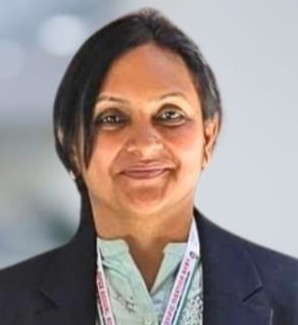
By Prof Dr. Aliya Kemal Ahsan
In the world of paediatric cardiology, there is a fundamental truth: a surgeon can only repair what they can clearly see. For years, as I worked within the high-volume, high-pressure wards of the NICVD, I witnessed the incredible resilience of our medical teams. We are masters of volume, saving thousands of lives through sheer dedication. However, when faced with the most complex “blue baby” defects, where the anatomy is a distorted puzzle of misplaced vessels and tiny valves, we often reach the limits of traditional technology.
To push past those limits, I travelled to the Institut Jantung Negara (IJN) in Malaysia. Learning is a lifelong process, and my time at this global center of excellence has redefined my understanding of what is possible. IJN is not just a hospital; it is a specialized environment where the “digital heart” has replaced the guesswork of the past. Learning is a lifelong process. In medicine, if you stop evolving, your patients pay the price. My transition from the high-volume wards of the NICVD to the precision-driven labs of the Institut Jantung Negara (IJN) in Malaysia was a calculated move to find the tools we lack in Sindh.
This journey was made possible through the unwavering support of the Executive Director of NICVD, Prof. Tahir Sagheer, whose leadership continues to prioritize the specialized training of local faculty to meet global standards. The most profound lesson I learned at IJN was not about a machine, but about a culture. In many regional institutions, specialists work in silos: the imager provides a report, the surgeon reads it, and the intensivist manages the aftermath. At IJN, these walls do not exist. Every complex case is treated as a collaborative mission. I participated in “heart team” meetings where paediatric cardiologists, surgeons, interventionists, imaging specialists and intensivists sat together to dissect a single patient’s anatomy.
More importantly, IJN does not operate in isolation from the rest of the world. Through advanced telehealth platforms, they discuss difficult cases with global experts in real time. This borderless approach to medicine ensures that every child benefits from collective global intelligence, rather than the opinion of a single doctor. The 3D echo, VR and MRI collaborative culture is powered by a suite of technologies that turn a child’s heart into a navigable 3D environment. This is the hallmark of a center of excellence, and it is the exact standard we must now bring to Sindh. 3D echocardiography allows us to move beyond the flat, grainy images of 2D ultrasound.
It enables us to view the heart’s valves and structures in a volumetric space, providing a surgeon’s eye view of septal defects and valve leaflets, and allowing the team to study the inside of the heart before the chest is ever opened. Virtual reality (VR) and VR-CT represent the most transformative leap in modern surgery. Using cardiac VR, IJN converts a patient’s CT data into a virtual 3D world. By wearing a VR headset, a surgeon can literally walk through the child’s heart. They can plan their incisions, practise the placement of a patch, and identify anomalous coronary arteries that might be hidden on a standard scan.
This eliminates on-table surprises, significantly reducing time on the bypass machine and improving survival rates. Dedicated cardiac MRI provides, for the most complex haemodynamics, a non-invasive, high-definition roadmap of blood flow. It allows us to measure pressures and tissue health with a level of detail that ensures no element is left to chance. Bringing this “IJN standard” to Sindh aligns with the transformative healthcare vision of the provincial leadership. Under the guidance of Chairman Bilawal Bhutto Zardari, Sindh has seen a revolution in making high-end cardiac care accessible and free for all. This mission is carried forward by the Chief Minister of Sindh, who has consistently prioritised the upgrade of medical infrastructure to world-class levels.
Central to this progress is the vision of Health Minister Dr Azra Pechuho, whose commitment to specialised healthcare has shifted the focus from basic treatment to high-tech excellence. Her vision for Sindh is one where a child in a remote village receives the same precision-guided surgery as a child in Kuala Lumpur or London. My journey from the high-volume service of NICVD to the precision excellence of IJN has given me a clear mission: we must bridge this technological gap. The children of Sindh, whether in the bustling heart of Karachi or a remote village in the interior, deserve a medical system that never stops evolving.
By developing these advanced imaging capabilities across our province, we are doing more than buying equipment. We are empowering our local surgeons to operate with the same confidence as the best in the world. We are transforming “inoperable” cases into success stories. IJN Malaysia shows us that the future of paediatric cardiology is not found in silos, but in a shared, digital vision. My goal is to ensure that the “IJN standard” becomes the “Sindh standard”. We are moving from an era of blind surgery to an era of total clarity. In the fight for a child’s life, seeing the heart in its true, three-dimensional form is the first and most important step towards healing.
By integrating 3D echo, VR and dedicated MRI into our daily workflow at NICVD, we are fulfilling the promise made by our leaders. We are empowering our surgeons with “digital eyes”, ensuring that complex heart disease is no longer a barrier to a cure. The children of Sindh deserve a system that never stops learning. With the support of our leadership and the lessons from IJN, we are ensuring that the smallest hearts in our province have the brightest, most precisely planned future.
(The writer has earned double fellowship in Peadiatric Medicine and Peadiatric Cardiology, and also 3rd fellowship attachment in Peads Cardiac Imaging. Currently serving as Assistant Professor at NICVD, Karachi, and can be reached at editorial@metro-morning.com)

1 Comment
What a dedication to learning, ever-changing medicine and, above all to voiceless hearts!