





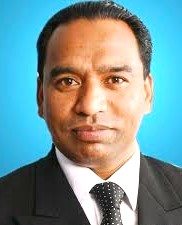
By Asghar Ali Mubarak
The prospect of renewed US–Iran talks in Islamabad has placed Pakistan in an unusually exposed position, where diplomacy and economic fragility appear to be colliding rather than complementing each other. While officials present the initiative as a potential breakthrough for regional stability, the economic undercurrents tell a more complicated story. For Pakistan, already navigating inflationary pressure, external debt constraints and a fragile business environment, the timing of such high-stakes diplomacy in its capital raises difficult questions about cost, disruption and longer-term exposure.
At the heart of the concern is a simple contradiction. Pakistan is seeking to position itself as a facilitator of global dialogue, yet the very act of hosting sensitive negotiations between rival powers carries immediate economic and logistical consequences. In Islamabad, heightened security protocols linked to the talks have already translated into partial shutdowns, restricted movement and interruptions to commercial activity. For a city heavily dependent on services, government employment and small-scale trade, even short-term closures have a disproportionate effect. Daily wage earners, transport operators and small retailers tend to absorb the first and most severe shocks, and there is little institutional cushioning available to offset those losses.
The disruption is not merely localised inconvenience; it feeds directly into broader economic sentiment. When markets and workplaces slow, confidence tends to weaken. In an economy where private investment is already cautious, any additional signal of instability reinforces hesitation. Business activity, particularly in urban centres, relies as much on predictability as it does on demand. The perception that Islamabad may periodically shut down for geopolitical events introduces a new variable of uncertainty into an already strained environment.
Beyond immediate disruption, the more structural concern lies in external shocks linked to the wider Middle East tensions that frame these talks. Pakistan’s economy remains deeply sensitive to global oil movements, given its heavy reliance on imported energy. When crude prices cross the symbolic threshold of 100 dollars per barrel, the transmission effect into domestic inflation is rapid and unavoidable. Transport costs rise, electricity generation becomes more expensive, and industrial input prices climb in tandem. Even modest fluctuations in global oil markets tend to have amplified domestic consequences because of Pakistan’s narrow fiscal space.
This inflationary pressure is not abstract. It filters quickly into food prices, household budgets and wage expectations. The Sensitive Price Index has already reflected upward movement, reinforcing the sense that external geopolitical tensions are feeding directly into domestic economic hardship. For lower and middle-income households, which spend a large share of their income on essentials, even small price increases can significantly reduce purchasing power.
Industrial activity faces a parallel strain. Rising fuel and energy costs increase the cost of production and logistics, making Pakistani goods less competitive both domestically and in export markets. Manufacturing sectors that depend on imported raw materials or energy-intensive processes are particularly exposed. Over time, this can suppress output, slow job creation and widen the gap between economic potential and actual performance. When businesses begin to anticipate sustained cost pressures, investment decisions are often postponed, further dampening growth momentum.
The external account adds another layer of vulnerability. Pakistan’s remittance inflows, heavily dependent on labour markets in the Gulf and broader Middle East, are indirectly linked to regional stability. Any slowdown in those economies, whether driven by conflict, sanctions or oil market volatility, tends to filter back into reduced remittance growth. At the same time, export demand from those regions can soften, particularly for labour-intensive goods and services. The combined effect places additional pressure on Pakistan’s balance of payments at a time when foreign exchange buffers remain limited.
There is also a psychological dimension that is often underestimated in macroeconomic assessments. Business confidence surveys indicate a marked deterioration in sentiment, with a large majority of firms citing inflation, energy costs and policy uncertainty as key constraints. When geopolitical developments are added to this mix, they reinforce a sense of unpredictability that is difficult to price into business planning. A perception that external shocks may repeatedly disrupt domestic stability can become self-reinforcing, leading firms to scale back expansion or delay hiring.
Yet it would be reductive to view Pakistan solely as a passive victim of external shocks. The government’s diplomatic positioning reflects a deliberate attempt to carve out relevance in an increasingly fragmented regional landscape. By offering Islamabad as a venue for dialogue, Pakistan is attempting to convert geographical proximity and political neutrality into diplomatic capital. In theory, successful mediation could enhance its international standing and potentially open channels for economic cooperation or support.
The risk, however, is that the economic costs of hosting such processes are immediate and certain, while the benefits are uncertain and long-term. This asymmetry is what makes the current situation particularly delicate. If talks stall or collapse, Pakistan absorbs the disruption without the compensating gains of diplomatic success. If they succeed, the reputational dividend may still take time to translate into tangible economic relief. For now, Pakistan finds itself in a familiar but uncomfortable position, balancing the promise of diplomatic relevance against the reality of economic fragility. The success or failure of the talks will ultimately be judged not only in political terms, but in whether the country can absorb their consequences without further straining an already stretched economy.
(The writer is a senior journalist covering various beats, can be reached at editorial@metro-morning.com)
