





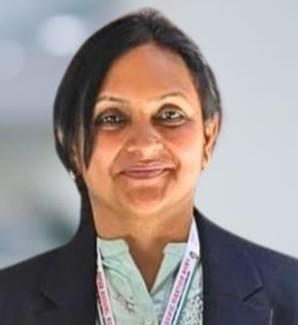
By Dr Aliya Kemal Ahsan
In the pre-dawn quiet of a Karachi hospital, a father from the parched plains of Tharparkar sits waiting. His daughter’s small hand rests in his, and in his eyes there is fear, yes, but also something else: a faint, unfamiliar pulse of hope. His child needs complex heart surgery. In much of the world, that sentence means ruin. It means selling land, begging from relatives, a lifetime of debt. Here, at the National Institute of Cardiovascular Diseases, it means nothing of the sort. The procedure will cost him nothing. It is hard to write that sentence without pausing. Free. Not cut-rate. Not subsidized for those who can fill out the right forms. Free.
What the NICVD has achieved in Sindh is not merely a medical success story. It is a moral statement, etched not in manifestos but in the lived experience of millions. This is a public hospital treating over 2.3 million patients a year, making it the largest cardiac care center in South Asia. Yet the real metric is not volume but dignity. A laborer from a slum, a farmer from the interior, a woman who has never held a credit card – they all receive the same advanced diagnostics, the same bypass surgeries, the same stent placements as a wealthy patient anywhere else. The Government of Sindh funds this model, and in doing so has answered a profoundly radical question: is high-quality healthcare a privilege for the few, or a right for all? Here, the answer is delivered every day, on a beating heart.
What makes the NICVD extraordinary, however, is not just the care inside its walls but the revolution it has taken to the streets. Recognizing that in a heart attack, time is muscle – that every lost minute irretrievably damages the organ – the institute created its Chest Pain Unit program. These are not grand buildings. They are container based clinics placed under flyovers, at busy intersections, in the dense fabric of Karachi’s neighborhoods. Twenty four of them now operate, and they do one thing with remarkable efficiency: they intercept death during the so called golden hour, that first sixty minutes when intervention means survival. Hundreds of thousands of patients have been treated in these unassuming units. They are stations of hope, parked in the shadows of concrete, and they have changed the geography of emergency care.
Yet even that is only part of the story. For generations, advanced heart care was a Karachi only privilege. If you lived in Sukkur or Larkana or the distant district of Mithi, your chances of survival were measured in kilometers and petrol money. Families would sell what little they owned to make the agonizing journey to the capital, often arriving too late. The NICVD understood that compassion without access is merely sentiment. So it built ten satellite centers, full scale cardiac hospitals embedded in the provinces. Larkana, Sukkur, Nawabshah, Hyderabad, Tando Muhammad Khan, Khairpur, Sehwan, Mithi, Ghotki and even within the old heart of Lyari in Karachi itself. A child with a congenital defect in upper Sindh now receives the same quality of open heart surgery as anyone in the provincial capital. The journey is no longer measured in desperate miles but in the short distance to a local hospital.
And then there is the work that catches the breath. The paediatric cardiology wing handles some of the most complex congenital cases in the region. There is no cruelty quite like a child born with a broken heart. To watch a parent hold their infant after a successful surgery, to see them realize that their child will live, will run, will grow old – that is not medicine. That is something closer to grace. The NICVD has also expanded into stroke treatment, offering free emergency interventions for paralysis, preventing the lifelong tragedy of a clot that steals a person’s mobility and independence. It understands that the heart and the brain are not separate kingdoms. They are one fragile republic of the self.
As the sun rises over Karachi, the father from Tharparkar watches his daughter wheeled toward recovery. The surgery is done. She is safe. He will not be handed a bill. He will not be asked to sign a loan. He will only need to think about what toy to buy her when they reach home. That is the quiet miracle of the NICVD. It does not merely treat disease. It heals families. It restores the idea that a heartbeat is not a commodity. And in a world increasingly comfortable with the notion that the rich deserve to live and the poor deserve to struggle, that is a radical, beautiful, and necessary truth. The heart of Sindh is beating. May it never stop.
(The writer has earned double fellowship in Peadiatric Medicine and Peadiatric Cardiology, and also 3rd fellowship attachment in Peads Cardiac Imaging. Currently serving as Assistant Professor at NICVD, Karachi, and can be reached at editorial@metro-morning.com)
