





By our correspondent
KARACHI: The two-day Training of Trainers (ToT) program on gender equality and workplace harassment concluded with participants calling for stronger institutional measures to ensure safer and more inclusive working environments across Pakistan’s public and private sectors.
The program, organized in accordance with Pakistan’s labor laws and the International Labor Organization’s Convention C-190 on violence and harassment at work, brought together professionals, trainers and institutional representatives to discuss practical strategies aimed at improving workplace culture and promoting equal opportunities.
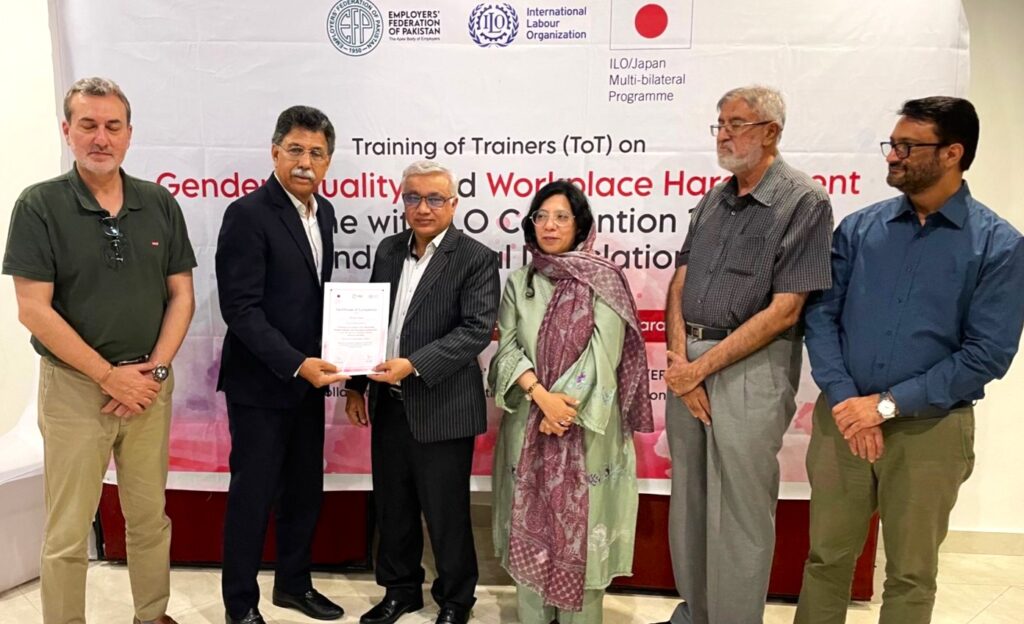
At the closing ceremony, the Secretary General of the Employers’ Federation of Pakistan, Nazar Ali, along with trainer Kiran Zubair, presented a certificate to SESSI Director Wasim Jamal in recognition of his successful completion of the training program.
Speakers at the event said the initiative reflected a growing recognition within workplaces that issues of harassment, discrimination and unequal treatment could no longer be ignored. They stressed that employers and institutions had a responsibility to create professional environments where employees, particularly women and vulnerable groups, could work with dignity and security.
The training sessions focused on building awareness about gender-sensitive workplace practices, legal obligations under Pakistani legislation and international labor standards, as well as mechanisms for addressing complaints and preventing harassment. Participants were also trained to act as facilitators within their respective organizations so that awareness and implementation could continue beyond the program itself.
The initiative was organized by the Employers’ Federation of Pakistan in collaboration with the International Labor Organization under its PRS Project. The program was funded by the Government of Japan through the ILO/Japan Multi-bilateral Program, which supports labor rights, workplace protection and social development initiatives in several countries, including Pakistan.
Organizers described the training as part of broader efforts to strengthen professional standards and encourage institutions to adopt policies that align with international best practices on workplace safety, equality and respect.
